 Spiritual
Parvati came from Málaga in 2023, when she was barely two years old. The devotees rescued her because her owner wanted to send her to the slaughterhouse, as she belonged to a breed prone to many illnesses. Miraculously—or rather, by Krishna’s mercy—she has remained healthy ever since her arrival at Rupa Goshala.
Parvati was already pregnant, although still very young. Normally, one waits longer before a cow has her first calf, so Parvati gave birth to her son Ganesh while she was still a heifer.
The birth took place at night, in her stall, while everyone was asleep. Parvati, lying down with her tail resting against the door, began to push, and Ganesh came out without any complications. Since her tail was still on the door, the calf fell into the corridor.
When Damodara Priya and Dina Sharana checked the cameras in the morning to make sure everything was fine in the goshala, they saw a small black calf walking down the corridor, visiting the other cows one by one.
They quickly went to bring the newborn back into the stall with his mother. Soon after, Ganesh had begun to nurse, but he was not drinking enough to reduce the amount of milk accumulated in Parvati’s udders, which became swollen. They had to call the veterinarian.

Dina Sharana and Damodara Priya with newborn Ganesh
Since Ganesh continued drinking too little, the vet said it was necessary to milk Parvati to relieve her. Parvati was furious. Even though four people were holding her by the horns, she would not let anyone touch her—she was in great pain. Finally, after quite some effort, they managed to milk her.
Over time, Parvati became a calm cow, and today she allows herself to be milked with great gentleness. She now has the body of a full-grown cow—her face and temperament have changed. She is of the Belgian Blue breed, which surprised the goshala’s veterinarian when he saw her producing milk regularly.
Ganesh — The Bold One
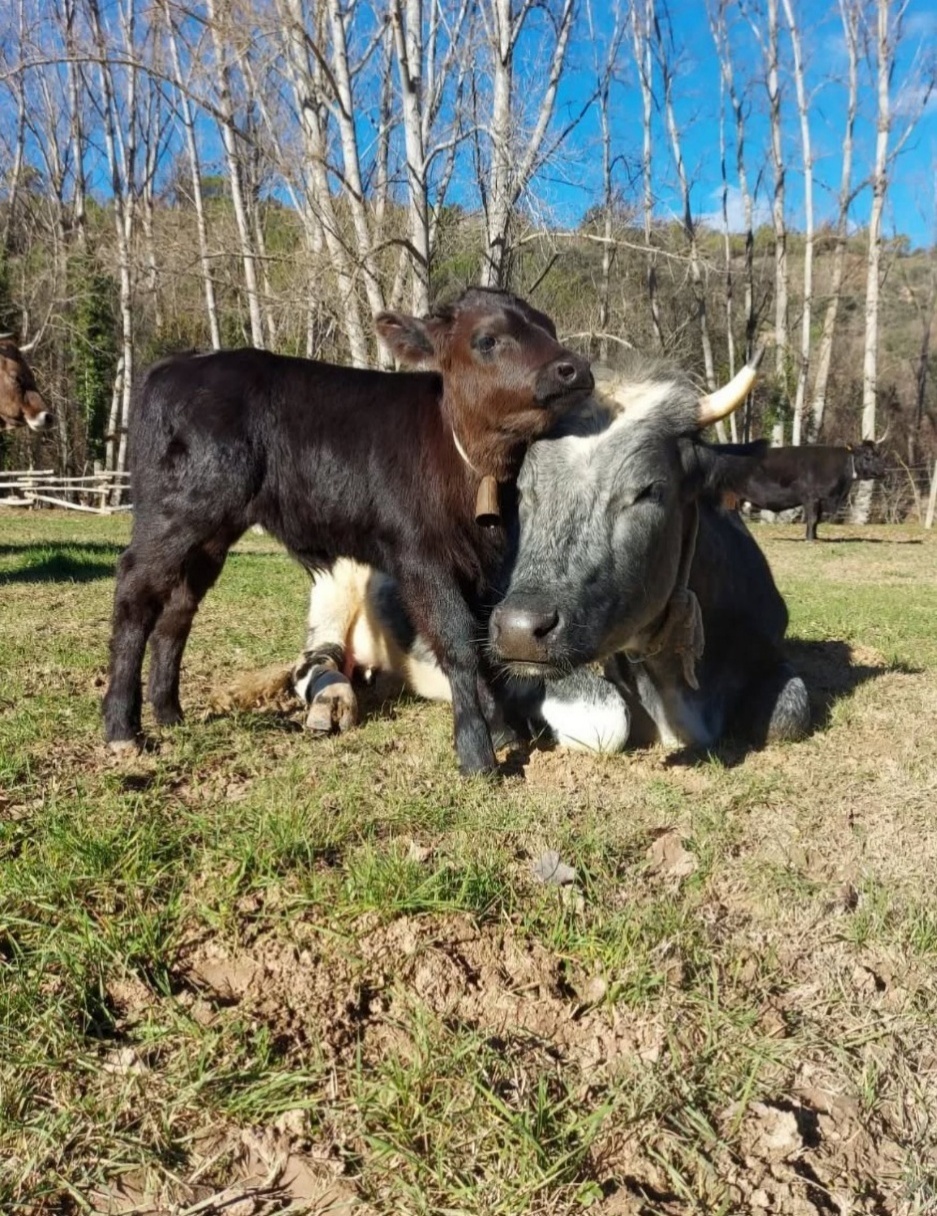 Ganesh is fearless, amiable, and playful. He is always looking for someone to play with and is often unaware of how strong he is. Whenever someone goes out to the field with the wheelbarrow, he starts running with excitement. His weakness is charging at it with great enthusiasm. Parvati con su hija
Ganesh with his mother Parvati
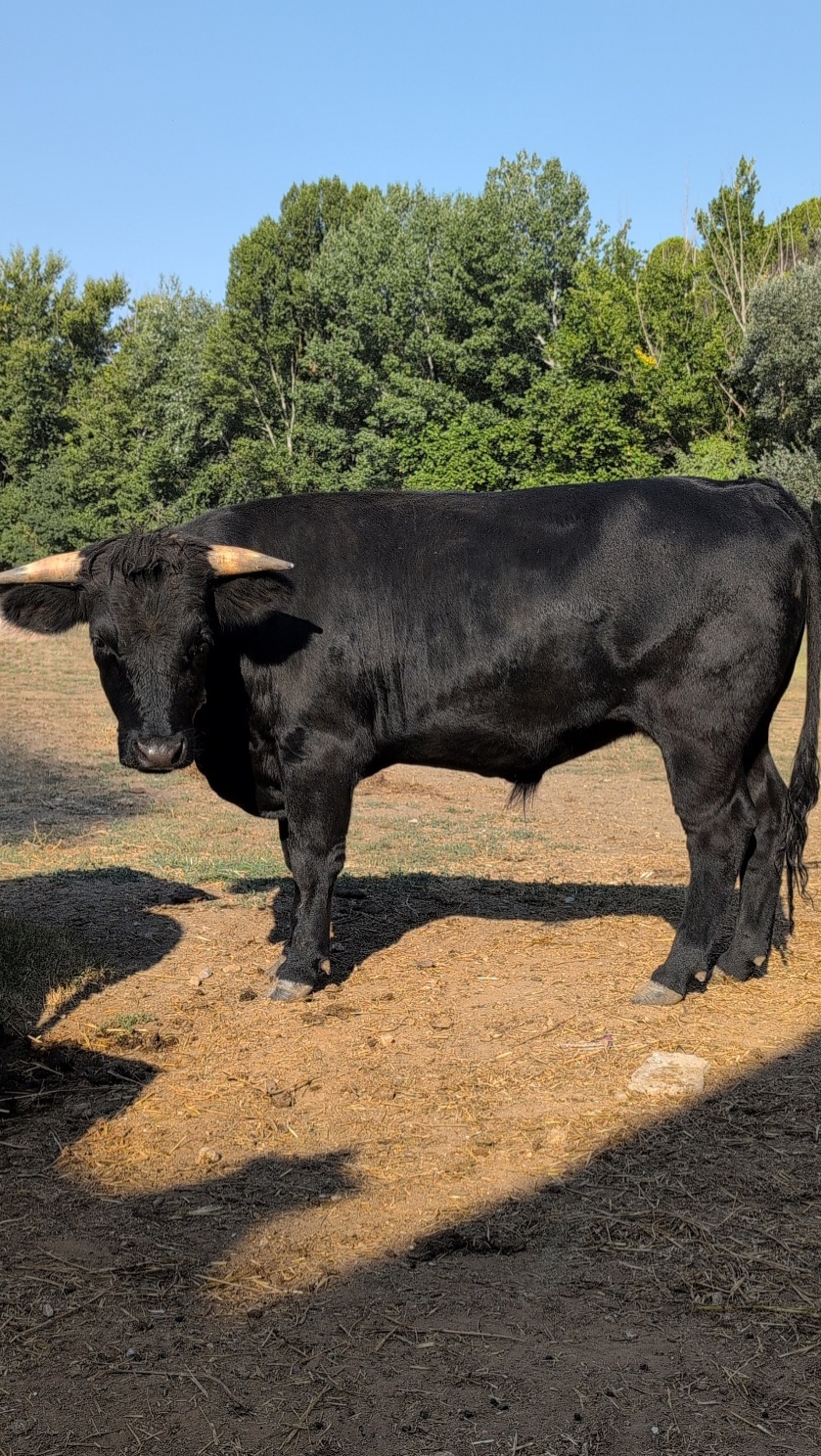
Ganesh in his youth
Yamuna-mayi — The Sweet One
On the night of June 27, 2025, Parvati gave birth to a beautiful little calf, Yamuna-mayi. She is very sweet, gentle, and calm, and her charm draws everyone’s attention. She is yet another blessing for New Vrajamandala, an auspicious sign of Krishna’s mercy.
 Yamuna-mayi is careful by nature and quickly won the affection of all the members of the herd. Even so, she is very independent and accepts other cows as mothers. Kunti loves taking care of Yamuna-mayi, and Yamuna-mayi enjoys drinking her milk. She also brings joy to Radharani, for Radharani lost her only calf, and this is the first time she has been able to nurse a little one.
Yamuna-mayi with Parvati, Dina Sharana and Madhavi