 Spiritual
(An adaptation of Vidyapati’s Tāṭala saikate)

1a
In a world where souls lose their way,
I forgot you, O Lord, adrift in dismay.
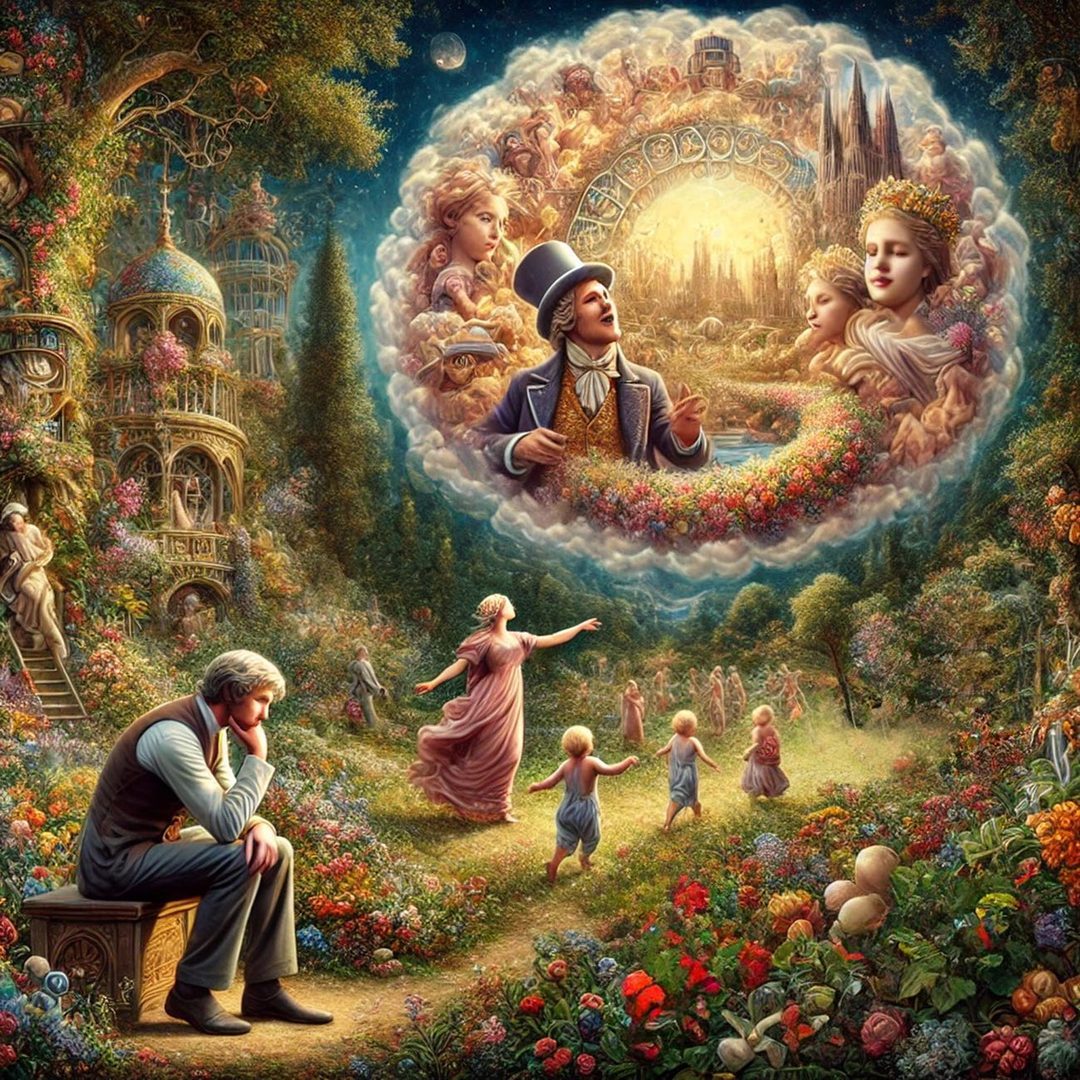
1b Lovers, children and friends on my mind. Their allure, though fleeting, made me blind.

2a
Like a drop of water on burning hot sand,
worldly delights quickly came to an end.

2b
In this misery, I turn to You in despair,
O Mādhava, I don’t find relief anywhere.


You’re the three worlds‘ savior true,
with mercy You embrace the souls askew.
In You alone my hope shall reside,
my well-wishing friend and trusted guide.

In a half-alive state, I wandered astray,
living in disgrace, day after day.
As a frivolous child, I wasted my time,
as a useless old man, I lived in decline.
Like a drop of water on burning hot sand, worldly delights quickly come to an end.

Romantic adventures, young love's sweet kiss,
enchanted my heart with delusory bliss.
When will I find the path to embrace
and worship You, O Lord, face to face?

Brahmās come and go in endless succession, yet You are eternal, no beginning or cessation. From You they arise, to You they return, like ocean waves in cycles churn.
Like a drop of water on burning hot sand, worldly delights quickly come to an end.

Vidyāpati admits his fear of death, who’s awaiting him with its ice-cold breath. No shelter but You, O Lord Supreme, I surrender my soul for You to redeem.

The burden to free me from worldly strife rests now with You, O bestower of life. In Your lotus hands lies my deliverance from this transient world to transcendence.
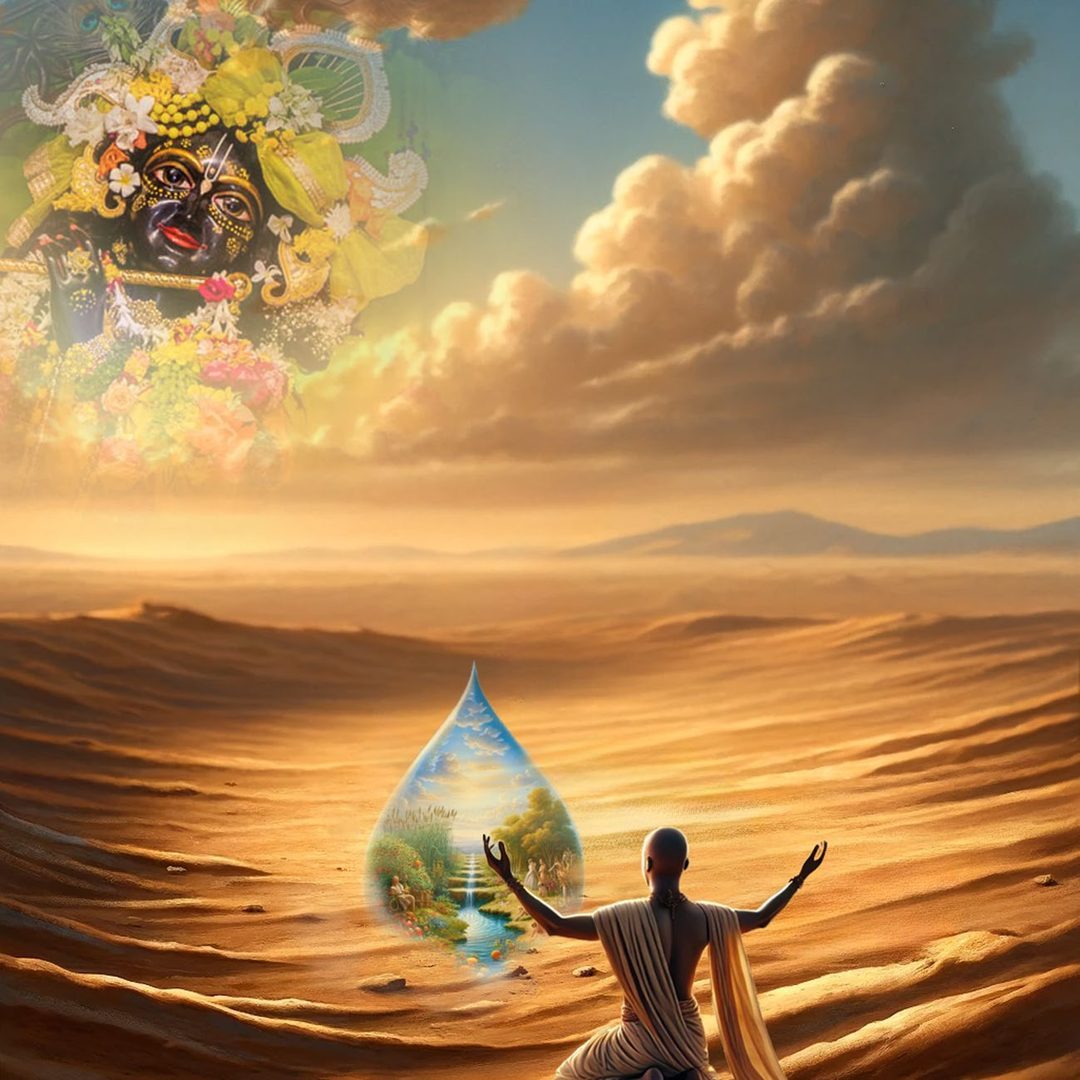
Like a drop of water on burning hot sand,
worldly delights quickly come to an end.
In this misery, I turn to You in despair,
O Mādhava, I don’t find relief anywhere.
In this misery, I turn to You in despair, O Mādhava, there is no other relief anywhere. O Mādhava, I surrender myself to Your care.
Commentary
While Vidyāpati is especially revered for composing songs about the pastimes of Rādhā and Kṛṣṇa, it is noteworthy that Śrīla Prabhupāda did not comment on any of Vidyāpati’s songs depicting Kṛṣṇa’s pastimes. Instead, he emphasized that such songs are intended for liberated souls, those free from material desires. However, he frequently spoke about Tāṭala saikate, as this song explores the conditioned soul’s frustrating experience—symbolized by the search for water in the desert-like material world, where one continually hopes but fails to find happiness. This song, therefore, provides valuable lessons to be learned.
The Illusion of Worldly Happiness
Vidyāpati begins his song by depicting how the jīva, allured by the promise of quenching its thirst for love and joy in the company of partners, family members, and friends, wanders from body to body, from planet to planet, and even from universe to universe. Throughout this journey, the jīva remains in complete forgetfulness of its true nature and its loving relationship with the Supreme Lord. Reflecting on this deplorable condition, Vidyāpati concludes that worldly delights dissipate swiftly, much like a drop of water on hot sand. Śrīla Prabhupāda comments on this theme in the ŚrīmadBhāgavatam (4.25.12) in connection with the story of King Purañjana, who symbolizes the jīva trapped in the material world: Śrīla Vidyāpati, a great Vaiṣṇava poet, has sung: tāṭala saikate, vāri-bindu-sama, suta-mita-ramaṇī-samāje Material sense gratification, with society, friendship and love, is herein compared to a drop of water falling on a desert. A desert requires oceans of water to satisfy it, and if only a drop of water is supplied, what is its use? Similarly, the living entity is part and parcel of the Supreme Personality of Godhead, who, as stated in the Vedānta-sūtra, is ānanda-mayo 'bhyāsāt, full of enjoyment. Being part and parcel of the Supreme Personality of Godhead, the living entity is also seeking complete enjoyment. However, complete enjoyment cannot be achieved separate from the Supreme Personality of Godhead. In his wanderings in the different species of life, the living entity may taste some type of enjoyment in one body or another, but full enjoyment of the senses cannot be obtained in any material body. Thus Purañjana, the living entity, wanders in different types of bodies, but everywhere meets frustration in his attempt to enjoy. In other words, the spiritual spark covered by matter cannot fully enjoy the senses in any circumstance in material life.
The Forest of Enjoyment
In the Fifth Canto of the Śrīmad-Bhāgavatam, there is a description of the “Forest of Enjoyment” which symbolizes the material world where the living entities search for different pleasurable objects. Prabhupāda comments on this metaphor (SB 5.13.7): In the material forest, the conditioned soul sometimes contemplates great castles and skyscrapers, and he wastes his energy on such things, hoping to live in them very peacefully with his family forever. However, the laws of nature do not allow this. When he enters such castles, he temporarily thinks that he is very happy, even though his happiness is impermanent. His happiness may last for a few years, but because the owner of the castle has to leave the castle at the time of death, everything is eventually lost.
This is the way of worldly transactions. Such happiness is described by Vidyāpati as the happiness one derives upon getting a drop of water in the desert. The desert is heated by scorching sunshine, and if we want to reduce the desert temperature, we need huge amounts of water—millions and millions of gallons. What effect will one drop have? Water certainly has value, but one drop of water cannot reduce the heat of the desert. In this material world everyone is ambitious, but the heat is very scorching. What will an imaginary castle in the air do to help? Śrīla Vidyāpati has therefore sung: tāṭala saikate, vāri-bindu-sama, suta-mitaramaṇi-samāje. The happiness of family life, friends and society is compared to a drop of water in the scorching desert. The entire material world is busy trying to attain happiness because happiness is the prerogative of the living being. Unfortunately, due to falling in contact with the material world, the living entity simply struggles for existence. Even if one becomes happy for a while, a very powerful enemy may plunder everything. There are many instances in which big businessmen suddenly become paupers in the street. Yet the nature of material existence is such that foolish people are attracted to these transactions and they forget the real business of self-realization.
Māyā’s Alluring Power
Piercing through the glamorous veil of illusion is not an easy task because māyā’s covering potency, āvaraṇātmikā-śakti, is so strong that the living entity is satisfied even in abominable conditions. This can be observed in the case of hogs and worms who live in a repulsive condition, surrounded by filth and stool, but feel satisfied. Human beings have the discriminatory power to understand that they are suffering, and this realization may prompt them to look for a solution.
Gradually, after numerous failed attempts, the may finally come to realize the truth of Kṛṣṇa’s words in the Bhagavad-gītā (7.14): This divine energy of Mine, consisting of the three modes of material nature, is difficult to overcome. But those who have surrendered unto Me can easily cross beyond it. Vidyāpati has reached this crucial point and therefore says: “In this misery, I turn to You in despair, O Mādhava, I don’t find relief anywhere.” Kṛṣṇa is known as Jagatāraṇa, the savior of the universe, and Dīnadayāmaya, the merciful benefactor of the helpless. As soon as the jīva turns to Him, He is ready to offer all support. Next, Vidyāpati describes the life of a common man, as we also see Bhaktivinoda Ṭhākura do in some of his songs. He begins by referring to himself as “half-alive,” a term that conveys a sense of incompleteness, a feeling of emptiness, and a lack of purpose or joy. Actually, if it were not for the presence of the spirit soul, which is the living force, our body—being a lump of dead matter—would not move. In that sense, a person who is not conscious of their true identity as a spiritual entity is not fully alive.
The Various Stages of Life
Vidyāpati then gives a brief description of the three main stages of human life: childhood and youth, adulthood, and old age. From a spiritual point of view, each period is wasted in activities that do not aim at developing higher consciousness, which would ultimately lead to liberation from the cycle of repeated birth and death. When one is young, the focus is on having a good time through play or other diversions. Latter comes the time of romance, courtship, marriage and family life. Finally, in the twilight of life, one is left with only nostalgia and trivial pastimes like playing golf or cards, and watching TV, as old age strips a person of vitality, leaving them practically incapable of even ordinary tasks.
The Big Picture
In the fourth stanza, Vidyāpati looks at the “big picture,” the supracosmic cycle of life wherein countless universes with their respective Brahmās are generated by Mahā-Viṣṇu and again absorbed by Him. He compares this process to the endless churning of ocean waves. In the Bhagavad-gītā (8.19), Kṛṣṇa describes a smaller cycle of one day in Brahmā’s life which corresponds to 1,000 yuga cycles, or 4,320,000,000 years: Again and again, when Brahmā's day arrives, all living entities come into being, and with the arrival of Brahmā's night they are helplessly annihilated. This partial cosmic annihilation happens 36,500 times during Brahmā’s life of 100 years. At the end of his life, Brahmā himself dies, unless he is a pure devotee who enters the spiritual sky.
Facing Death
Śeṣa śamana-bhaya, when the end of life is near, there is fear of death for the ordinary conditioned soul. Nobody wants to die, yet nobody will live. That is the bleak reality and true nature of the material world which is known as martya-loka, the realm of death. Only a devotee who has taken complete shelter of the lotus feet of the Supreme Lord is not at all afraid of death. The shining example is Mahārāja Parīkṣit who was cursed to die within seven days but became free from all fear by surrendering to the lotus feet of the Lord upon hearing the following instruction from his spiritual master, Śukadeva Gosvāmī: At the last stage of one's life, one should be bold enough not to be afraid of death. But one must cut off all attachment to the material body and everything pertaining to it and all desires thereof.
In the conclusion of his song, Vidyāpati conveys the realization that true relief lies in fully surrendering to the Lord, trusting His shelter as the only salvation from this transient world.
Vidyāpati's Timeless Message
Vidyāpati’s Tāṭala saikate offers a profound message that resonates even today: the futility of seeking happiness in the material world and the ultimate need to surrender to the Lord for true fulfillment.
Though Śrīla Prabhupāda recorded Tāṭala saikate only once, partially, he referenced this song more than 50 times in his books and lectures. Vidyāpati’s words are important and meaningful, because they remind us of our precarious position in this world—an essential realization for progress in spiritual life.
The Original Song
Tāṭala saikate
Vidyāpati Ṭhākura
tāṭala saikate, vāri-bindu-sama, suta-mita-ramaṇī-samāje tohe visari mana, tāhe samarpala, aba majhu haba kona kāje tāṭala—burned; saikate—on the sandy beach; vāri-bindu-sama—like a drop of water; suta-mita-ramaṇī—children, friends, and women; samāje—in the association; tohe visari—forgetting You; mana—my mind; tāhe—unto them; samarpala—I have offered; aba—now; majhu—my; haba—will be; kona kāje—by what action (to remedy the situation). O Lord, completely forgetting You, I have offered my mind unto the society of women, children, and friends—but this experience has been just like offering a
drop of water unto the burning hot sands of the beach. How can I possibly be relieved of this great misery? mādhava he! hāma pariṇām nirāśā tuhuṅ jaga-tāraṇa, dīna dayā-maya, ataye tohāri viśoyāsā mādhava—O Lord Mādhava!; hāma—I; pariṇām—in consequence; nirāśā— despondent; tuhuṅ—You; jaga-tāraṇa—savior of the universe; dīna dayā-maya— merciful to the helpless; ataye—therefore; tohāri—in You; viśoyāsā—my only hope. O Mādhava! As a consequence, I am rendered totally despondent. You are the savior of the universe, and are merciful to the helpless souls. Therefore I place my hope only in You. ādha janama hāma, ninde goṅāyaluṅ, jarā śiśu koto-dina gelā nidhuvane ramaṇī, rasa-raṅge mātala, tohe bhajabo kona belā ādha janama—half alive; hāma—I; ninde—in disrepute; goṅāyaluṅ—I have spent; jarā—in old age; śiśu—as a child; koto dina—so many days; gelā—have passed; nidhuvane—in romantic adventures; ramaṇī rasa-raṅge—in the pleasure of sporting with women; mātala—I have been intoxicated; tohe bhajabo—I will worship You; kona belā—at what opportunity. Wandering about in a half-alive condition, I spent my life in utter disgrace. Uncountable days passed as a frivolous child and a useless old man. I have been intoxicated by the pleasure of sharing romantic adventures with beautiful young women. When will I ever get a chance to worship You?
koto caturānana, mari mari jāota, na tuyā ādi avasānā tohe janami puna, tohe samāota, sāgara-laharī samānā koto—how many; catura-ānana—four-faced Brahmās; mari mari jāota—have died one after another; na—not; tuyā—Your; ādi avasānā—beginning or end; tohe—in You; janami—they take birth; puna—and then; tohe—in You; samāota—they are absorbed; sāgara-laharī—the waves of the ocean; samānā—like.
Numberless Brahmās have died one after another, whereas You are without beginning or end. All of them take birth from You and are again absorbed into You, just like waves in the ocean.
bhaṇaye vidyāpati, śeṣa śamana-bhaya, tuyā vinā gati nāhi ārā ādi-anādika, nātha kahāyasi, bhava-tāraṇa bhāra tohārā bhaṇaye vidyāpati—Vidyāpati narrates; śeṣa—at the end of his life; śamanabhaya—fear of Yamarāja; tuyā vinā—other than You; gati—shelter; nāhi ārā—there is no other; ādi-anādika—beginning and beginningless; nātha—Lord; kahāyasi—You are called; bhava-tāraṇa bhāra—the responsibility of deliverance from the material world; tohārā—is Yours. Vidyāpati confesses that now, at the end of his life, he is fearful of death. O Lord! There is no shelter other than You. You will always remain celebrated as being the Lord of both the beginning and the beginningless. Now the responsibility for my deliverance from the material world is entirely Yours.