 Spiritual
(An adaptation of Bhaktivinoda Ṭhākura’s Śuno mora duḥkhera kāhinī)

O Lord, hear the tale of my miserable life, a sad and sorrowful story: I drank the poison of worldliness, mistaking it for nectar’s glory. The Sun is setting on my life's horizon, casting its fading glow; in this misery, I seek Your shelter, O Lord, save me from gloom and woe.

My childhood spent in play, my youth in fruitless study, no sense of right or wrong, my aim—only vain glory. Under household's spell material joys were the goal, children and friends multiplied—attachment overshadowed my soul.
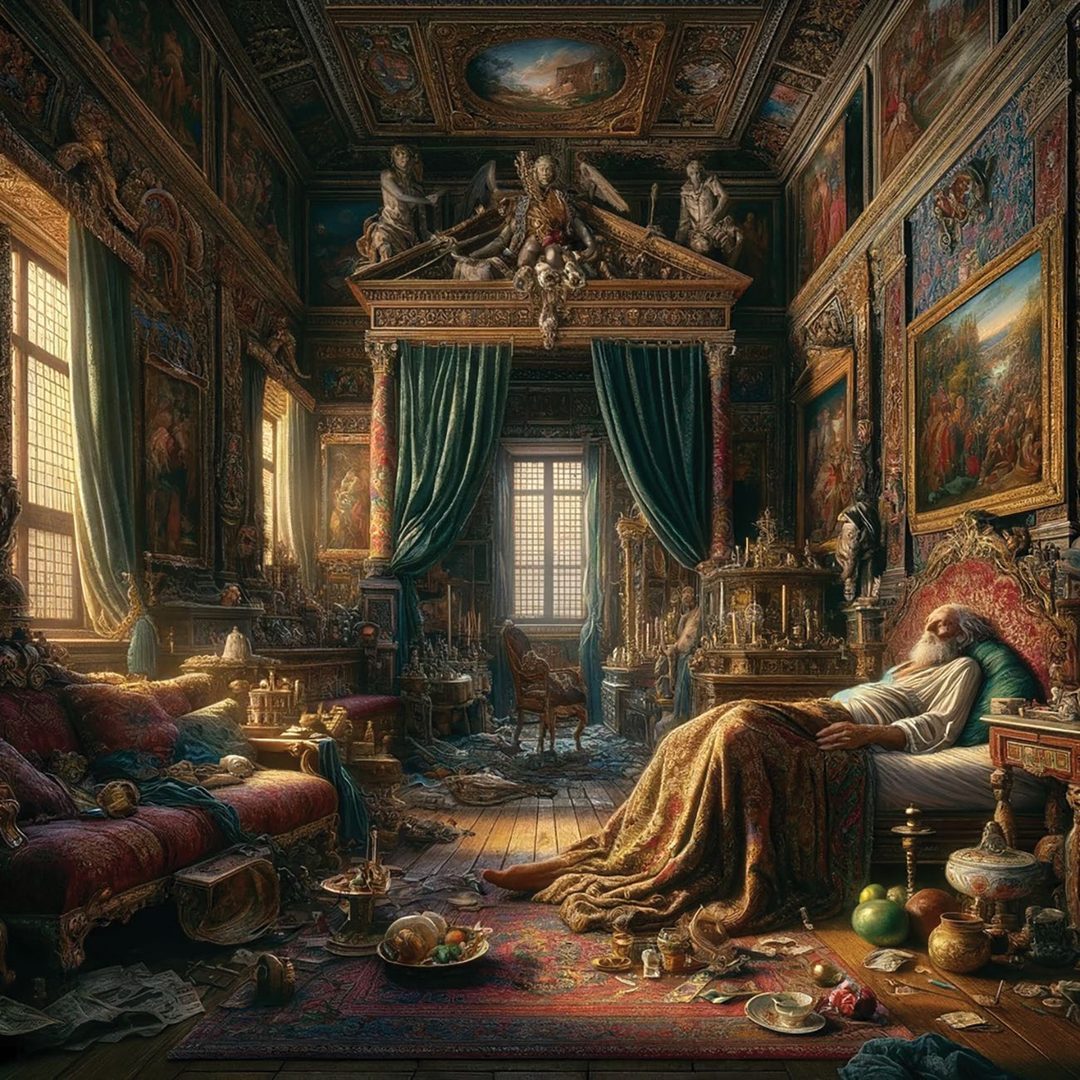
Soon old age arrived and joy departed, sensual pleasures flee, tormented by illness, I’m troubled and weak, O Lord, hear my plea. Senses feeble, body worn out, my strength of mind in decline, all prospects gone, my spirits downcast, my only hope the divine.
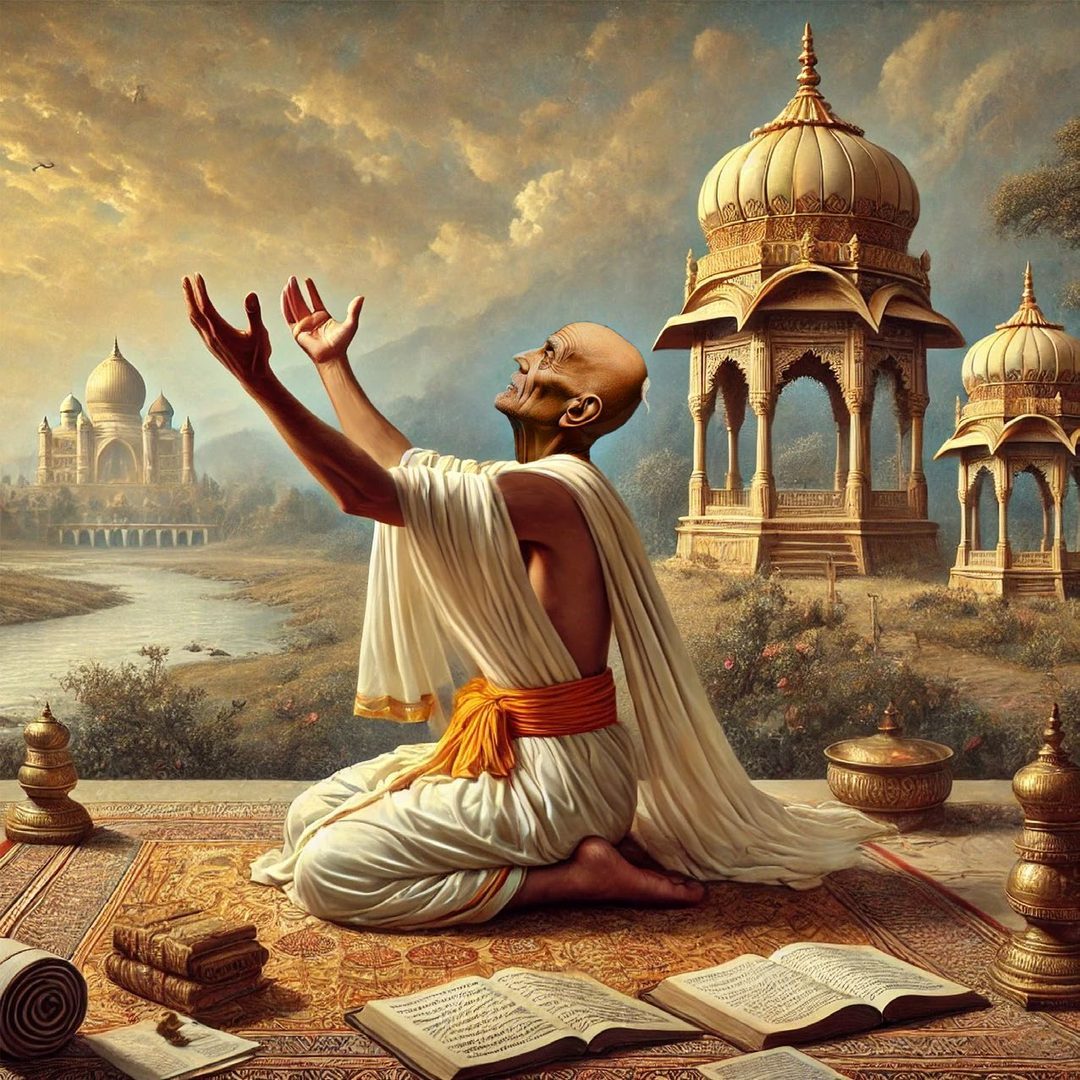
I have no knowledge, no sense, no love or devotion in my heart. What help is there for me now? Will darkness ever depart? Only You, Patita-bandhu, friend of the fallen and lowest, can raise me to Your lotus feet and bathe me in Your foot dust.
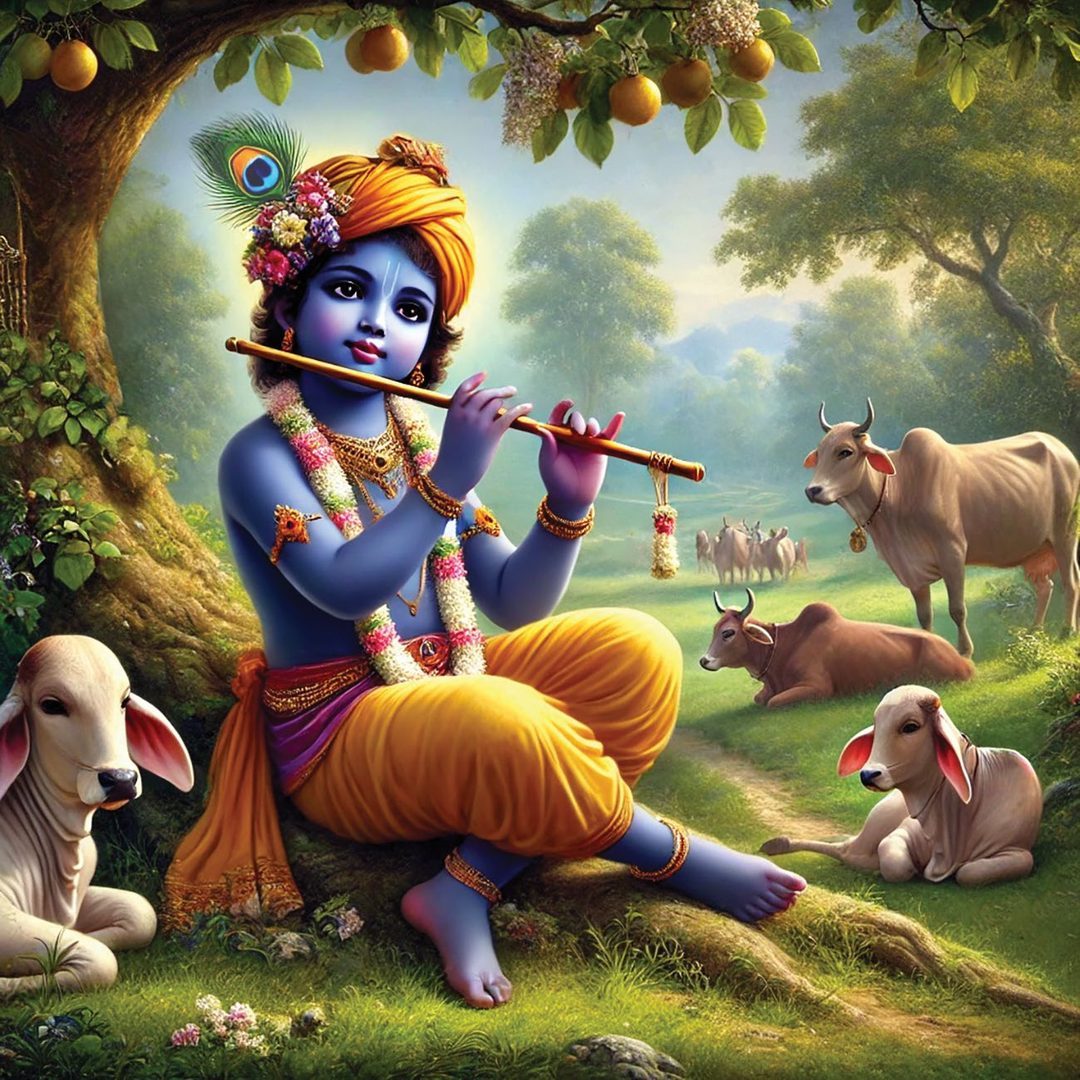
If You judge me now, a wretched soul, no goodness will You find; judge me not, be merciful to this lowly servant, be kind. Let me drink the honey of Your fragrant lotus feet, and thereby deliver this Bhaktivinoda by Your grace, divine and sweet.
Commentary
This is one of Bhaktivinoda Ṭhākura’s “confessional songs,” where he reflects deeply on the frailties of the human condition and his own perceived shortcomings. Other notable examples are the songs Āmara jīvana (My Life) and Gopīnātha (Lord of the Cowherd Girls), which exemplify his humility and deep devotion. In My Tale of Misery, he comes before the Lord and recounts what he considers his “miserable life.” He compares worldly enjoyment to drinking poison, a metaphor also found in his song Anādi karamaphale and in Narottama dāsa Ṭhākura’s song Hari! Hari! biphale, which are included in this collection under the titles The Ocean of Nescience and A Wasted Birth, respectively.
Worldly Enjoyment: Poison in Disguise
The conditioned soul, driven by passionate desires, seeks to gratify the senses by coming into contact with various enjoyable objects: the eyes with beautiful forms, the ears with melodious sounds, the nose with delightful fragrances, the tongue with delicious tastes, and the skin with pleasant textures, especially another person’s soft skin. In the beginning, such contact produces pleasurable feelings that, according to the Bhagavad-gītā (18.38), seem like amṛta (sweet nectar). However, in the end, such pleasures often turn into bitter poison. This happens because these pleasures are short-lived, and repeated indulgence leads to saturation, transforming joy into disgust or even pain. This is especially true for pleasures derived from eating, drinking, or sexual indulgence. There is another aspect to consider. In his Prema-bhakti-candrikā, Narottama dāsa Ṭhākura compares the paths of fruitive activities (karma) and philosophical speculation (jñāna) to pots of poison (karma-kāṇḍa, jñāna-kāṇḍa, kevala viṣera bhāṇḍa). He warns that anyone who mistakes this poison for nectar and drinks it will experience spiritual death, continuing to transmigrate from one material body to another and eating all kinds of abominable things (amṛta baliyā yebā khāya, nānā yoni sadā phire). To be born and die repeatedly is not a happy experience. Therefore, a sane person is advised to avoid the temptation of nectar-like poison, as it will keep them trapped in the cycle of repeated births and deaths.
The Sunset of Life
Bhaktivinoda Ṭhākura reflects on the arrival of old age, lamenting that his life is now in its twilight years: "The Sun is setting on my life's horizon, casting its fading glow." This imagery emphasizes the inevitable decline that comes with time, reminding us that youth and vitality are fleeting. When one is young, this gloomy scenario seems far off, but time is implacable. Sooner or latter, everyone’s life-sun will set. The daily movements of the Sun in the sky mirror the greater cycle of the life-sun. Early morning can be compared to infancy, late morning to youth, noon to adulthood, afternoon to maturity, and late afternoon to old age. Finally, when the sun of one’s life disappears behind the horizon and night falls, the time of death has arrived. In the Second Canto of Śrīmad-Bhāgavatam (2.3.17), we find the following verse: Both by rising and by setting, the Sun decreases the duration of life of everyone, except one who utilizes the time by discussing topics of the all-good Personality of Godhead. This rising and setting of the Sun refers to the Sun’s small, daily cycle which occurs around 30,000 times in an average human life. In his purport to this verse, Śrīla Prabhupāda emphasizes the crucial importance of using human life for self-realization which breaks the cycle of perpetual births in the material world and leads to eternal life by rekindling our relationship with the Supreme Lord through
devotional service. Time passes quickly and relentlessly and should therefore be used wisely for spiritual pursuits, as even a moment wasted cannot be redeemed for any amount of gold. If used wisely, however, the time allotted to a human life can open the path of bhakti-yoga, allowing us to connect with the permanent source of happiness: Kṛṣṇa, the reservoir of all pleasure. Hearing from a pure devotee about topics of the all-good Personality of Godhead is the key to that connection. Any jīva who takes to the path of bhakti and fully engages in devotional service to the Lord, will be able to conquer death.
Old age and Disease as Catalysts
Receiving the transcendental sound of kṛṣṇa-kathā through the ears is compared to receiving an injection of a highly potent drug that affects the entire body. As Śrīla Prabhupāda says in the purport to the verse about the rising and setting of the sun: Aural realization of the transcendental messages implies total realization, just as fructification of one part of a tree implies fructification of all other parts. This realization for a moment in the association of pure devotees like Śukadeva Gosvāmī prepares one’s complete life for eternity. And thus the Sun fails to rob the pure devotee of his duration of life, inasmuch as he is constantly busy in the devotional service of the Lord, purifying his existence. Death is a symptom of the material infection of the eternal living being; only due to material infection is the eternal living entity subjected to the law of birth, death, old age and disease. In other words, death affects only bodies made from matter, but we can become free from such bodies and thus deathless by hearing and chanting the transcendental messages of the Lord. If our consciousness is purified by being in touch with the Supreme Spirit, after leaving the present body, we will not need to accept another material body but will be assured a spiritual body suitable for eternal life in association with the Lord. When viewed spiritually, even old age and disease can serve as catalysts for seeking eternal life, pushing us to focus on the path of self-realization.
A Typical Life’s Journey
The next two stanzas describe the typical life journey of an average human being. As a child, most of the time is spent in play. As one grows older, the focus shifts to education, and latter the main interest becomes enjoying family life surrounded by spouse, children, relatives, and friends. During all these stages of life, little thought, if any, is given to the real purpose of human life—self-realization. Oblivious to the passage of time, the conditioned soul dreams of living forever, imagining a fountain of eternal youth. A modern example is seen among the most successful entrepreneurs in Silicon Valley. Encouraged by advances in biotechnology, genetics, and artificial intelligence, tech billionaires began investing heavily in antiaging and longevity research in the early 2000s, with total investments reaching US$ 10 billion annually by 2021. Yet, inevitably, Kālakanyā—the daughter of Time, also known as Jarā (Old Age)— continues to knock at everyone’s door, proposing union, and no one, regardless of wealth or health, can refuse her advances.
Overcoming Fear
Bhaktivinoda Ṭhākura presents himself as someone targeted by Jarā, who seeks him as a suitable spouse. He laments that old age diminishes his ability to enjoy sensual pleasures, as the senses grow feeble, the body wears out, and even the mind may deteriorate due to diseases like Alzheimer’s or dementia.
In the Fourth Canto of the Śrīmad-Bhāgavatam, in connection with the story of King Purañjana, Prabhupāda states that the daughter of Time cannot overcome a Vaiṣṇava. However, this does not imply that a Vaiṣṇava's body does not grow old. He gives the example of Kṛṣṇadāsa Kavirāja Gosvāmī, who wrote Caitanyacaritāmṛta when he was very old, as well as Rūpa Gosvāmī and Sanātana Gosvāmī who began their spiritual lives at an advanced age, after retiring from their occupations and family responsibilities. The prime example for us, of course, is Śrīla Prabhupāda himself. He founded ISKCON at the age of 70 and then traveled and preached continuously for eleven years while simultaneously translating volume after volume of Vaiṣṇava literature. Old age and disease could not stop him; thus we see him dictating purports to the Tenth Canto of Śrīmad-Bhāgavatam in an almost inaudible voice while lying on his deathbed. From an external point of view, his situation may have resembled that of any old and diseased man, but there is a gulf of difference, as Prabhupāda explains in connection with King Purañjana being attacked by old age (SB 4.27.24): Because a devotee rigidly follows the instructions of Nārada Muni, he has no fear of old age, disease or death. Apparently a devotee may grow old, but he is not subjected to the symptoms of defeat experienced by a common man in old age. Consequently, old age does not make a devotee fearful of death, as a common man is fearful of death. When jarā, or old age, takes shelter of a devotee, Kālakanyā diminishes the devotee's fear. A devotee knows that after death he is going back home, back to Godhead; therefore he has no fear of death. Thus instead of depressing a devotee, advanced age helps him become fearless and thus happy.
The Mystic Power of the Lord’s Lotus Feet
Bhaktivinoda Ṭhākura ends his song with a heartfelt plea, humbly asking the Lord to grant him shelter at His lotus feet. The significance of seeking refuge at the Lord's feet is a recurring theme in the writings of the previous ācāryas. We will elaborate on this topic in more detail in the commentary on the song Free From Fear. In conclusion, here is a beautiful quote from the ŚrīmadBhāgavatam (2.8.6) about the mystic power of the Lord’s lotus feet. A pure devotee of the Lord whose heart has once been cleansed by the process of devotional service never relinquishes the lotus feet of Lord Kṛṣṇa, for they fully satisfy him, as a traveler is satisfied at home after a troubled journey.
The Original Song
Śuna mora duḥkhera kāhinī
Bhaktivinoda Ṭhākura
(prabhu he!) śuna mora duḥkhera kāhinī viṣaya-halāhala, sudhā-bhāne piyaluṅ, āva avasāna dina-maṇi (prabhu he!)—O Lord; śuna—please hear; mora—my; duḥkhera—of misery; kāhinī— tale; viṣaya-halāhala—the poison of worldliness; sudhā-bhāne—thinking it to be nectar; piyaluṅ—I drank; āva—going down; avasāna—the end (of my life); dinamaṇi—the Sun. O Lord! Please hear the tale of my miserable life. I drank the deadly poison of worldliness, pretending it was nectar, and now the Sun is setting on the horizon of my life.
khelā-rase śaiśava, poḍhaite kaiśora, gowāoluṅ, nā bhela viveka bhoga-baśe yauvane, ghara pāti' basiluṅ, suta-mita bāḍhala aneka khelā-rase—enjoying to play; śaiśava—in childhood; porhaite—academic pursuits; kaiśora—youth; gowāoluṅ—arose; nā—not; bhela—sense of discrimination; viveka—the intelligence; bhoga-baśe—settled down for enjoyment; yauvane— young manhood; ghara—a household; pāti'—maintaining; basiluṅ—quickly; sutamita—children and friends; bāḍhala—multiplied; aneka—many. I spent my childhood in play, my youth in academic pursuit, and in me there arose no sense of discrimination. In young manhood I set up a household and settled down to the spell of material enjoyment while my children and friends quickly multiplied.
vṛddha-kāla āola, saba sukha bhāgala, pīrā-baśe hoinu kātara sarvendriya durbala, kṣīna kalevara, bhogā-bhāve duḥkhita antara vṛddha-kāla—old age; āola—arrived; saba—all; sukha—happiness; bhāgala— departed; pīrā-baśe—subjected to the torments of disease; hainu—became; kātara—troubled and weak; sarvendriya—all my senses; durbala—feeble; kṣīna— exhausted; kalevara—my body; bhogā-bhāve—the spirit of enjoyment; duḥkhita— unhappy; antara—within. Old age soon arrived, and all joys consequently departed. Subjected to the torments of disease, I am troubled and weak. All my senses are feeble now, my body is racked and exhausted, and my spirits are downcast in the absence of former sense pleasures.
jñāna-lava-hīna, bhakti-rase vañchita, āra mora ki habe upāya patita-bandhu, tuhuṅ, patitādhama hāma, kṛpāya uṭhāo tava pāya jñāna—knowledge; lava—a particle; hīna—without; bhakti-rase—the mellow of devotion; vañchita—desired object; āra—other; mora—my; ki—what; habe—there will be; upāya—way; patita-bandhu—friend of the fallen; tuhuṅ—You; patita- adhama—fallen and the lowest; hāma—I; kṛpāya—by Your mercy; uṭhāo—please lift me to; tava—Your; pāya—obtain. Devoid of even a particle of enlightenment, cheated of the mellows of devotion— what help is there for me now? O Lord, You are the friend of the fallen. I am certainly fallen, the lowest of men. Please, therefore, by Your mercy, lift me to Your lotus feet. vicārite ābahi, guna nāhi pāobi, kṛpā kara, chorata vicāra tava pada-paṅkaja-sīdhu pibāoto, bhakativinoda kara pāra vicārite—while judging; ābahi—You will find; guna—qualities; nāhi—no; pāobi—You will find; kṛpā kara—have mercy; chorata—do not make; vicāra—judgement; tava— Your; pada-paṅkaja—lotus feet; sīdhu—the honey; pibāoto—cause me to drink; bhakativinoda—Bhaktivinoda; kara—make; pāra—deliverance. Were You to judge me now, You would find no good qualities. Have mercy and judge me not. Cause me to drink the honey of Your lotus feet and thereby deliver this Bhaktivinoda.