 Spiritual
(An adaptation of Bhaktivinoda Ṭhākura’s Vidyāra vilāse)

In a cheerful mood I spent my time with mundane learning, confident that worldly wisdom was lofty and rewarding. I ignored Your lotus feet and never worshiped You, O Lord, now You are my only shelter, refuge and support.

With each book I studied, my hopes surged and soared, mundane knowledge seemed to be life's ultimate award. But those hopes turned out to be fruitless and feeble, now I know such learning to be ignorant babble.

The study of worldly matters is illusion’s creation, blocking true devotion, inducing infatuation. Like an ass, I carried the load of mundane education, ending only in ambition, frustration, and lamentation.
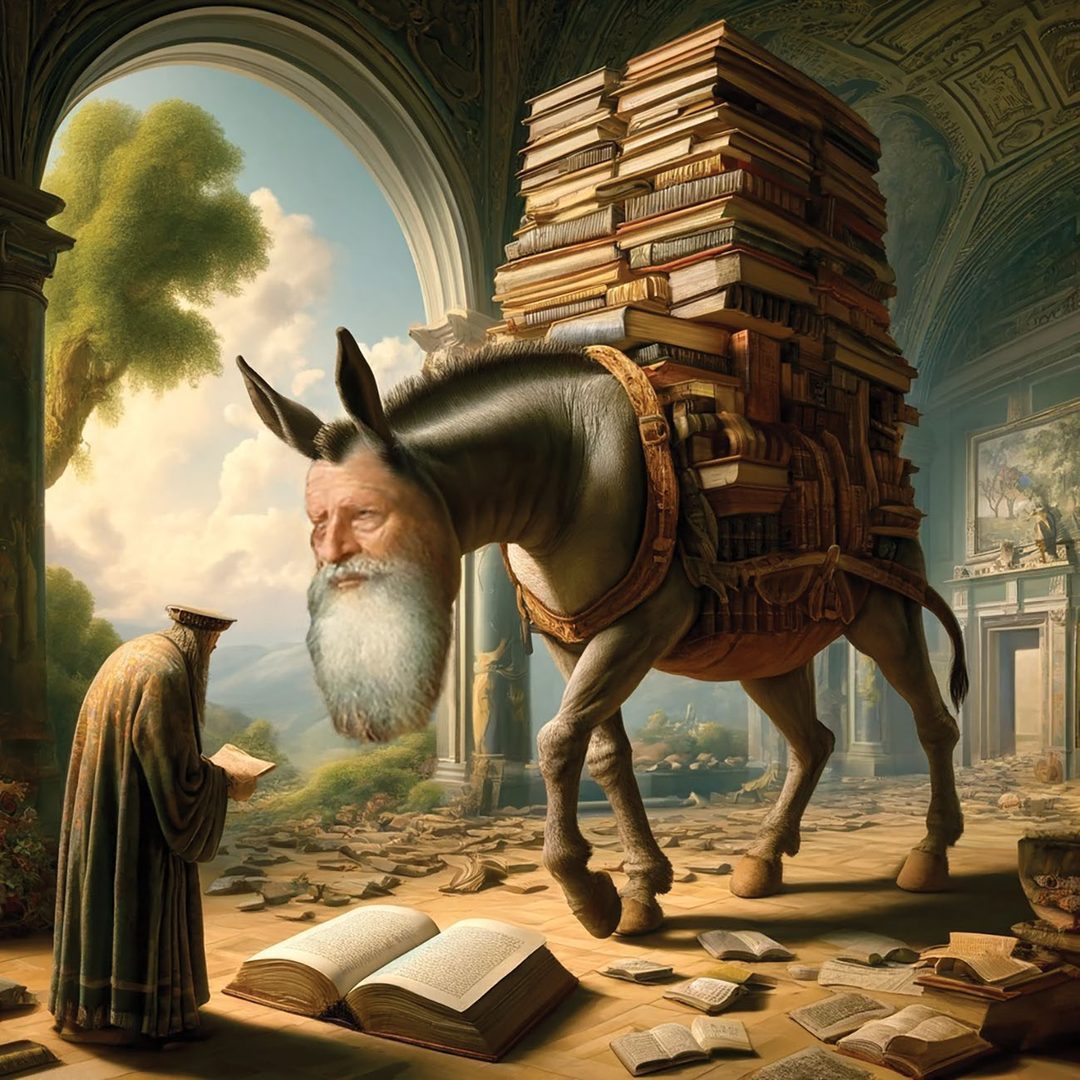
Here I stand, a learned ass, proud of my useless load, absorbed in material life, my spirit overshadowed. Now in my old age, the power to enjoy curtailed, nothing at all pleases me, my plans have all failed.

Life has become agony, my heart is in pain, my learning turned out to be devoid of real gain. It has become a pointed spear piercing my inner sense, with the unbearable burning pain of abject ignorance.
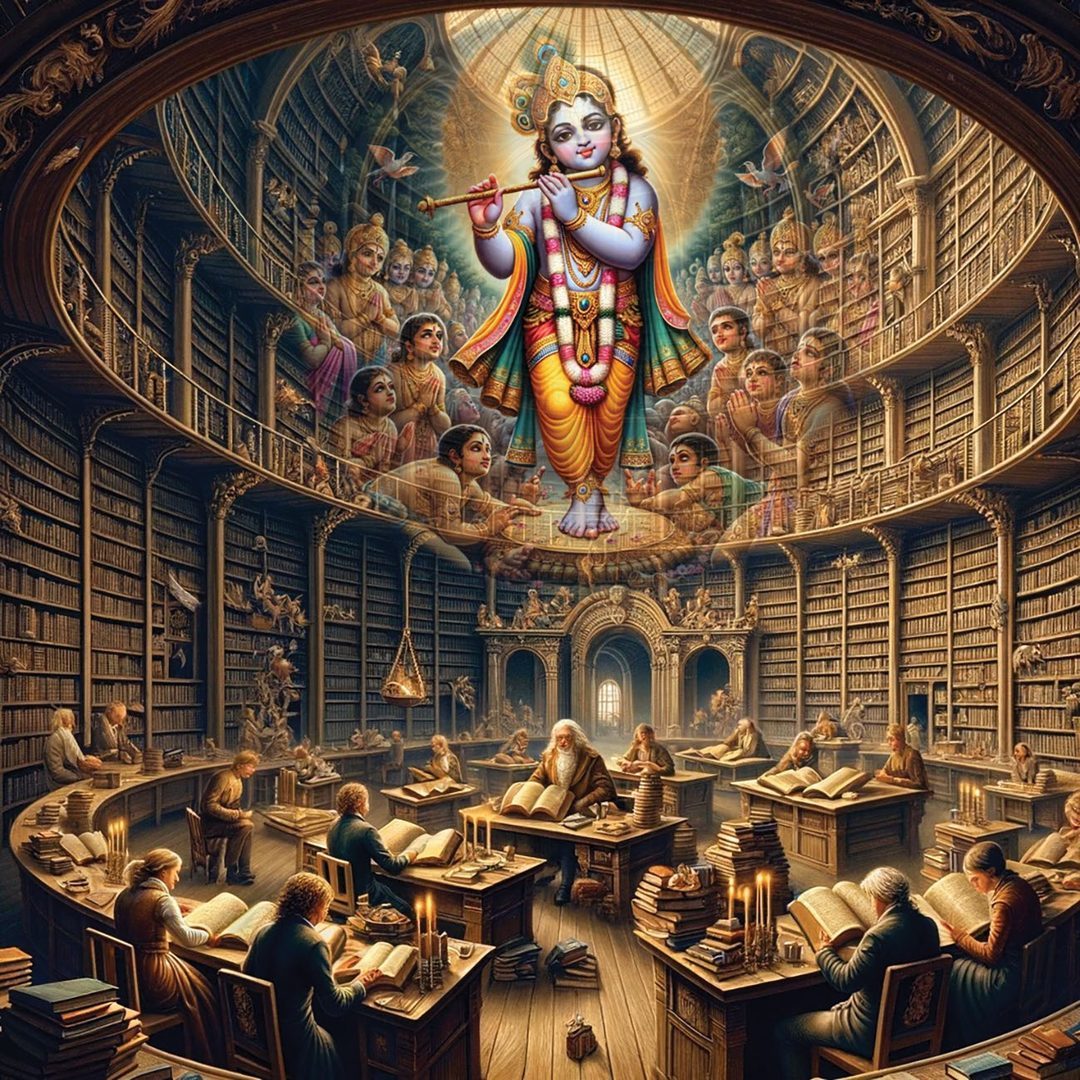
O Lord, in this dreary world there is no other treasure than Your precious lotus feet, their value beyond measure. Bhaktivinoda abandons now all dull mundane knowledge and makes Your feet his life’s essence, transcending all bondage.
Commentary
Vidyāra-vilāse (lit. the joy of learning) is the second song in Bhaktivinoda Ṭhākura’s songbook Śaranāgati, illustrating the First Principle of Surrender: Dainya (Humility). Although we have no recording of Śrīla Prabhupāda singing this song, he refers to it many times in his lectures and conversations. In particular, he quotes the third stanza where Bhaktivinoda Ṭhākura says: jaḍa-vidyā yata, māyāra vaibhava, tomāra bhajane bādhā / moha janamiyā, anitya saṁsāre, jīvake karaye gādhā. “All the socalled knowledge of this world is born of the flickering potency of Your illusory energy (māyā). It is an impediment to the execution of devotional service to You. Indulgence in mundane knowledge verily makes an ass of the eternal soul by encouraging its infatuation with this temporary world.”
Clarifying the Role of Knowledge
In this regard, to prevent any misunderstanding, it should be noted that Vaiṣṇava philosophy does not categorically reject non-spiritual knowledge. Ordinary knowledge can undoubtedly be helpful in navigating difficult situations in day-to-day life, but devotees caution against relying on such knowledge to solve the real problems of life. Life in the material world means struggle for existence, and many branches of knowledge and scientific research are dedicated to finding solutions to the countless suffering conditions human beings undergo. The ancient Vedic scriptures also contain branches of nonspiritual knowledge, among them the popular Āyurveda (medical science), Sthāpatyaveda (architecture and engineering), Jyotiṣa (astronomy and astrology), and Gandharvaveda (the study of music).
The Limitations of Material Knowledge
Bhaktivinoda Ṭhākura begins this song by telling us that he spent considerable time on educational pursuits hoping that the acquisition of material knowledge would yield inner fulfillment. However, as he points out, these hopes turned out to be false. The reason is that we, as spiritual beings, yearn for spiritual fulfillment, and no amount of material knowledge can quench that thirst. A good analogy is a fish out of water. Although offered all kinds of comfort on land, a fish out of its natural habitat remains unhappy until it is back in the water. To illustrate the real nature of mundane knowledge, Bhaktivinoda Ṭhākura uses the example of an ass carrying a huge load. The amount of knowledge that humanity has accumulated over the centuries is staggering, but what is its real value? Scientific advancements, such as electrical engineering, quantum mechanics, molecular biology and gene modification, computer science and the Internet, and more recently the human genome project and artificial intelligence, have dramatically transformed our understanding of the world and our way of life, but the fundamental problems of life—birth, death, old age and disease—remain unsolved. We may discover the intricate workings of the material elements and harness their power to exploit nature, but the wheel of time, the great destroyer, keeps turning relentlessly. Real knowledge teaches us how to escape the crushing force of time.
The Power of Old Age
In the third stanza, Bhaktivinoda Ṭhākura points out: “Indulgence in mundane knowledge verily makes an ass of the eternal soul by encouraging its infatuation with the temporary world.” As in other songs, he specifically mentions old age as a factor that changes one’s worldview: bārdhakye ekhana, śaktira abhāve, kichu nāhi lāge bhāla. “Now in my old age, for want of the power to enjoy, I find that nothing at all pleases me.” The truth of this statement is evident in the world around us, especially among celebrities in the entertainment industry. Throughout their lives, they revel in fame and admiration, enjoying immense wealth that enables them to live in some of the world’s most beautiful places and indulge in luxuries beyond the reach of the ordinary person. Yet, as time marches on, youthful attractiveness fades, and the physical and mental faculties that once allowed for enjoyment wane. Disappointment and bitterness inevitably grow, day by day. In the end, perhaps all that remains is a star on the Hollywood Walk of Fame – glittering but cold.
The Only Treasure Worth Seeking
Bhaktivinoda Ṭhākura therefore concludes that the only treasure worth seeking in this world is the lotus feet of the Lord. Sanat-kumāra advised King Pṛthu (SB 4.22.40): The ocean of nescience is very difficult to cross because it is infested with many dangerous sharks. Although those who are nondevotees undergo severe austerities and penances to cross that ocean, we recommend that you simply take shelter of the lotus feet of the Lord, which are like boats for crossing the ocean. Although the ocean is difficult to cross, by taking shelter of His lotus feet you will overcome all dangers. In the beginning of the Tenth Canto of Śrīmad-Bhāgavatam (10.1.5), Parīkṣit Mahārāja says: Taking the boat of Kṛṣṇa's lotus feet, my grandfather Arjuna and others crossed the ocean of the Battlefield of Kurukṣetra, in which such commanders as Bhīṣmadeva resembled great fish that could very easily have swallowed them. By the mercy of Lord Kṛṣṇa, my grandfathers crossed this ocean, which was very difficult to cross, as easily as one steps over the hoofprint of a calf.
Latter (SB 10.14.58), Brahmā prays to the Lord as follows: One who has taken shelter of the lotus feet of the Lord, which are accepted as the most suitable boat for crossing the ocean of nescience, can achieve liberation as easily as one leaps over the holes made by the hooves of a calf. Such persons are meant to reside in the abode of the Lord, and they have nothing to do with a place where there is danger at every step. Commenting on this verse, Śrīla Prabhupāda says: The Lord's lotus feet are an indestructible boat, and if one takes shelter of that boat he can easily cross the ocean of nescience. Consequently, there are no dangers for a devotee although he lives within this material world, which is full of dangers at every step. One should seek the shelter of the allpowerful instead of trying to be protected by one's own concocted ideas.
The Original Song
Vidyāra vilāse
Bhaktivinoda Ṭhākura
vidyāra vilāse, kāṭāinu kāla, parama sāhase āmi tomāra caraṇa, nā bhajinu kabhu, ekhana śaraṇa tumi vidyāra vilāse—in the joys of mundane learning; kāṭāinu kāla—I passed the time; parama sahase—with great confidence; āmi—I; tomāra caraṇa—Your lotus feet, O Lord; nā bhajinu—I did not worship; kabhu—ever; ekhana—but now; śaraṇa tumi— You are my only shelter.
With great enthusiasm I spent my time in the joys of mundane learning, and never worshiped Your lotus feet, O Lord. Now You are my only shelter. parite parite, bharasā bārila, jñāne gati habe māni' se āśā biphala, se jñāna durbala, se jñāna ajñāna jāni parite parite—reading on and on; bharasā bārila—my hope grew; jñāne—material knowledge; gati—life's true goal; habe—will be attained; māni'—I considered; se āśā—that hope; biphala—was fruitless; se jñāna—that knowledge; durbala—proved feeble; se jñāna—that knowledge; ajñāna—ignorance; jāni—I understand. Reading on and on, my hopes grew and grew, for I considered the acquisition of material knowledge to be life's true goal. But this hope was in vain, for all my knowledge proved feeble. Now I understand that all such erudition is actually pure ignorance. jaḍa-vidyā yata, māyāra vaibhava, tomāra bhajane bādhā moha janamiyā, anitya saṁsāre, jīvake karaye gādhā jaḍa-vidyā—mundane knowledge; yata—all; māyāra vaibhava—is the power of the illusory energy; tomāra bhajane—to Your service; bādhā—an impediment; moha janamiyā—bringing about infatuation; anitya saṁsāre—for this temporary world; jīvake—to the eternal soul; karaye gādhā—it turns into an ass. All the so-called knowledge of this world is born of the flickering potency of Your illusory energy (māyā). It is an impediment to the execution of devotional service to You. Indulgence in mundane knowledge verily makes an ass of the eternal soul by encouraging his infatuation with this temporary world. sei gādhā ha’ ye, saṁsārera bojhā, vahinu aneka kāla bārdhakye ekhana, śaktira abhāve, kichu nāhi lāge bhāla sei gādhā ha' ye—here is one such ass; saṁsārera bojhā—the burden of material existence; vahinu—I have carried on my back; aneka kāla—for a long time;
bārdhakye—in my old age; ekhano—now; śaktira abhāve—for want of the power to enjoy; kichu nāhi—absolutely nothing; lāge bhāla—pleases me. Here is one person who has been turned into such an ass, who for so long has carried on his back the useless burden of material existence. Now in my old age, for want of the power to enjoy, I find that nothing at all pleases me.
jīvana jātanā, hoila ekhana, se vidyā avidyā bhela avidyāra jvālā, ghaṭila viṣama, se vidyā hoila śela jīvana—life; jātanā—agony; hoilo—has become; ekhano—now; se vidyā—that knowledge; avidyā bhelo—has become ignorance; avidyāra jvālā—the burning pain of ignorance; ghaṭilo viṣama—has become intolerable; se vidyā—that knowledge; hoila śela—has become a pointed spear. Life has now become agony, for my so-called erudite knowledge has proven itself to be worthless ignorance. Material knowledge has now become a pointed shaft and has pierced my heart with the intolerable, burning pain of ignorance. tomāra caraṇa, vinā kichu dhana, saṁsāre nā āche āra bhakativinoda, jaḍa-vidyā chāri,' tuvā pada kare sāra tomāra caraṇa—Your lotus feet; vinā—besides; kichu dhana—any treasure; saṁsāre—in this world; nā āche āra—there is none else; bhakativinoda— Bhaktivinoda; jaḍa-vidyā chāri'—giving up all mundane knowledge; tuvā pada—Your lotus feet; kare sāra—makes the sum and substance of his life. O Lord, there is no treasure worth seeking in this world other than Your lotus feet. Bhaktivinoda abandons all his mundane knowledge and makes Your lotus feet the sum and substance of his life.