 Spiritual
(An adaptation of Bhaktivinoda Ṭhākura’s Ātma-nivedana)
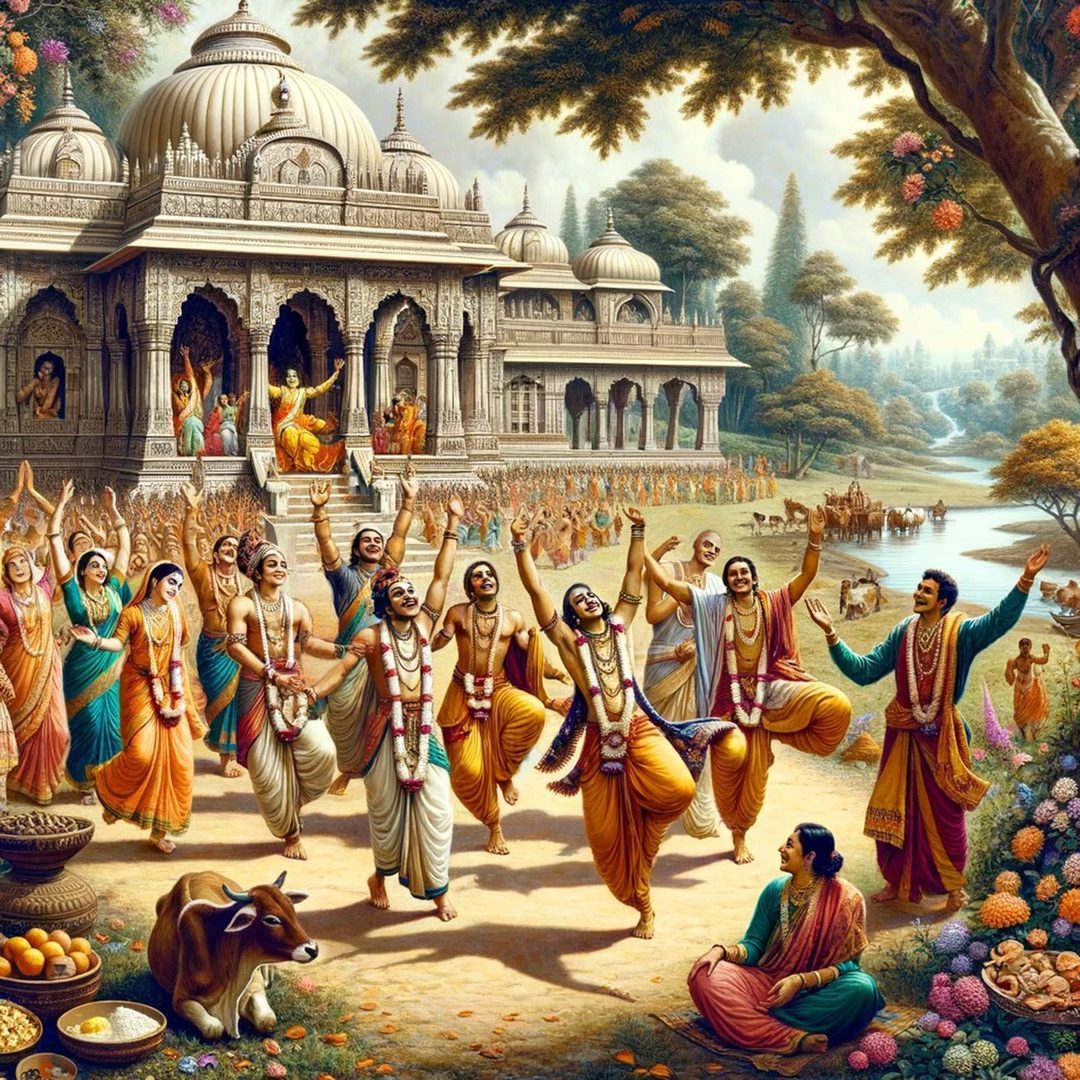
By surrendering myself to Your lotus feet,
O Lord, I have become supremely happy.
Misery has vanished, worries are no more,
all I see is joy and wonder everywhere.
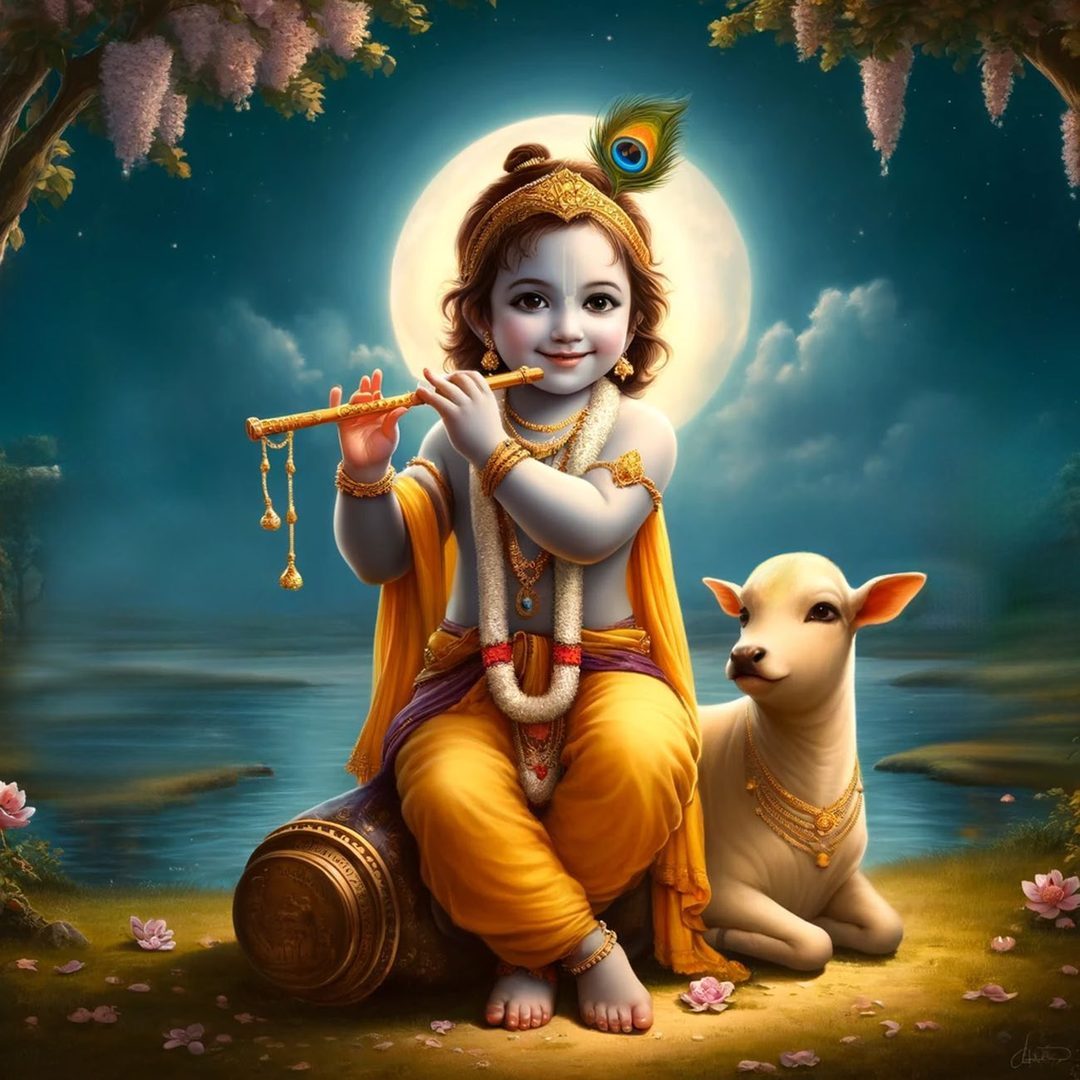
From Your lotus feet, immortal nectar flows, protecting Your devotee from both fear and sorrow. Under their shelter, I have found lasting peace, no more anxiety in worldly existence.
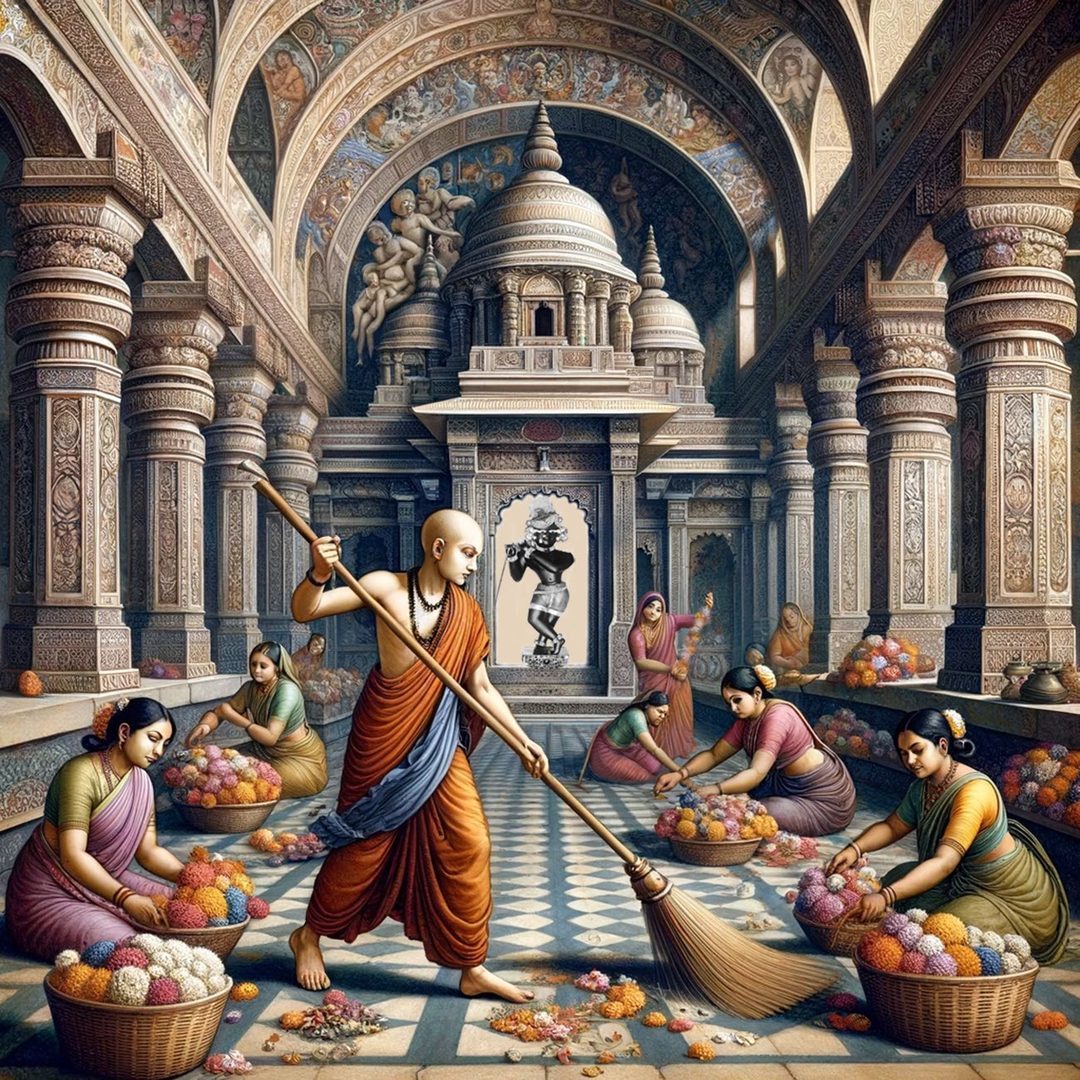
Service in Your temple I will render without motive, never seeking any fruits in return. Rather, I shall strive for whatever pleases You, with full attachment to Your lotus feet.

Troubles in Your service are a source of happiness, for both joy and sorrow are actually blessings. Bestowing great fortune and spiritual opulence, they destroy the misery of stubborn ignorance.
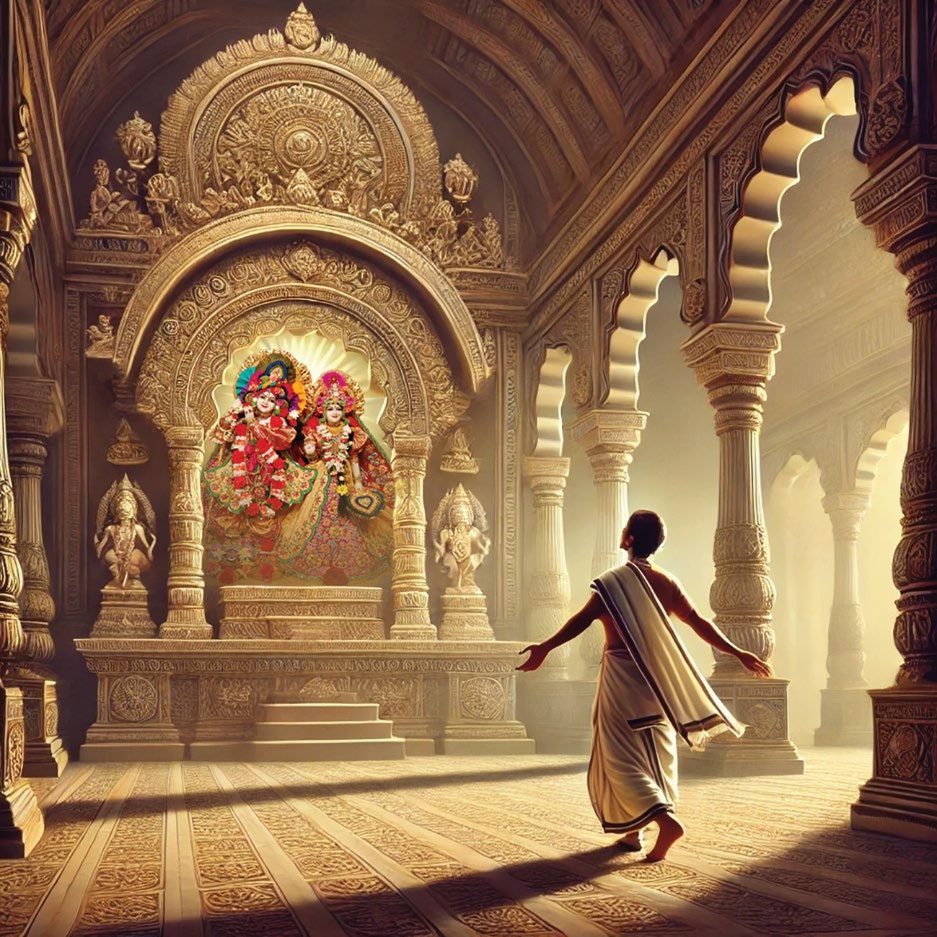
My sad past history is all but forgotten, my mind is now enlivened by Your blissful service. I am rightly Yours and You are truly mine, no need for any other treasure divine.
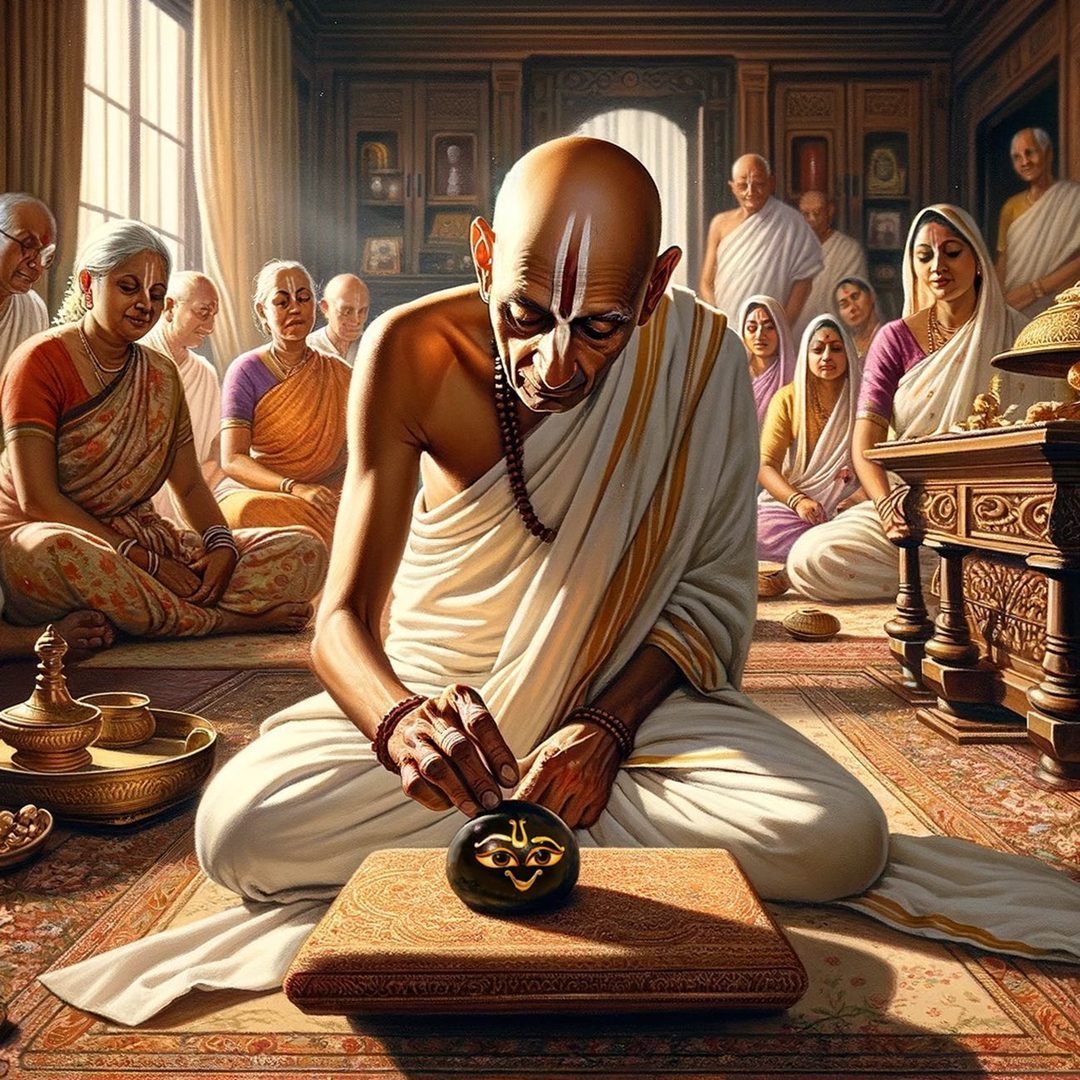
Bhaktivinoda dives deeply into the ocean of pure happiness by engaging in Your service with devotion and gratefulness. Your wishes are his life and soul, no other desire in his heart, while living in Your house and serving You. You are his only resort.
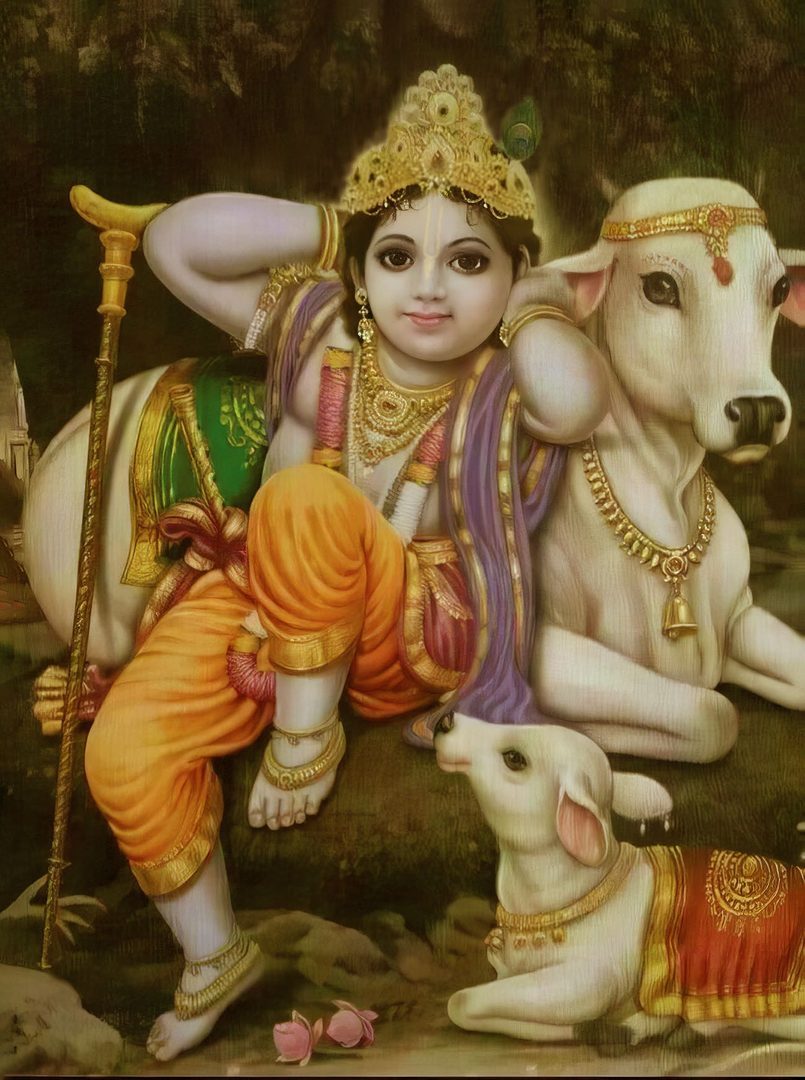
By surrendering myself to Your lotus feet,
O Lord, I have become supremely happy.
Misery has vanished, worries are no more,
all I see is joy and wonder everywhere.
Commentary
This song is the last of eight in Bhaktivinoda Ṭhākura’s songbook Śaraṇāgati in the section titled Second Principle of Surrender: Ātmanivedana (Dedication of the Self). It concludes the song cycle Introspection by opening a new chapter. The heavy-hearted, somber mood expressed in the previous introspective songs gives way to a light-hearted, cheerful mood characteristic of a soul who has fully realized their identity as an eternal servant of Kṛṣṇa and experiences the full potential of bliss inherent in devotional service.
Service Beyond Material Servitude
Devotional service to the Lord is vastly different from ordinary service in the material world. Generally, no one likes to be a servant—a position often associated with inferiority and dependence—even if the pay is attractive. Most would prefer a position of superiority, with the power to exercise control and give orders. However, in the realm of bhakti, this is not the case. As Śrīla Prabhupāda explains in the Bhagavad-gītā (9.29): “Devotional service to the Lord is not an activity of this material world; it is part of the spiritual world, where eternity, bliss and knowledge predominate.” Bhaktivinoda Ṭhākura expresses this mood precisely, saying that by engaging in service to the Supreme Lord he has become supremely happy (parama sukhī). When Kṛṣṇa revealed the most confidential knowledge to Arjuna, He mentioned that one of the characteristics of devotional service is that it is joyfully performed (Bg. 9.2). Kṛṣṇa is the embodiment of supreme joy, and by coming in contact with Him—even as a menial servant—one also experiences supreme joy. Misery finds no place in a mind enlivened by devotional service, and Bhaktivinoda Ṭhākura notes that he feels free from all anxiety, seeing only joy everywhere.
Scriptural Affirmations of Devotional Bliss
Skeptics may think these are the words of a dreamer, but Vedic literature contains many descriptions that corroborate Bhaktivinoda Ṭhākura’s statements. For instance, Dhruva Mahārāja prays: My Lord, the transcendental bliss derived from meditating upon Your lotus feet or hearing about Your glories from pure devotees is so unlimited that it is far beyond the stage of brahmānanda, wherein one thinks himself merged in the impersonal Brahman as one with the Supreme. Since brahmānanda is also defeated by the transcendental bliss derived from devotional service, then what to speak of the temporary blissfulness of elevating oneself to the heavenly planets, which is ended by the separating sword of time? Although one may be elevated to the heavenly planets, he falls down in due course of time.
The Unique Nectar of Kṛṣṇa’s Lotus Feet
In the second stanza, Bhaktivinoda Ṭhākura describes the unique quality of Kṛṣṇa’s lotus feet as a source of exquisite nectar. Śrīla Prabhupāda writes in the purport to SB 1.11.26: The essence of everything is the Supreme Lord: He is called the sāram. And those who sing and talk about Him are called the sāraṅgas, or the pure devotees. The pure devotees are always hankering after the lotus feet of the Lord. The lotus has a kind of honey that is transcendentally relished by the devotees. They are like the bees who are always after the honey. Śrīla Rūpa Gosvāmī, the great devotee ācārya of the GauḍīyaVaiṣṇava-sampradāya, has sung a song about this lotus honey, comparing himself to the bee: “O my Lord Kṛṣṇa, I beg to offer my prayers unto You. My mind is like a bee, and it is after some honey. Kindly, therefore, give my bee-mind a place at Your lotus feet, which are the resources for all transcendental honey." Kṛṣṇa’s lotus feet are not only the source of transcendental honey but also offer protection from fear and sorrow, as perfectly expressed in Govinda dāsa’s song Bhajahū re mana (Free From Fear). Taking shelter under these lotus feet is a common theme in the prayers of devotees throughout history. Bhaktivinoda Ṭhākura has expressed his desire to take shelter in many of the songs included in this collection, and now he describes the result he is experiencing when actually taking shelter: lasting peace and no more anxiety in worldly existence. His testimony should encourage devotees who are still in the process of taking shelter and are still waiting for the promised results to manifest. The Lord reciprocates according to the degree of surrender, and as long as our surrender is partial, we can hardly expect the full result in the form of freedom from all anxiety, and lasting peace. This is illustrated by the example of Draupadī, who received Kṛṣṇa’s full protection only after she completely surrendered, throwing her arms in the air and putting herself at His mercy to supply an endless sari and thus prevent her from being stripped naked by the evil Kurus.
Unalloyed Devotional Service
The third stanza explores unmotivated devotional service, as explained by Śrī Caitanya Mahāprabhu to Rūpa Gosvāmī (Cc. Madhya 19.167): anyābhilāṣitā-śūnyaṁ jñāna-karmādy-anāvṛtam ānukūlyena kṛṣṇānu-śīlanaṁ bhaktir uttamā When first-class devotional service develops, one must be devoid of all material desires, knowledge obtained by monistic
philosophy, and fruitive action. The devotee must constantly serve Kṛṣṇa favorably, as Kṛṣṇa desires. Prabhupāda elaborates in the purport: A pure devotee has no plans other than those for the Lord’s service. He is not interested in attaining success in mundane activities. He simply wants success in the progress of devotional service. [...] He is interested only in satisfying Kṛṣṇa. If one lives only for the satisfaction of Kṛṣṇa, it does not matter whether he belongs to this order of life or that order of life. One’s only business should be to satisfy Kṛṣṇa.
Seeing Calamities as Blessings
In the next stanza, Bhaktivinoda Ṭhākura addresses a topic that often perplexes neophyte devotees: seeing calamities and adversities as blessings in disguise. A devotee who has surrendered to the Lord’s lotus feet remains confident in His protection under all circumstances, even in seemingly adverse situations. Bali Māhārāja is again a perfect example, praised by Vāmanadeva for his unwavering dependence on the Lord’s mercy (SB 8.22.28-30): Bali Mahārāja has become the most famous among the demons and nonbelievers, for in spite of being bereft of all material opulences, he is fixed in his devotional service. Although bereft of his riches, fallen from his original position, defeated and arrested by his enemies, rebuked and deserted by his relatives and friends, although suffering the pain of being bound and although rebuked and cursed by his spiritual master, Bali Mahārāja, being fixed in his vow, did not give up his truthfulness. It was certainly with pretension that I spoke about religious principles, but he did not give up religious principles, for he is true to his word.”
Prabhupāda’s purport elaborates on these verses: Bali Mahārāja passed the severe test put before him by the Supreme Personality of Godhead. This is further proof of the Lord's mercy toward His devotee. The Supreme Personality of Godhead sometimes puts a devotee to severe tests that are almost unbearable. One could hardly even live under the conditions forced upon Bali Mahārāja. That Bali Mahārāja endured all these severe tests and austerities is the mercy of the Supreme Lord. The Lord certainly appreciates the devotee's forbearance, and it is recorded for the future glorification of the devotee. This was not an ordinary test. As described in this verse, hardly anyone could survive such a test, but for the future glorification of Bali Mahārāja, one of the mahājanas, the Supreme Personality of Godhead not only tested him but also gave him the strength to tolerate such adversity. The Lord is so kind to His devotee that when severely testing him the Lord gives him the necessary strength to be tolerant and continue to remain a glorious devotee. The conclusion is that true devotees do not feel resentment for being put into difficulties or experiencing hardship. Rather, they see any bitter fruits they may taste as a natural result of their own actions— the harvest of what they have sown in the past. Thus, they will exercise tolerance and, at the same time, patiently await the mercy of the Lord.
This attitude is expressed in a famous verse found in the ŚrīmadBhāgavatam (10.14.8), where Brahmā prays: My dear Lord, one who earnestly waits for You to bestow Your causeless mercy upon him, all the while patiently suffering the reactions of his past misdeeds and offering You respectful obeisances with his heart, words and body, is surely eligible for liberation, for it has become his rightful claim.
Another example is Queen Kuntī, who even prayed for calamities to happen again and again, considering them blessings that allowed her to see the Lord again and again. In other words, the absence of difficulties may lull us into a false sense of comfort and security, which generally results in forgetfulness of the Lord, whereas troubling circumstances push us to remember the Lord as our only protector and maintainer.
Embracing Both Joy and Sorrow
As Bhaktivinoda Ṭhākura expresses in this song, a devotee can appreciate both joy and sorrow as equally beneficial. In the next stanza, he declares that whatever misfortune may have happened in the past is now history and pales in the presence of the elated feelings he is experiencing in the Lord’s service. In this collection, songs like My Tale of Misery and Shadow Theater demonstrate the realization of one’s miserable condition in material existence. However, engaging in devotional service purifies the heart, frees it from the influence of rajas and tamas, and enlivens the mind.
The Intimacy of Mutual Possessiveness
In the perfected stage, the loving relationship between the Lord and His devotee becomes very intimate, culminating in the conception of mutual possessiveness. Śrīla Prabhupāda explains in the purport to SB 6.9.45: A devotee who has sacrificed everything for the service of Kṛṣṇa and whose only source of relief is the Lord is known as akiñcana. As expressed in Queen Kuntī’s prayers, the Lord is akiñcana-vitta, the property of such a devotee. Bhaktivinoda Ṭhākura sums this up with the simple statement: āmi to' tomāra, tumi to' āmāra—“I am Yours, and You are mine.” This confidential exchange of pure love is so enjoyable that Bhaktivinoda compares it to diving into an ocean of bliss, producing endless waves of ecstasy.
Conclusion
Thus concludes this cycle of songs which often express sorrow and despair but ultimately lead us to the shore of the ever-increasing ocean of the boundless bliss of transcendence.
The Original Song
Ātma-nivedana
Bhaktivinoda Ṭhākura
ātma-nivedana, tuyā pade kari', hoinu parama sukhī duḥkha dūre gela, cintā nā rahila, caudike ānanda dekhi ātma-nivedana—surrender; tuyā—your; pade—unto the lotus feet; kari'—offering; hoinu—became; parama—supremely; sukhī—happy; duḥkha—unhappiness; dūre— far away; gela—has gone; cintā—anxiety; nā—not; rahila—remained; caudike—in all directions; ānanda—pleasures derived from them; dekhi—seeing. I have become supremely happy by surrendering myself unto Your lotus feet. Sorrow has gone far away, and there are no more cares. All I see is joy in the four directions. aśoka-abhaya, amṛta-ādhāra, tomāra caraṇa-dvaya tāhāte ekhana, viśrāma labhiyā chārinu bhavera bhaya aśoka—free from grief; abhaya—free from fear; amṛta-ādhāra—the nectar from His lips; tomāra—Your; caraṇa—lotus feet; dvaya—both; tāhāte—by that; ekhana—
now; viśrāma—rest; labhiyā—having attained; chārinu—I have given up; bhavera— of wordly existence; bhaya—fear. Your two lotus feet are reservoirs of immortal nectar that grant freedom from both sorrow and fear. Resting in them I have found peace, and have completely given up the fear of worldly existence. tomāra saṁsāre, kariba sevana, nāhiba phalera bhāgī tava sukha jāhe, kariba yatana, ha' ye pade anurāgī tomāra—your; saṁsāre—in the cycle of birth and death; kariba—I shall do; sevana— service; nāhiba—I shall never be; phalera—fruit; bhāgī—enjoyer; tava—your; sukha—happiness; jāhe—of which; kariba-yatana—I shall diligently attend; ha’ ye— having become; pade—Your feet; anurāgī—attached to. I shall render service in Your household and never endeavor to enjoy the fruits of that service. Rather, I shall strive for whatever pleases You, being fully enamored by Your lotus feet. tomāra sevāya, duḥkha haya yata, se-o to' parama sukha sevā-sukha-duḥkha, parama sampada, nāśaye avidyā-duḥkha tomāra—Your; sevāya—by service; duḥkha—unhappiness; haya—are; yata—having arisen; se-o—that; to'—indeed; parama—supreme; sukha—happiness; sevā— service; sukha—happiness; duḥkha—unhappiness; parama—supreme sampada— opulences; nāśaye—they destroy; avidyā—nescience; duḥkha—misery. All the troubles encountered in Your service shall be the cause of great happiness, for in Your devotional service joy and sorrow are equally great riches. Both destroy the misery of ignorance. pūrva itihāsa, bhulinu sakala, sevā-sukha pe' ye mane āmi to' tomāra, tumi to' āmāra, ki kāja apara dhane pūrva—former; itihāsa—history; bhulinu—I have forgotten; sakala—all; sevā— service; sukha—happiness; pe' ye—having attained; mane—within the mind; āmi—
I; to'—indeed; tomāra—Your; tumi—You; to'—indeed; āmāra—My; ki—what; kāja—what is the need for; apara—another; dhane—treasure. I have completely forgotten all of my past history by feeling in my mind the great joy of Your service. I am indeed Yours, and You are truly mine. What need is there of any other treasure? bhakativinoda, ānande ḍubiyā, tomāra sevāra tare saba ceṣṭā kare, tava icchā-mata, thākiyā tomāra ghare bhakativinoda—Bhaktivinoda; ānande—in happiness; ḍubiyā—sinking; tomāra— your; sevāra—to serve him; tare—him; saba—all; ceṣṭā—endeavor; kare—makes; tava—Your; icchā—wishes; mato—according to; thākiyā—having stayed; tomāra— Your; ghare—at the home. Bhaktivinoda sinks deeply into the ocean of pure bliss by engaging in Your service. He devotes all his efforts according to Your wishes while living in Your house.