 Spiritual
(An adaptation of Narottama dāsa Ṭhākura’s Hari hari! biphale)
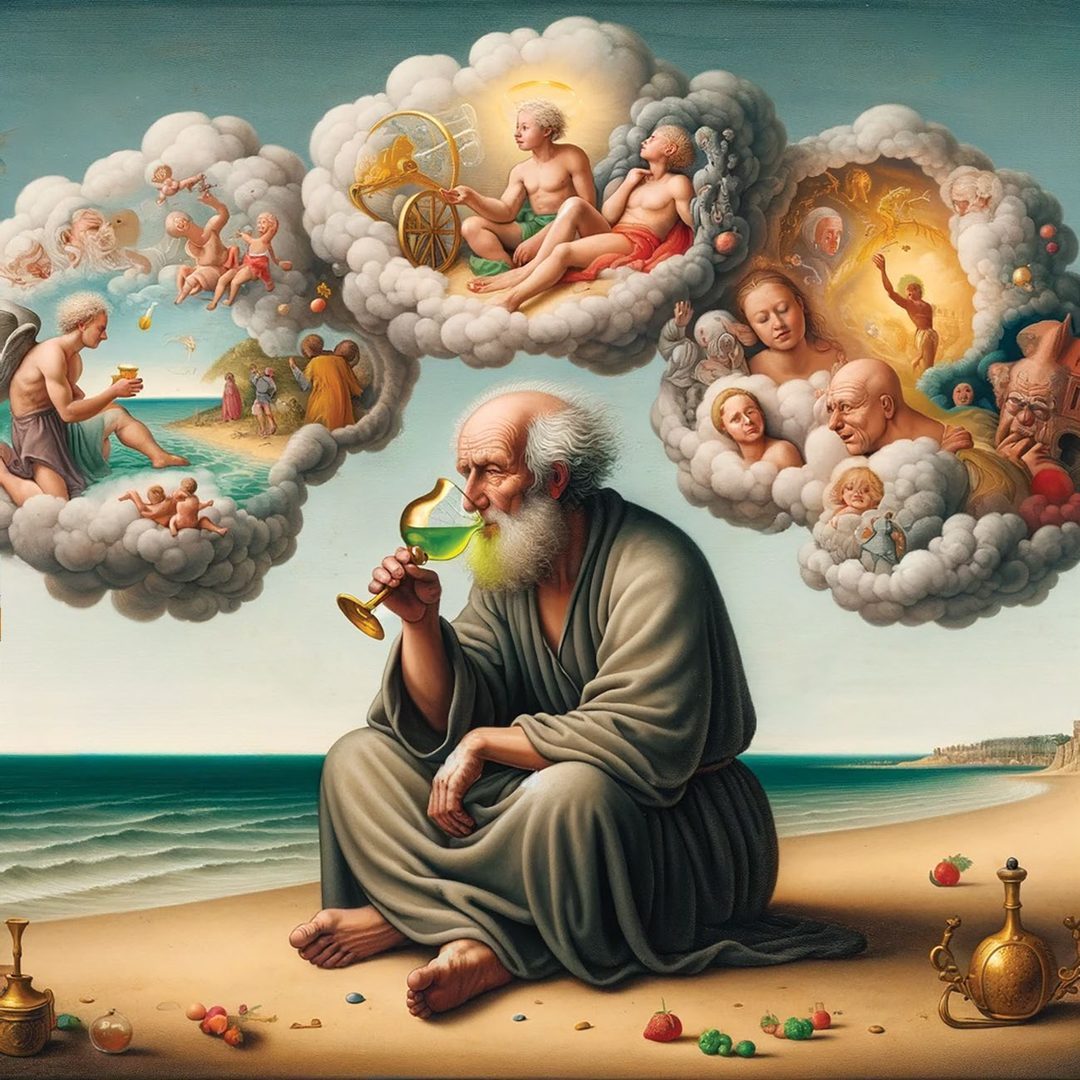
1a Hari! Hari! I’ve wasted my human birth, missed a rare chance, blinded by worldly mirth. Hari! Hari! I’ve squandered a precious life, quibbling over petty trifles, always immersed in strife.
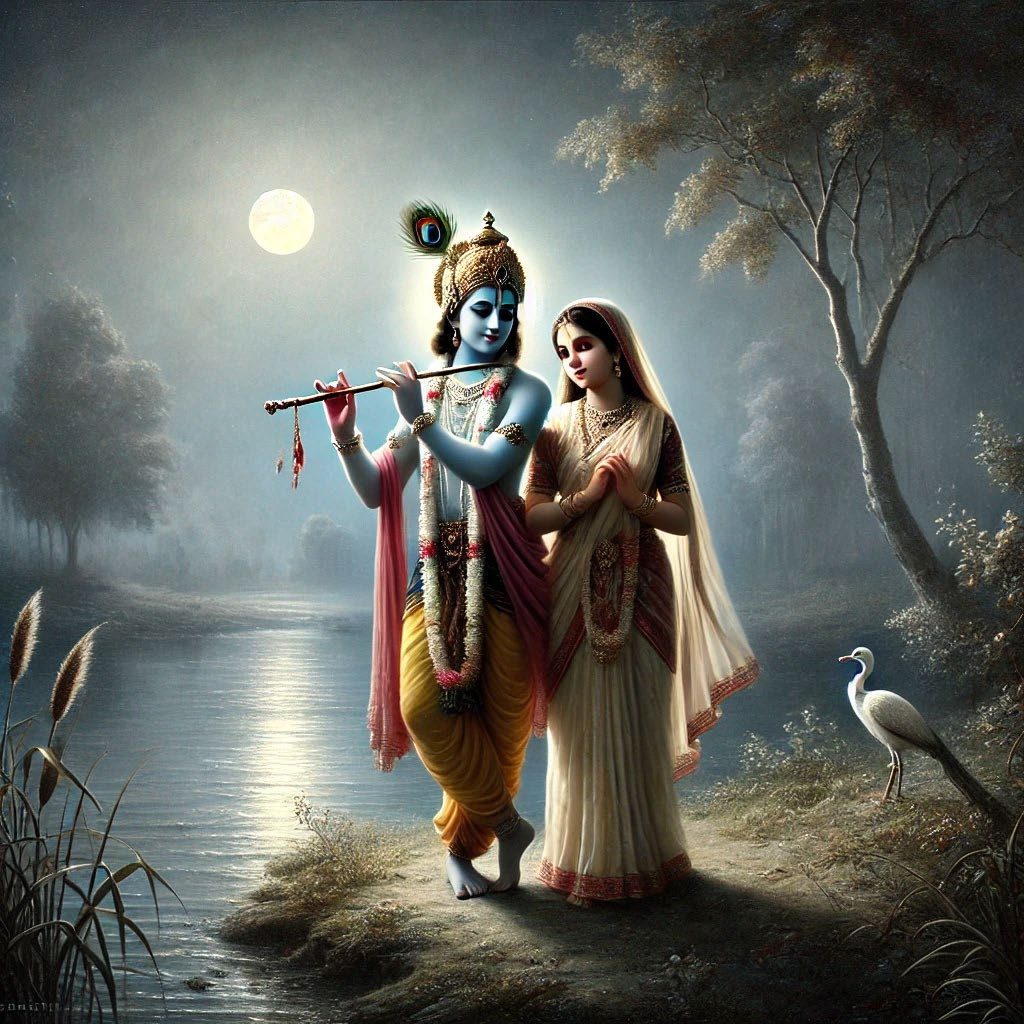
1b To worship Rādhā and Kṛṣṇa never came to my feeble mind, thus knowingly drinking poison, only misery did I find.
Hari! Hari! I’ve wasted my human birth, I squandered a precious life.
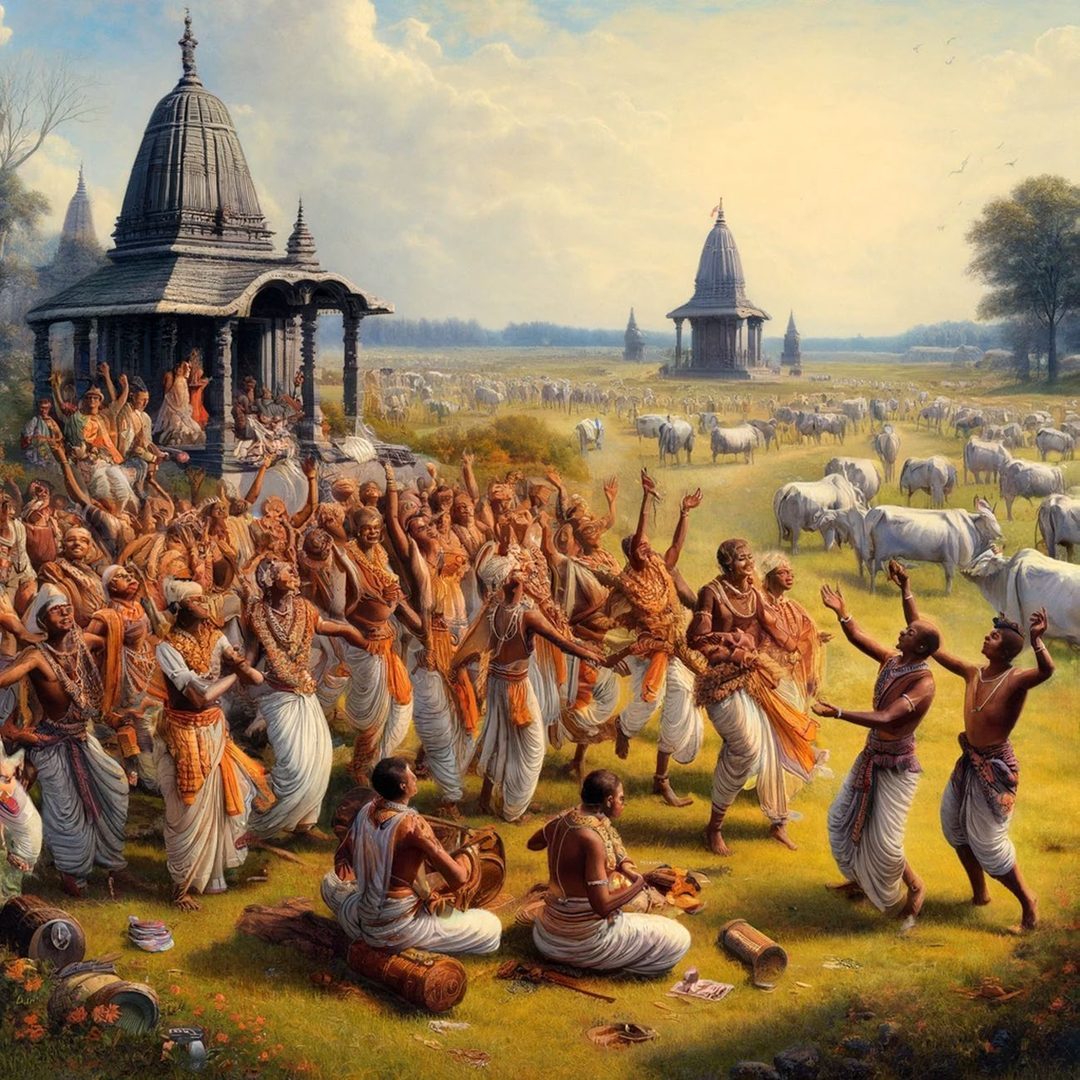
Divine love’s treasure has descended from Goloka above, as the chanting of Hari's names imbued with devotional love. Yet why does my heart feel no attraction, when devotees chant in blissful absorption?
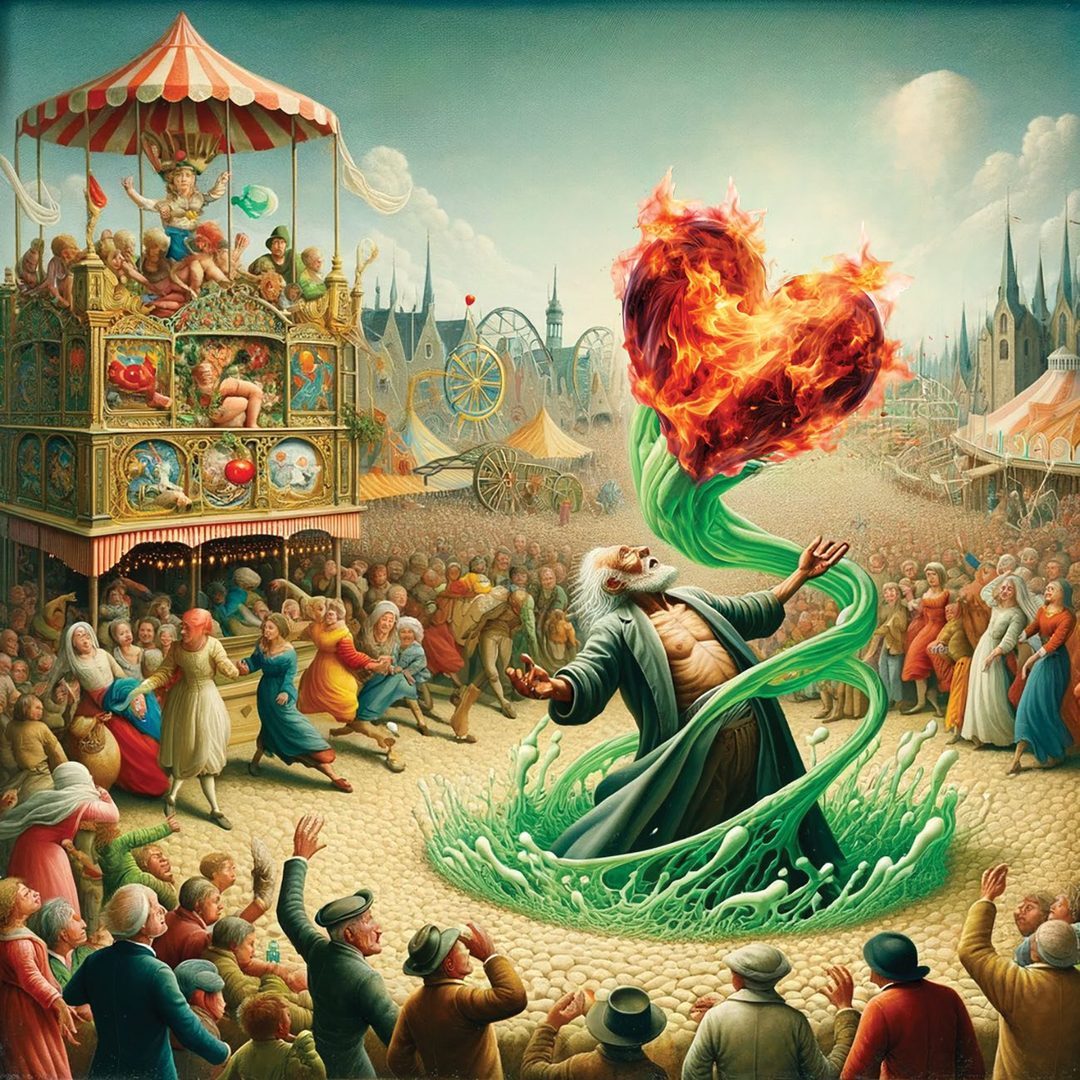
Day and night, the poison of worldliness
burns my heart, causing endless distress.
Still, I do not embrace the means to find
the nectar to soothe my troubled mind.
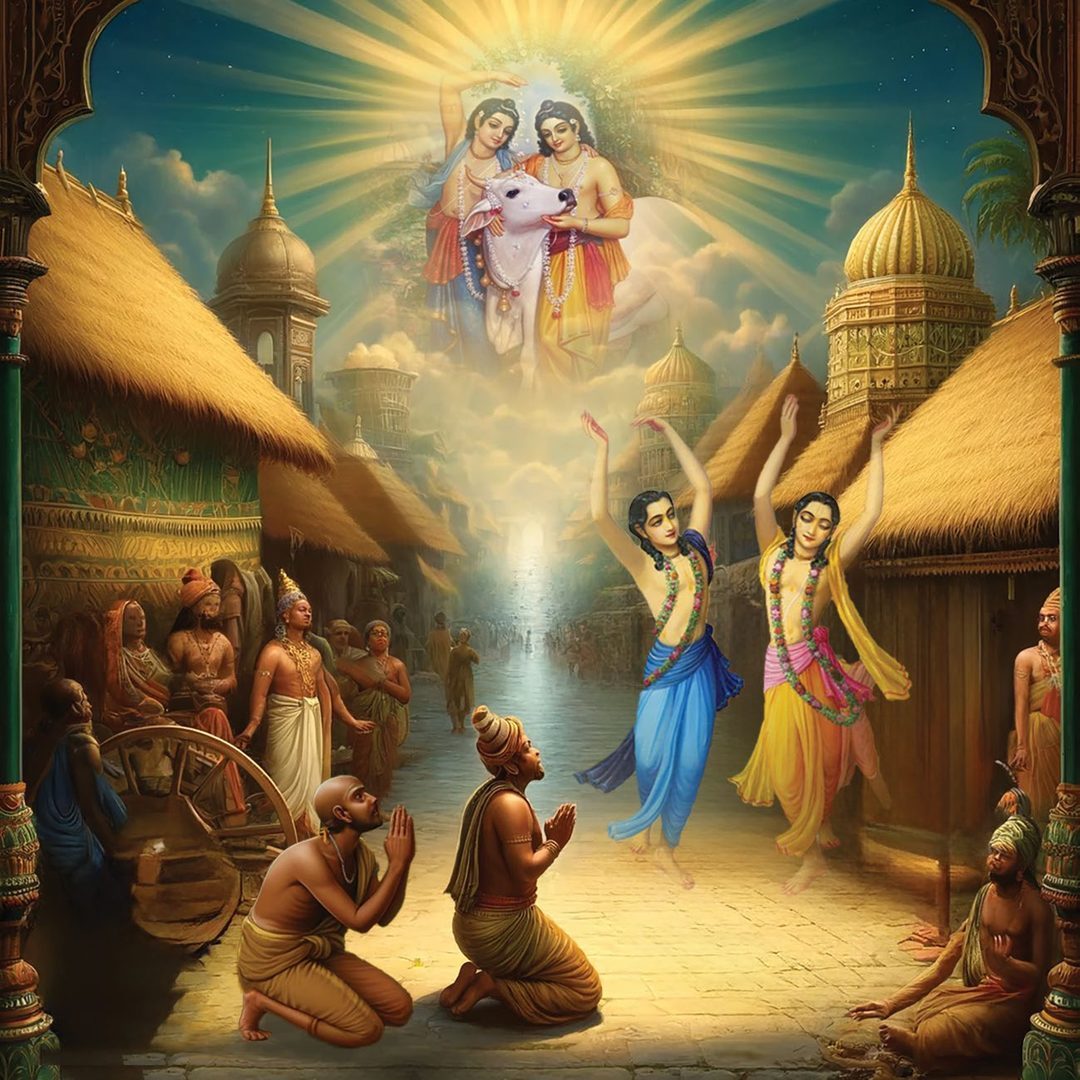
Hari! Hari! I’ve wasted my human birth, missed a rare chance, blinded by worldly mirth. Hari! Hari! I’ve squandered a precious life, O Lord, let my love for You in my heart revive. Śrī Kṛṣṇa and Balarāma, the king of Vraja’s pride, became the son of Śacī, with Nitāi by His side. The holy name saved all souls, even the wretched and low, Jagāi and Mādhāi are witnesses, being relieved of all sorrow.
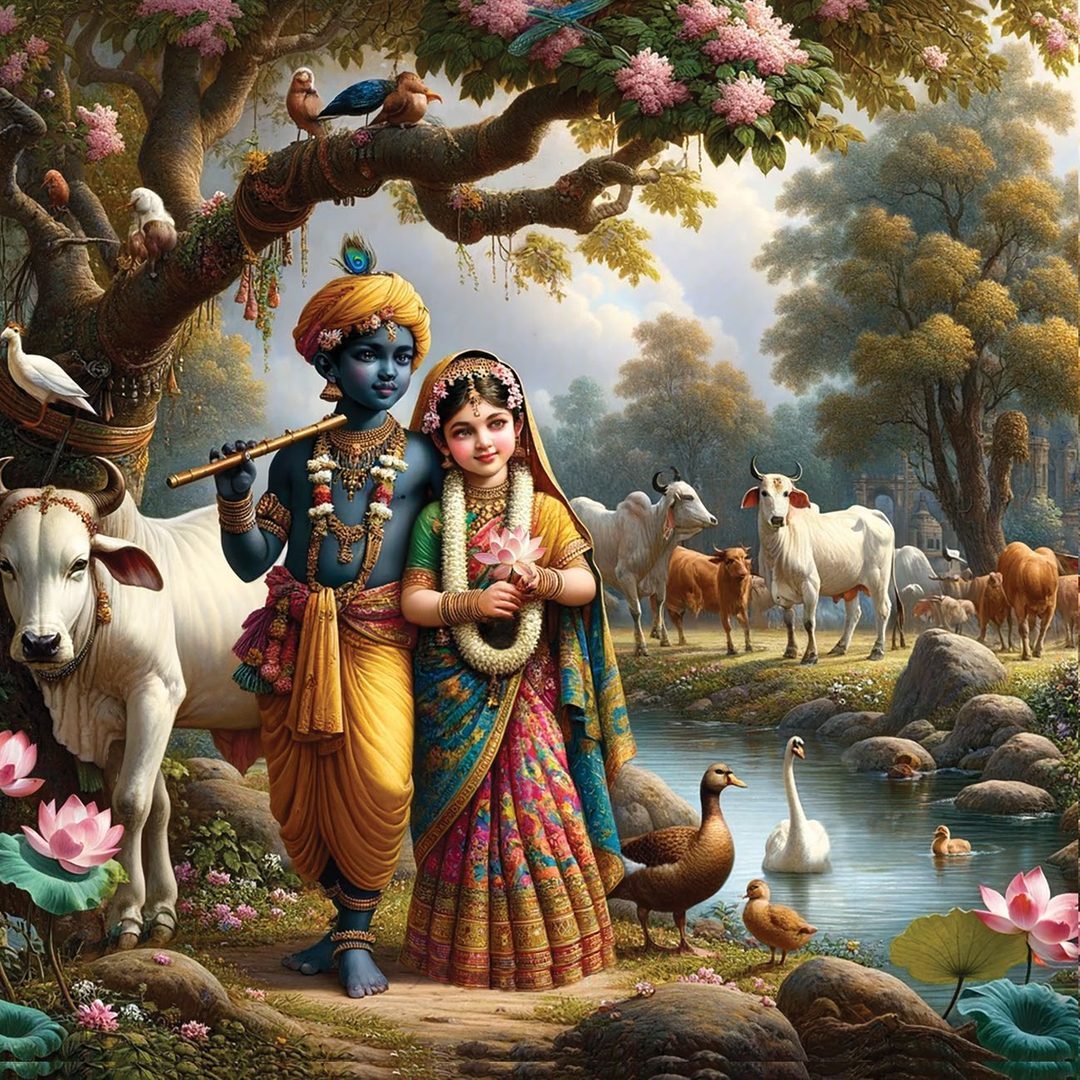
Alas, O my Lord, son of Nanda so dear, with Vṛṣabhānu's daughter, Rādhā, standing near. Have mercy on this destitute soul, I pray, hold me close to You, don’t push me away. Hari! Hari! I’ve wasted my human birth, missed a rare chance, blinded by worldly mirth. Hari! Hari! I’ve squandered a precious life, quibbling over petty trifles, always immersed in strife.
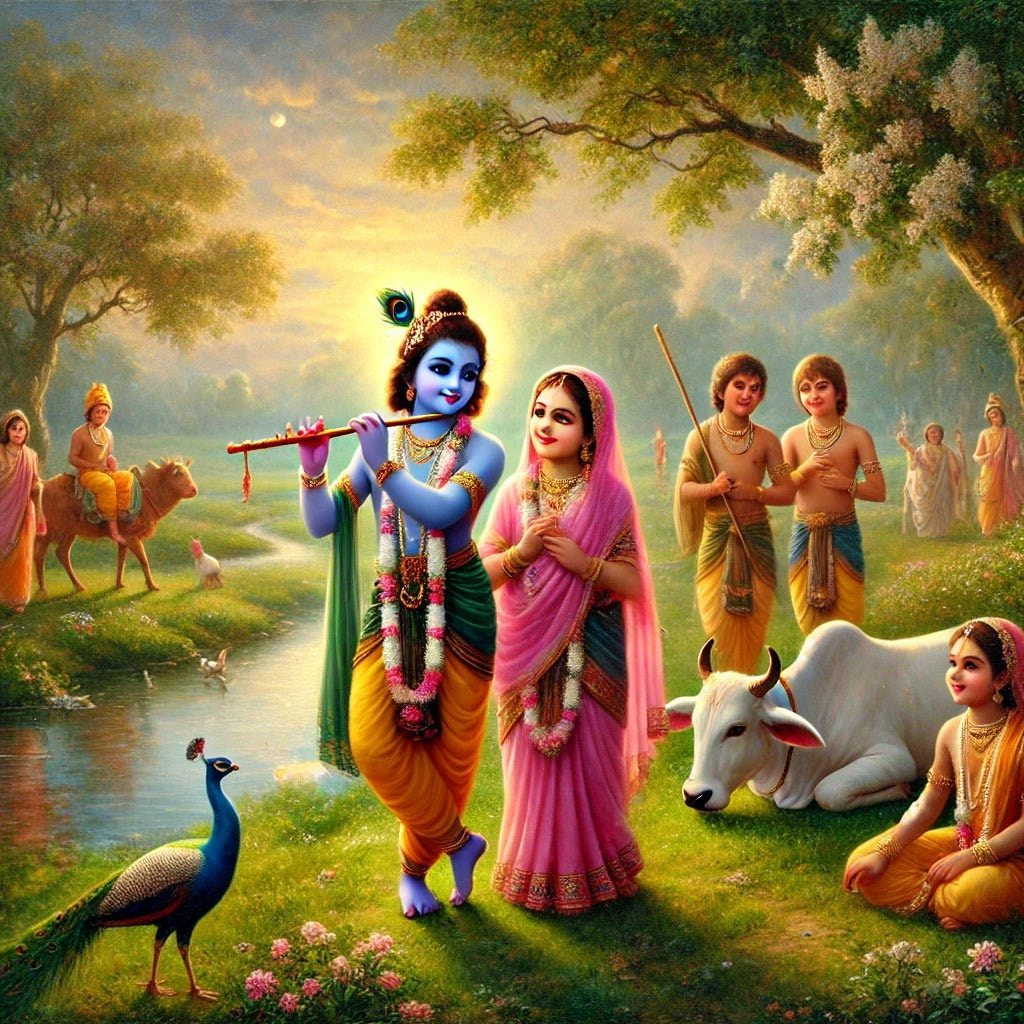
To worship Rādhā and Kṛṣṇa never came to my feeble mind, thus knowingly drinking poison, only misery did I find.
Hari! Hari! I’ve wasted my human birth, I squandered a precious life.
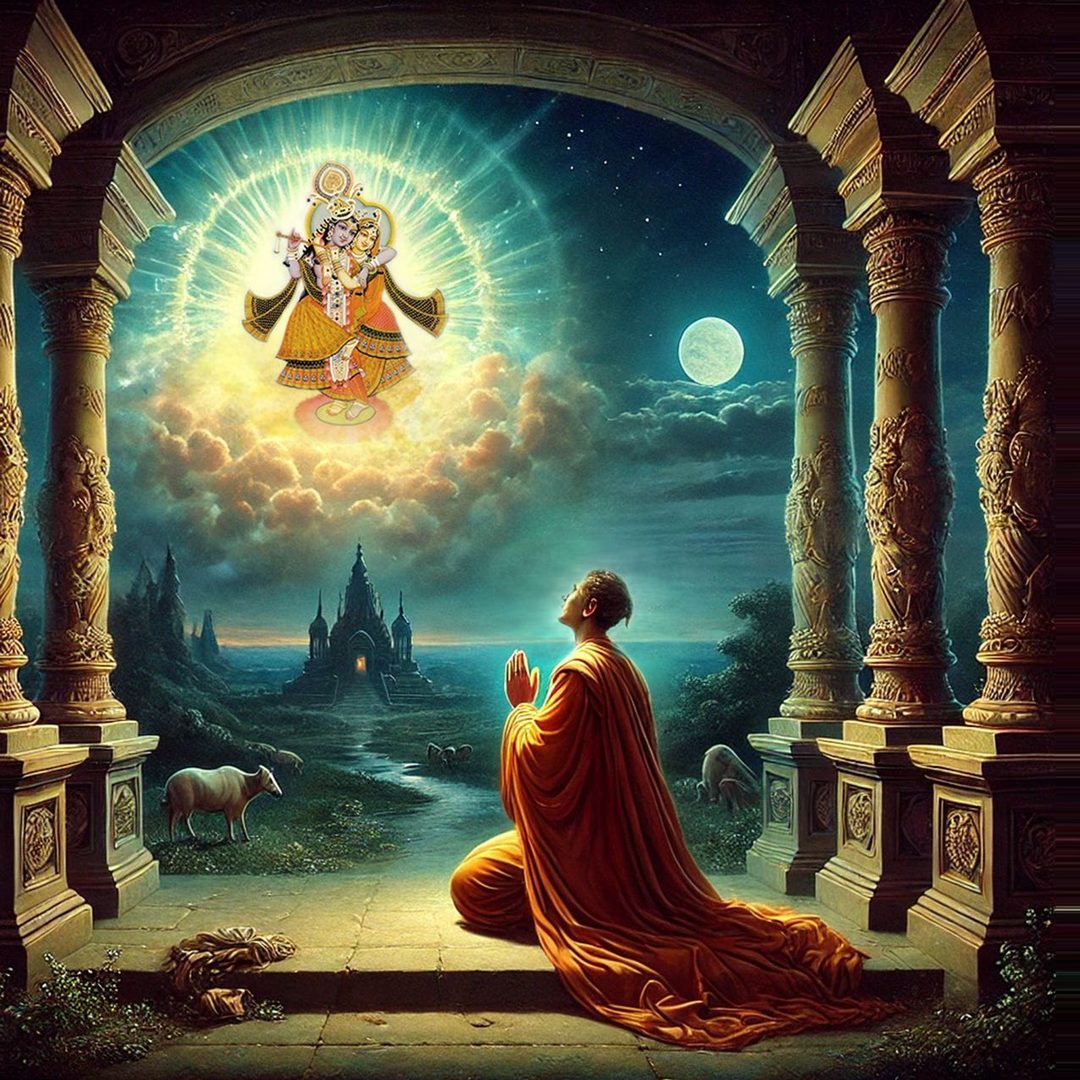
Narottama dāsa pleads, O Lord, it is true, who is my beloved now except for You? At Your reddish lotus feet my refuge I will find, You alone, O Kṛṣṇa, dwell forever in my mind.
Commentary
Narottama dāsa Ṭhākura expresses in this song the sentiments of a devotee who looks back at their life and realizes that they have not taken advantage of the great gift of being born as a human being. Human life is rare. There are 8,400,000 species, and only 400,000 are human. Among these, only a few are interested in self-realization. Nevertheless, the human form of life offers the opportunity to attain the highest level of consciousness. Therefore, letting this opportunity pass is considered a tremendous loss. To come to the human level of existence, the soul must transmigrate through the other 8,000,000 species. During that journey, there is no possibility for self-realization because other life forms do not offer this opportunity due to their restricted consciousness. Consciousness is compared to a flower that gradually opens in the evolutionary process and reaches full bloom in the human form of life. If we let this opportunity pass, it may take many lifetimes before we attain another human body and with it the chance to understand who we are, why we are in this world, and what the purpose of life is.
The Fleeting Nature of Material Pleasures
The main reason why human beings miss the opportunity for selfrealization is their attraction to and absorption in material objects that have nothing to do with the real self but provide some pleasure to the external covering of the self—the gross and subtle material body. However, the joy that comes from the contact of the senses with their objects—particularly in the form of food, drink, and touching soft skin—is ephemeral. Therefore, Kṛṣṇa advises in the Bhagavad-gītā (5.22): An intelligent person does not take part in the sources of misery, which arise from contact with the material senses. O
son of Kuntī, such pleasures have a beginning and an end, and so the wise man does not delight in them. Although one may accept this statement as true, putting it into practice is not easy.
Faith, Regret, and the Hope of Devotion
Over the course of hundreds or even thousands of lives, the conditioned soul has developed the deeply ingrained habit of enjoying the senses in myriad ways. Kṛṣṇa acknowledges this fact when He instructs Uddhava in devotional service. In Chapter 20 of the 11th Canto, Verses 27-29, He says that a devotee who has developed some faith is aware that all sense gratification leads to misery, but may still be unable to renounce all sense enjoyment. Kṛṣṇa knows our situation very well, and it is encouraging to see that He does not condemn us but simply asks us to continue with our spiritual practice. He tells Uddhava: My devotee should remain happy and worship Me with great faith and conviction. Even though he is sometimes engaged in sense enjoyment, My devotee knows that all sense gratification leads to a miserable result, and he sincerely repents such activities. When an intelligent person constantly engages in worshiping Me through loving devotional service as described by Me, his heart becomes firmly situated in Me. Thus all material desires within the heart are destroyed. There is hope, undoubtedly, but as we see from these verses, one important ingredient is regret. This sentiment is found in this song and in other songs by Narottama dāsa Ṭhākura, particularly in the song Akṣepa (Regret), commonly known as Gorā Pahū, which is included in this collection under the title Treasure of Love.
Spiritual Suicide: The Poison of Worldliness
In the first stanza of the present song, the author regrets that he has wasted his precious human life, comparing his precarious situation to drinking poison. Drinking poison voluntarily means committing suicide. In Vaiṣṇava philosophy, we speak of suicide in the sense of spiritual suicide, which means that the soul doesn’t actually die, being immortal, but may descend to species below the human level and thereby lose the opportunity for attaining spiritual perfection and liberation from the cycle of birth and death. Because such a loss is a tragedy, it is compared to drinking poison.
The Treasure of the Holy Name
The second stanza describes the glories of the holy name, which offers the treasure of divine love, prema-dhana. Śrī Caitanya Mahāprabhu said, prema pumārtha mahān: Prema, pure love of God, is the highest goal a human being can attain. But then the author considers his position, which represents the conditioned soul’s lamentable situation: The heart feels no attraction for the sweet sound of the holy name. On the contrary, the poison of worldliness is causing a burning sensation. Rūpa Gosvāmī compares this state to the affliction caused by jaundice, which makes sweet things taste bitter. By māyā’s influence, bitter things often taste sweet in the beginning, but only for a short time, as Kṛṣṇa points out in the Bhagavad-gītā (18.38): That happiness which is derived from contact of the senses with their objects and which appears like nectar at first but poison at the end is said to be of the nature of passion.
The Remedy: Chanting the Holy Name
Fortunately, Rūpa Gosvāmī also offers the cure for this disease:
The holy name, character, pastimes, and activities of Kṛṣṇa are all transcendentally sweet like sugar candy. Although the tongue of one afflicted by the jaundice of avidyā [ignorance] cannot taste anything sweet, it is wonderful that simply by carefully chanting these sweet names every day, a natural relish awakens within his tongue, and his disease is gradually destroyed at the root. (Upadeśāmṛta 7) In the purport, Śrīla Prabhupāda writes: Although Kṛṣṇa consciousness may not be very palatable for a diseased person, Śrīla Rūpa Gosvāmī nonetheless advises that if one wants to be cured of the material disease, he must take to it with great care and attention. One begins the treatment by chanting the Hare Kṛṣṇa mahā-mantra because by chanting the holy name of the Lord a person in the material condition will be relieved from all misconceptions (ceto-darpaṇamārjanam). Avidyā, a misconception about one's spiritual identity, provides the foundation for ahaṅkāra, or false ego, within the heart. The real disease is in the heart. If the mind is cleansed and consciousness is purified, a person cannot be harmed by the material disease. To cleanse the mind and heart from all misconceptions, one should take to the chanting of the Hare Kṛṣṇa mahā-mantra. This is both easy and beneficial. By chanting the holy name of the Lord, one is immediately freed from the blazing fire of material existence.
Deliverance Through the Holy Name
In the next stanza, Narottama dāsa Ṭhākura mentions the deliverance of Jagāi and Madhāi as proof of the transcendental redeeming power of the holy name. Jagāi and Mādhāi were two notorious brothers from a high-class brāhmaṇa family in Navadvīpa, Bengal, known for their sinful activities, including violence and debauchery. They were feared and despised by the town’s people due to their criminal and immoral behavior. One day, Nityānanda Prabhu approached them while preaching and urged them to chant the holy name. In response, Mādhāi struck Nityānanda on the head with a clay pot, causing him to bleed. Despite the attack, Nityānanda remained calm, pleading with them again to chant Kṛṣṇa’s name. Jagāi, moved by Nityānanda’s remarkable forbearance and compassion, restrained Mādhāi from further violence. When Śrī Caitanya Mahāprabhu heard of the attack on Nityānanda, He rushed to the scene, ready to invoke His divine chakra weapon to punish the brothers, but Nityānanda intervened, urging forgiveness. He pointed out that Jagāi had protected him from further harm, showing signs of repentance. Hearing this, Lord Caitanya forgave the brothers, and they, filled with remorse, surrendered to Him and began to chant the holy name. By the Lord’s mercy, Jagāi and Mādhāi transformed into devoted followers of Kṛṣṇa, abandoning their sinful ways and embracing a life of devotion. This story is a powerful example of the limitless mercy of Lord Caitanya and Lord Nityānanda, showing that no soul is beyond redemption if they sincerely take shelter of the Lord's holy name.
Conclusion: Surrender to Kṛṣṇa
Narottama dāsa Ṭhākura concludes his song by acknowledging that only Kṛṣṇa’s mercy can save him from the misery of material life. He surrenders fully to the Lord, seeking shelter at His lotus feet. This song serves as a reminder of the preciousness of human life, the dangers of wasting it on temporary pleasures, and the ultimate relief found in the holy name.
The Original Song
Hari hari! biphale
Narottama dāsa Ṭhākura
hari hari! biphale janama goṅāinu manuṣya-janama pāiyā, rādhā-kṛṣṇa nā bhajiyā, jāniyā śuniyā biṣa khāinu hari hari!—O Lord Hari!; biphale—uselessly; janama goṅāinu—I have spent my life; manuṣya-janama pāiyā—having obtained a human birth; rādhā-kṛṣṇa—Rādhā and Kṛṣṇa; nā bhajiyā—having not worshiped; jāniyā śuniyā—even after knowing and hearing about it; biṣa khāinu—I have drunk poison. O Lord Hari, I have wasted my life. Although I have obtained this rare human birth, I have not served Rādhā and Kṛṣṇa, and thus I have knowingly drunk poison.
golokera prema-dhana, hari-nāma-saṅkīrtana, rati nā janmila kene tāya saṁsāra-viṣānale, dibā-niśi hiyā jvale, jurāite nā kainu upāya golokera—of Goloka Vṛndāvana; prema-dhana—the treasure of divine love; harināma-saṅkīrtana—the congregational chanting of Lord Hari's holy names; rati—my attraction; nā janmila—never came about; kene—why?; tāya—for that; saṁsāraviṣānale—in the fire of the poison of worldliness; dibā-niśi—day and night; hiyā jvale—my heart burns; jurāite—to relieve it; nā kainu upāya—I have not taken the means. The treasure of divine love in Goloka Vṛndāvana has descended as the congregational chanting of Lord Hari’s holy names. Why did my attraction for that chanting never come about? Day and night my heart burns in the fire of the poison of worldliness, and I have not accepted the means for relieving it.
vrajendra-nandana yei, śacī-suta haila sei, balarāma haila nitāi dīna-hīna yata chila, hari-nāme uddhārila, tāra śākṣī jagāi mādhāi vrajendra-nandana yei—Lord Kṛṣṇa, the son of the King of Vraja; śacī-suta—the son of Śacī (Lord Caitanya); haila—became; sei—He; balarāma—Lord Balarāma; haila— became; nitāi—Lord Nityānanda; dīna-hīna—who were lowly and wretched; yata chila—all those souls who were; hari-nāme—by the holy name; uddhārila—were delivered; tāra śākṣī—the evidence of that; jagāi mādhāi—the two sinners named Jagāi and Mādhāi. Lord Kṛṣṇa, the son of the King of Vraja, became the son of Śacī, and Balarāma became Nitāi. The holy name delivered all those souls who were lowly and wretched. The two sinners Jagāi and Mādhāi are evidence of this. hā hā prabhu nanda-suta, vṛṣabhānu-sutā-yuta, karuṇā karaha ei-bāra narottama-dāsa kaya, nā ṭheliha rāṅgā pāya, tomā vine ke āche āmāra hā hā prabhu—alas! alas! O dear Lord!; nanda-suta—O son of Nanda!; vṛṣabhānusutā yuta—accompanied by the daughter of Vṛṣabhānu; karuṇā karaha—please be merciful to me; ei-bāra—now; narottama-dāsa kaya—Narottama dāsa says; nā ṭheliha—please do not push me away; raṅga pāya—from Your reddish lotus feet; tomā vine—except for You; ke āche āmāra—who is my beloved?. O Lord Kṛṣṇa, son of Nanda, accompanied by the daughter of Vṛṣabhānu, please be merciful to me now. Narottama Dāsa says, “O Lord, please do not push me away from Your reddish lotus feet, for who is my beloved except for You?”