 Spiritual
(An adaptation of Bhaktivinoda Ṭhākura’s Manasa, deha, geha)
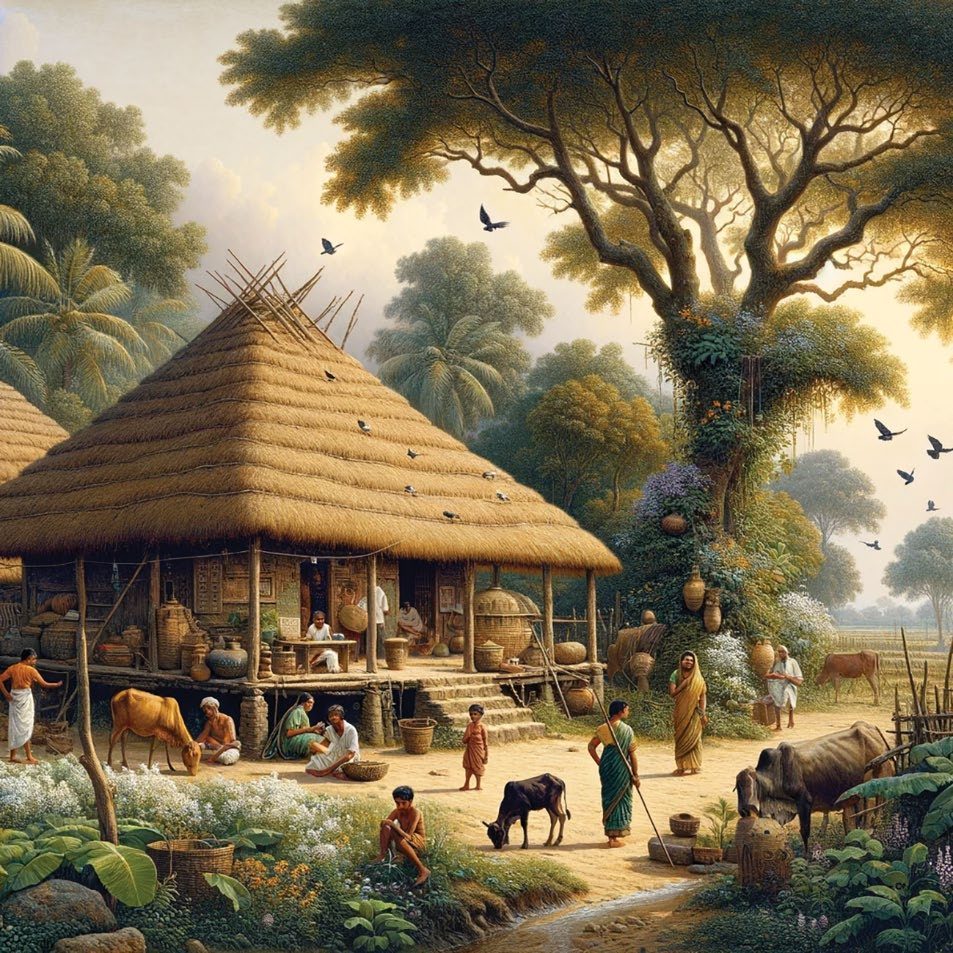
Mind, body, and home, and all I own and adore, I offer at Your lotus feet, O Nanda-kiśora.
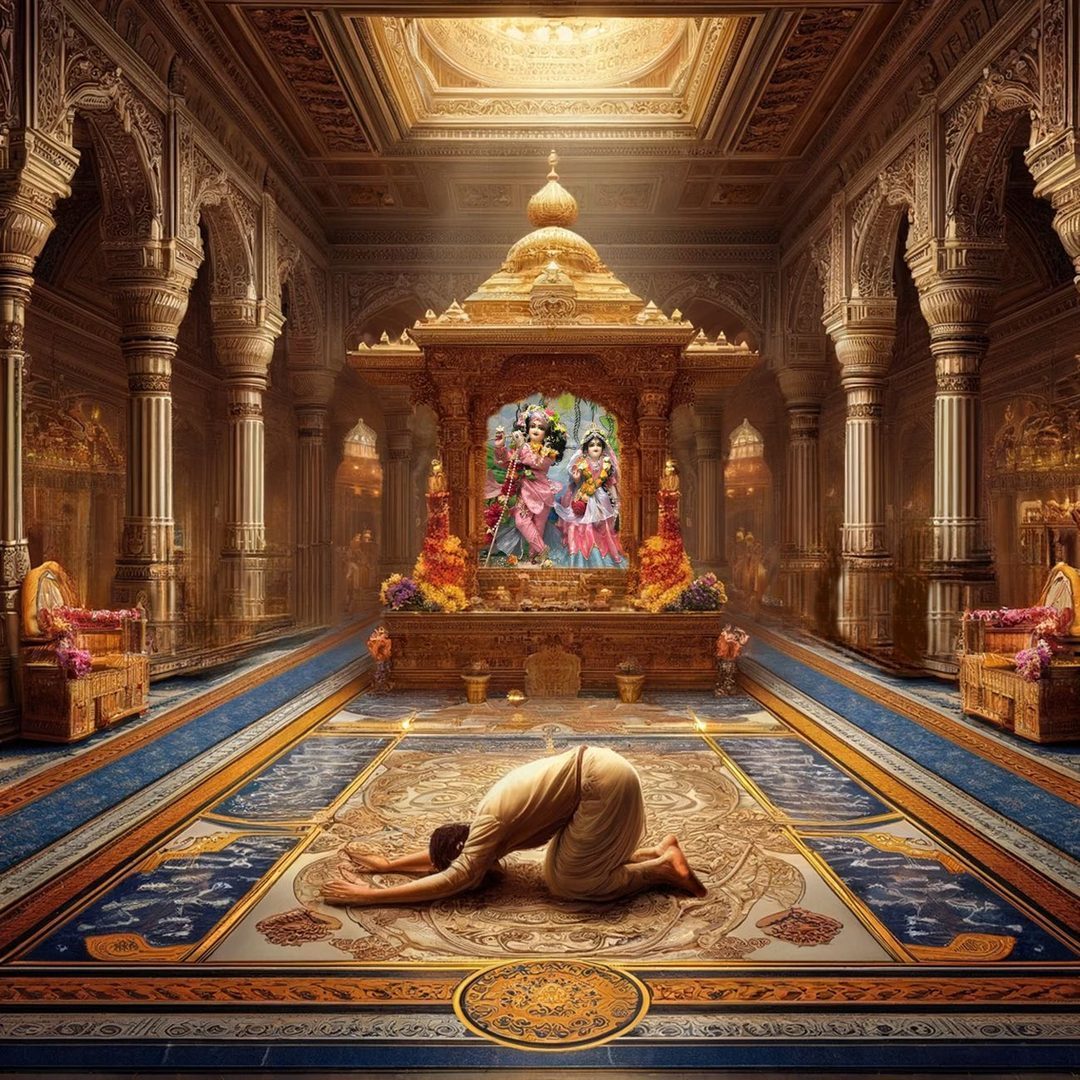
2-3 In good fortune or bad, in life, death or defeat, all my troubles will vanish, under Your lotus feet. Slay or protect me, as You wish, do as You want, I am Your eternal servant—that is our natural bond.
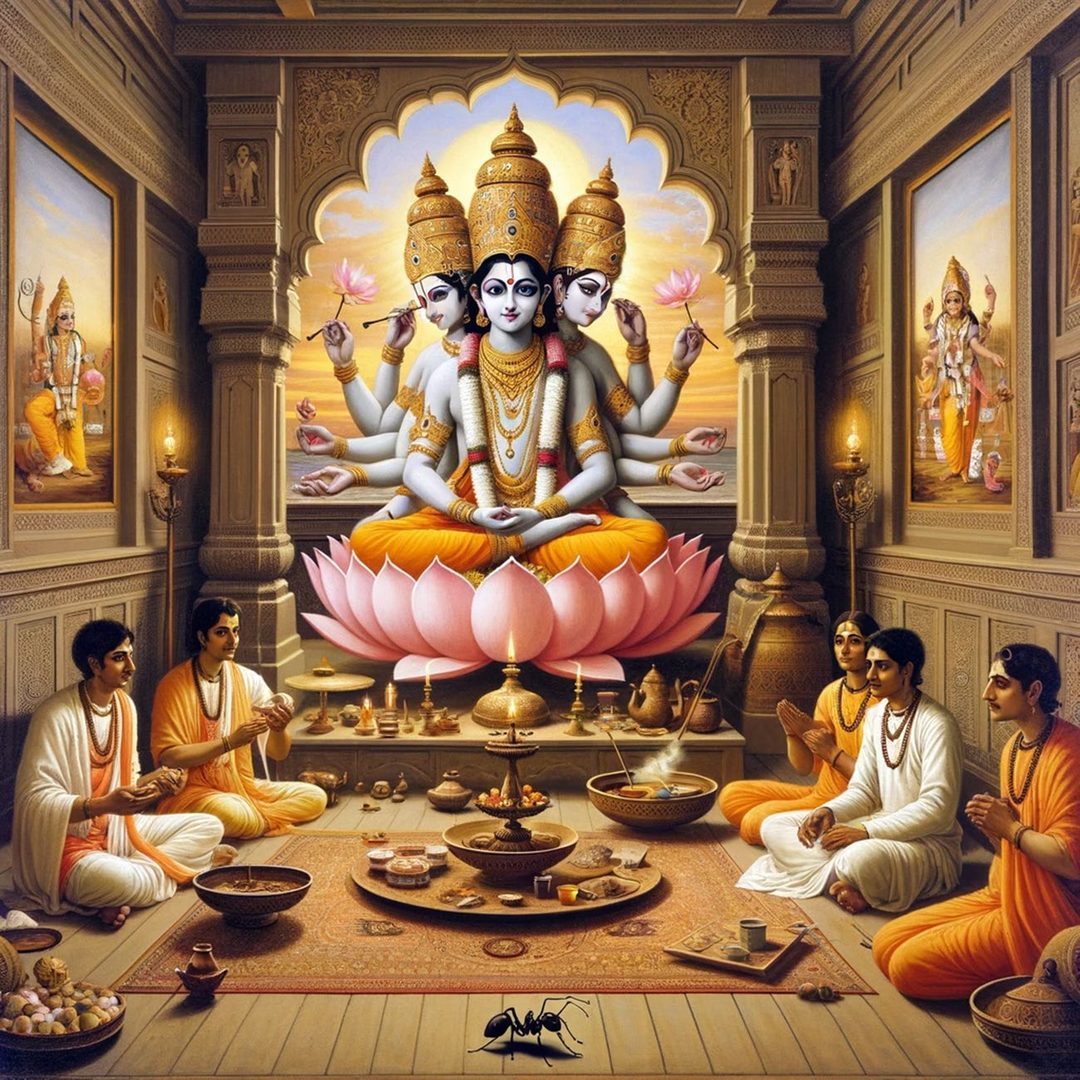
4-5 If rebirth be Your will, then let it take place in the home of a devotee, by Your divine grace. Let me become an ant even, if I can still serve You, no desire to be born as a Brahmā averse to You and untrue.
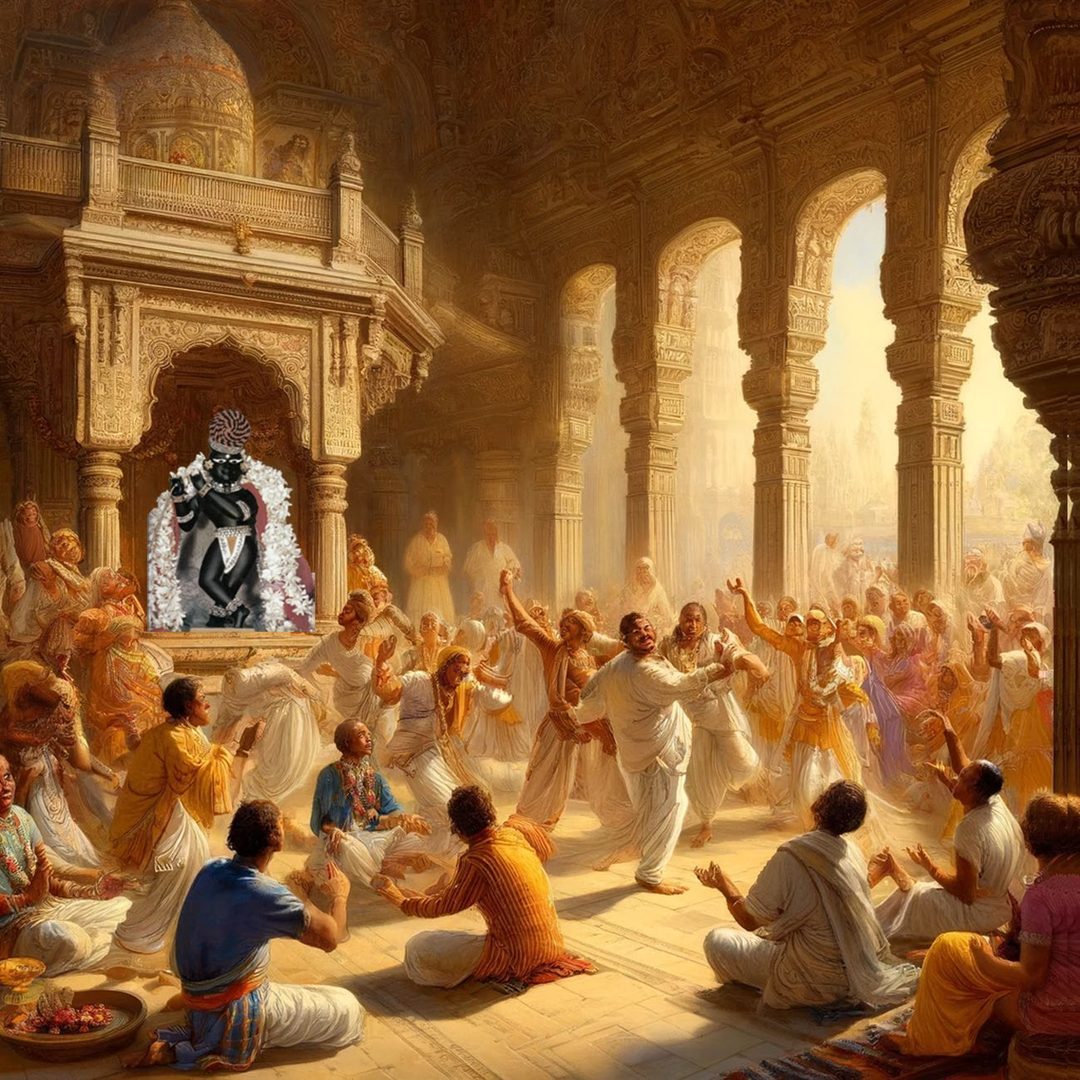
6-8 I yearn for the company of that unalloyed devotee, who does not desire worldly pleasures or impersonal mukti. Father, mother, lover, son, preceptor, husband and more, You are to me everything, O Nanda-kiśora. Bhaktivinoda begs and pleads, "O Kāna, hear my petition, O Lord of Rādhā, my life and soul, object of my devotion!”
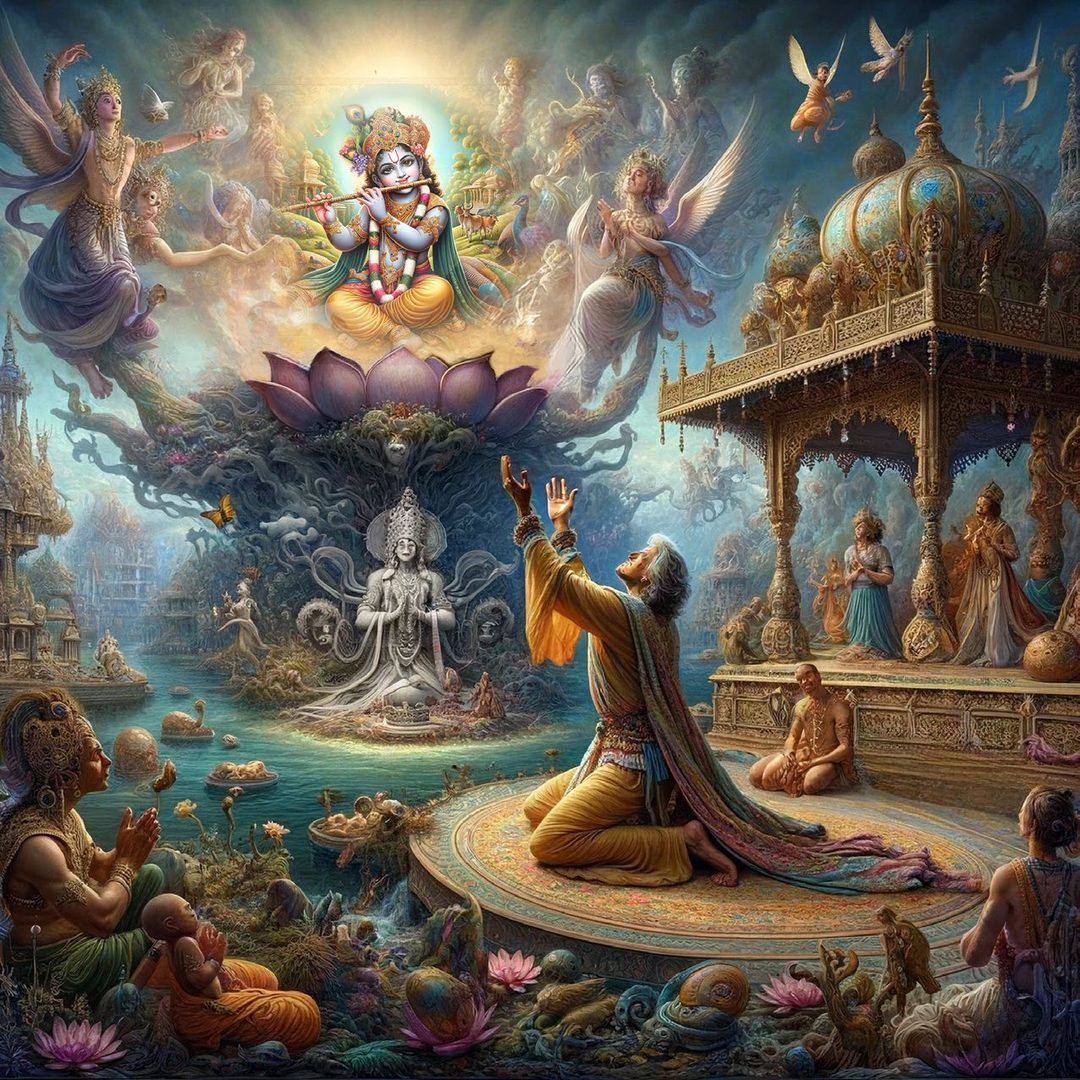
Mind, body, and home, and all I own and adore, I offer at Your lotus feet, O Nanda-kiśora.
Commentary
This song appears in Bhaktivinoda Ṭhākura’s songbook Śaraṇāgati, in the section titled Second Principle of Surrender: Ātma-nivedana (Dedication of the Self). In our song cycle, Mind, Body, and Home is the penultimate song, introducing the practical application of ātmanivedana (self-surrender), the final stage of the ninefold devotional practices. The essence of introspection is to reach the point of unconditional surrender, a theme emphasized at the end of many songs in this collection.
Ātma-nivedana (Dedication of the Self)
Ātma may refer to the soul, the mind, or the body, depending on the context, and nivedana means “offering” or “submission.” Therefore, ātma-nivedana can be translated as “offering one’s soul, mind, body, and everything related to it.” Bhaktivinoda Ṭhākura addresses Kṛṣṇa in His form as Nanda-kiśora, the son of Nanda Mahārāja, and declares that he offers everything in his possession, including his very self, at the Lord’s lotus feet. The shelter-giving quality of Kṛṣṇa’s lotus feet has been widely praised in many of the previous songs. Śrīla Prabhupāda elaborates on the wonderful qualities of these feet as follows: (SB 4.23.49): The lotus feet of the Lord are known as mahat-padam; this means that the total source of material existence rests on the lotus feet of the Lord. As stated in Bhagavad-gītā (10.8), ahaṁ sarvasya prabhavaḥ: everything emanates from Him. This cosmic manifestation, which is compared to an ocean of nescience, also rests on the lotus feet of the Lord. As such, this great ocean of nescience is minimized by a person who is a pure devotee. One who has taken shelter of the lotus feet of the Lord need not cross over the ocean, for he has already
crossed it by virtue of his position at the Lord's lotus feet. By hearing and chanting the glories of the Lord or the Lord's devotee, one can become firmly fixed in the service of the lotus feet of the Lord.
Expressions of Unreserved Surrender
In the third stanza, Bhaktivinoda Ṭhākura expresses his unreserved surrender with these words: mārobi rākhobi-yo icchā tohārā, meaning, “Slay me or protect me, as You wish.” The ŚrīmadBhāgavatam contains many stories illustrating this attitude, with the prime example being Māhārāja Ambarīṣa, who remained undisturbed when facing the danger of being killed by a demon produced from the wrath of Durvāsā Muni. Prabhupāda comments on this incident in one of his lectures: Durvāsā Muni created a demon to kill the king, Mahārāja Ambarīṣa, who, although a devotee, had no such yogic power to counteract. Ambarīṣa thought, ‘All right, if it is Kṛṣṇa's desire that this demon should kill me, then let him kill me.’ Thus, Ambarīṣa stood there motionless, fully surrendered. Mārobi rākhobi jo icchā tohārā—that is surrender. ‘I have surrendered to You. If You wish to kill me through this demon, that's all right. Welcome. Why not? Perhaps I am at fault, and if You want to end my life this way, let it be so.’ Ambarīṣa was not afraid for his life; he simply stood there, accepting the Lord’s will.
Praying for a Humble Birth Among Devotees
In stanzas 4 and 5, Bhaktivinoda Ṭhākura contemplates the possibility of being reborn in the material world. However, instead of requesting a prestigious or prosperous position, he asks the Lord for the blessing to be born into a family of devotees. Referring to this, Prabhupāda says in a lecture on Bhaktivinoda Ṭhākura’s Appearance Day: A devotee does not say, 'Elevate me to a heavenly planet or a Vaikuṇṭha planet.' No. 'You can put me anywhere.’ Just like Bhaktivinoda Ṭhākura says, kīṭa-janma hau: 'My dear Lord, I have no objection if I have to take my next birth as an insect. What to speak of a human being or any other being—as an insect. But it must be in the house of a devotee, so that by eating the remnants of foodstuff left by the devotee, he'll be delivered. Kīṭa-janma hau jatha tuyā, bahira-mukha brahmajanma nāhi mora āśā: 'I don't want my next birth as Lord Brahmā if I forget You.' That is wanted. A devotee prays to the Lord that he would be able to constantly remember His lotus feet. Never mind whether as an insect, as a king, or as a dog, never mind. That is a pure devotee’s desire."
The Power of Sādhu-saṅga
In the sixth stanza, the author expresses his longing for sādhu-saṅga, the company of saintly devotees. As Śrī Caitanya Mahāprabhu states, all perfection can be attained by even a moment’s association with a sādhu. When questioned about this seemingly exaggerated statement, Śrīla Prabhupāda explained that if one is sincere, even a brief encounter with a pure devotee can lead to spiritual enlightenment. He compared this to dry wood igniting immediately upon contact with fire—it depends on the quality of the wood. If it is moist, it will not ignite even after a long time, but if it is dry, it only takes a moment.
Kṛṣṇa as the Source of All Relationships
Bhaktivinoda Ṭhākura concludes the song by addressing the Lord in various roles that He may take in relationship with His devotees. He
says: sarva-moy. ‘You are everything to me.’ Although Kṛṣṇa is one (advaitam), He appears in unlimited forms (ananta-rūpam) to reciprocate with His devotees according to their desires and degree of surrender. Śrīla Prabhupāda writes in one of his Bhagavad-gītā purports (4.11): One devotee may want Kṛṣṇa as supreme master, another as his personal friend, another as his son, and still another as his lover. Kṛṣṇa rewards all the devotees equally, according to their different intensities of love for Him. In the material world, the same reciprocations of feelings are there, and they are equally exchanged by the Lord with the different types of worshipers. The pure devotees both here and in the transcendental abode associate with Him in person and are able to render personal service to the Lord and thus derive transcendental bliss in His loving service.
The Fruit of Surrender
In the next and final song of this collection, Bhaktivinoda Ṭhākura describes in detail the wonderful fruit a devotee relishes upon surrendering to the lotus feet of the Lord.
The Original Song
Mānasa, deha, geha
Bhaktivinoda Ṭhākura
mānasa, deha, geha, yo kichu mora arpilūṅ tuwā pade, nanda-kiśora! mānasa—my mind; deha—body; geha—family and home; yo kichu—whatever; mora—is mine; arpilū—I have offered; tuwā pade—at Your lotus feet; nandakiśora—O youthful son of Nanda! Mind, body, and family, whatever may be mine, I have surrendered at Your lotus feet, O youthful son of Nanda! sampade vipade, jīvane-maraṇe dāya mama gelā, tuwā o-pada varaṇe sampade vipade—in good fortune or in bad; jīvane-maraṇe—in life or death; dāya— difficulties; mama—my; gelā—have disappeared; tuwā o-pada—those feet of Yours; varaṇe—by submissive acceptance. In good fortune or bad, in life or death, all my difficulties have disappeared because I have chosen those lotus feet of Yours as my only shelter. mārabi rākhabi-yo icchā tohārā nitya-dāsa prati tuwā adhikārā mārabi rākhabi—slay me or protect me; yo icchā tohāra—as You wish; nitya-dāsa— Your eternal servant; prati—toward; tuwā adhikāra—it is Your prerogative. Slay me or protect me as You wish, for You are the master of Your eternal servant. janmāobi more icchā yadi tora bhakta-gṛhe jani janma hau mora janmāobi more—that I be born again; icchā yadi tora—if it is Your will; bhakta-gṛhe— in the home of Your devotee; jani janma—take birth; hau—may it be; mora—mine. If it is Your will that I be born again, then may it be in the home of Your devotee.
kīṭa-janma hau yathā tuvā dāsa bahira-mukha brahma janme nāhi āśa kīṭa-janma—born as an insect, or a worm; hau—may it be; yathā—so long as; tuvā dāsa—I remain Your devotee; bahira-mukha—averse to You; brahma-janme—to be born as Lord Brahmā; nāhi āśa—I have no desire. Let me be born again even as a worm or an insect, as long as I may remain Your devotee. I have no desire to be born as a Brahmā averse to You. bhukti-mukti-spṛhā vihīna ye bhakta labhaite tāka saṅga anurakta bhukti-mukti-spṛhā—desire for worldly enjoyment or liberation; vihīna—who is completely devoid; ye bhakta—that devotee; labhaite—to attain; tāka saṅga—their association; anurakta—I yearn. I yearn for the company of that devotee who is completely free of all desire for worldly enjoyment or liberation. janaka, jananī, dayita, tanaya prabhu, guru, pati-tuhū sarva-maya janaka—father; jananī—mother; dayita—lover; tanay—son; prabhu—Lord; guru— preceptor; pati—husband; tuh—You; sarva-moy—are everything to me. Father, mother, lover, son, Lord, preceptor, husband—You are everything to me. bhakativinoda kahe, śuna kāna! rādhā-nātha! tuhū hāmāra parāṇa bhakativinoda kahe—Ṭhākura Bhaktivinoda says; śuna kāna!—O Kāna, please hear me!; rādhā-nātha!—O Lord of Rādhā!; tuhū—You; hāmāra parāṇa—are my life and soul. Bhaktivinoda says, "O Kāna, please hear me! O Lord of Rādhā, You are my life and soul!"