 Spiritual
(An adaptation of Locana dāsa Ṭhākura’s Avatāra-sāra)
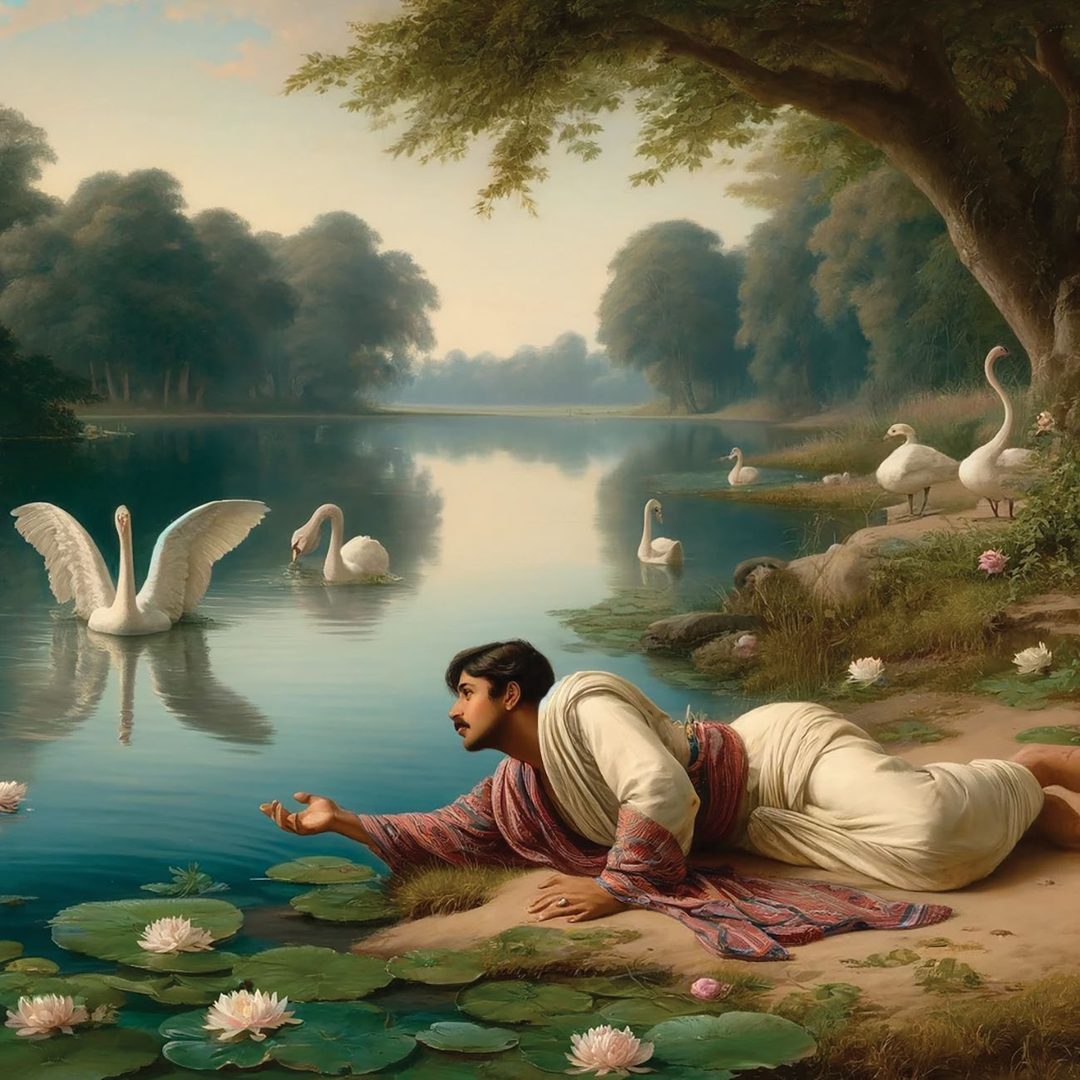
O mind, why don’t you worship Gaura, the crown-jewel of all avatāras? Although near water, you are still thirsty, your past bad karma keeps you afar.
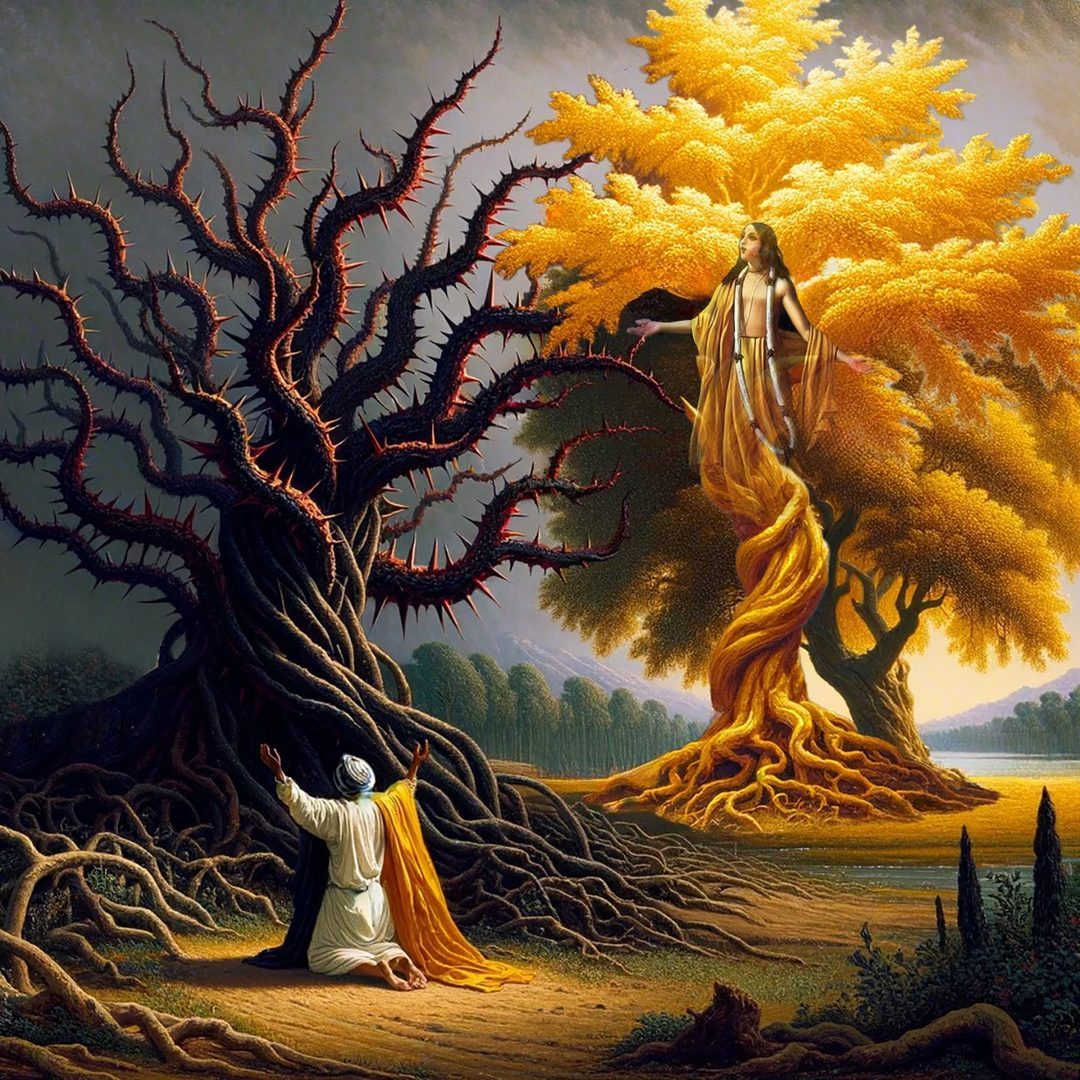
O mind, you always served thorny trees, hoping to harvest nectar fruits. Gaurāṅga, the wish-fulfilling tree of prema, you shunned, thinking Him poisonous.
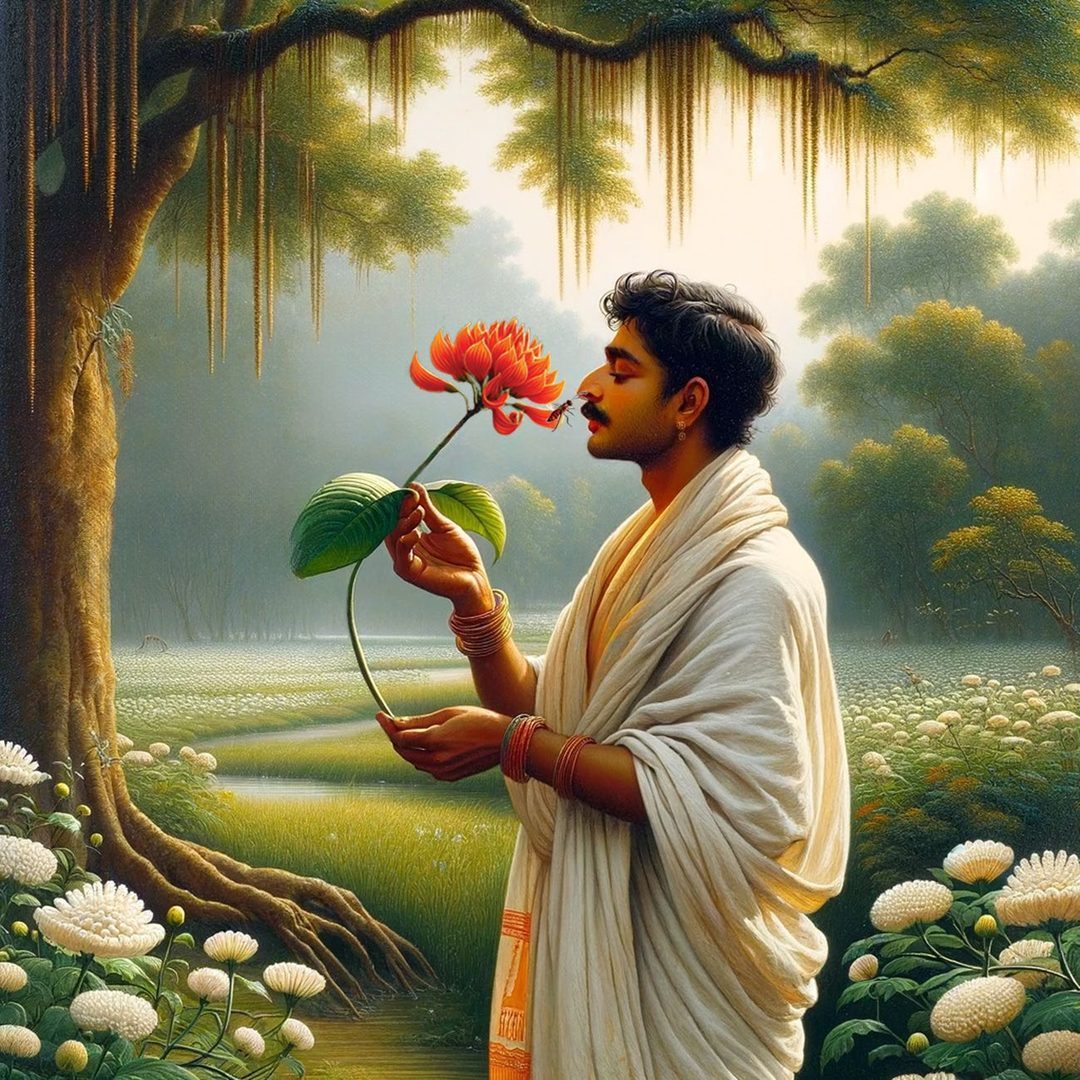
3a You searched for fragrance in the palāśa flower, but only an insect crawled into your nose.
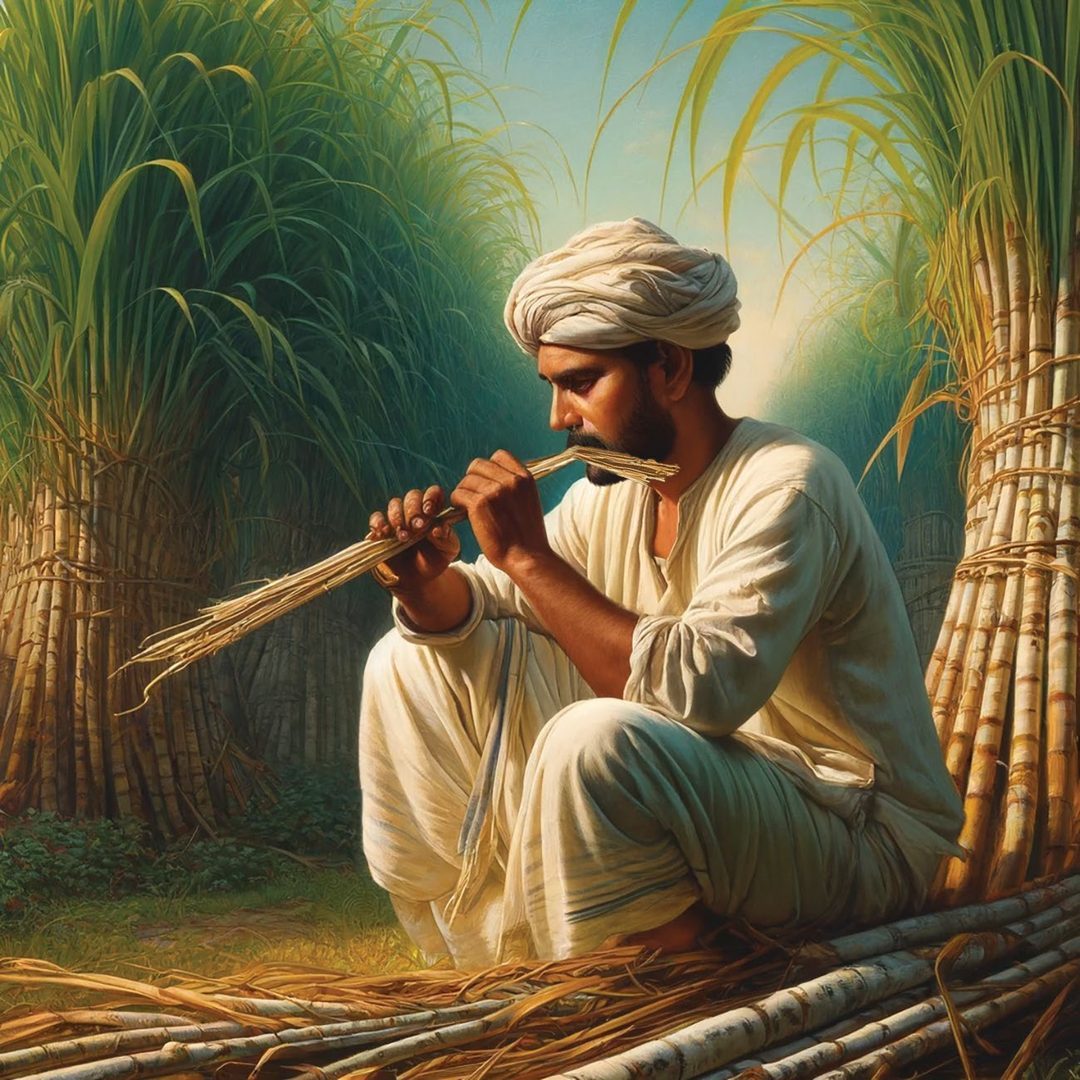
3b Desiring nectar you sucked on dry wood, but how can you get from it any sweet juice?
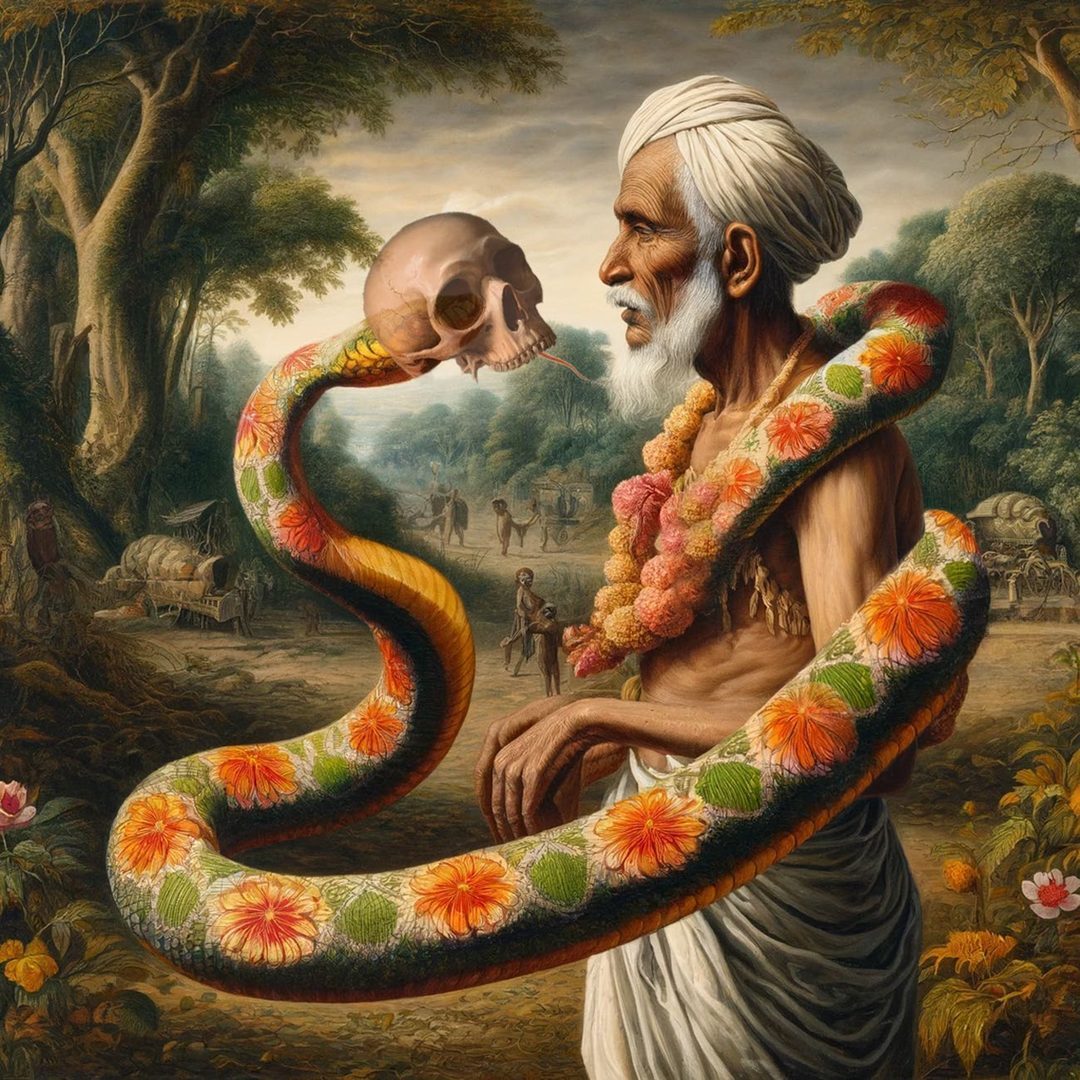
4a O mind, death is like a coiling snake you put around your neck like a flower garland.
4b
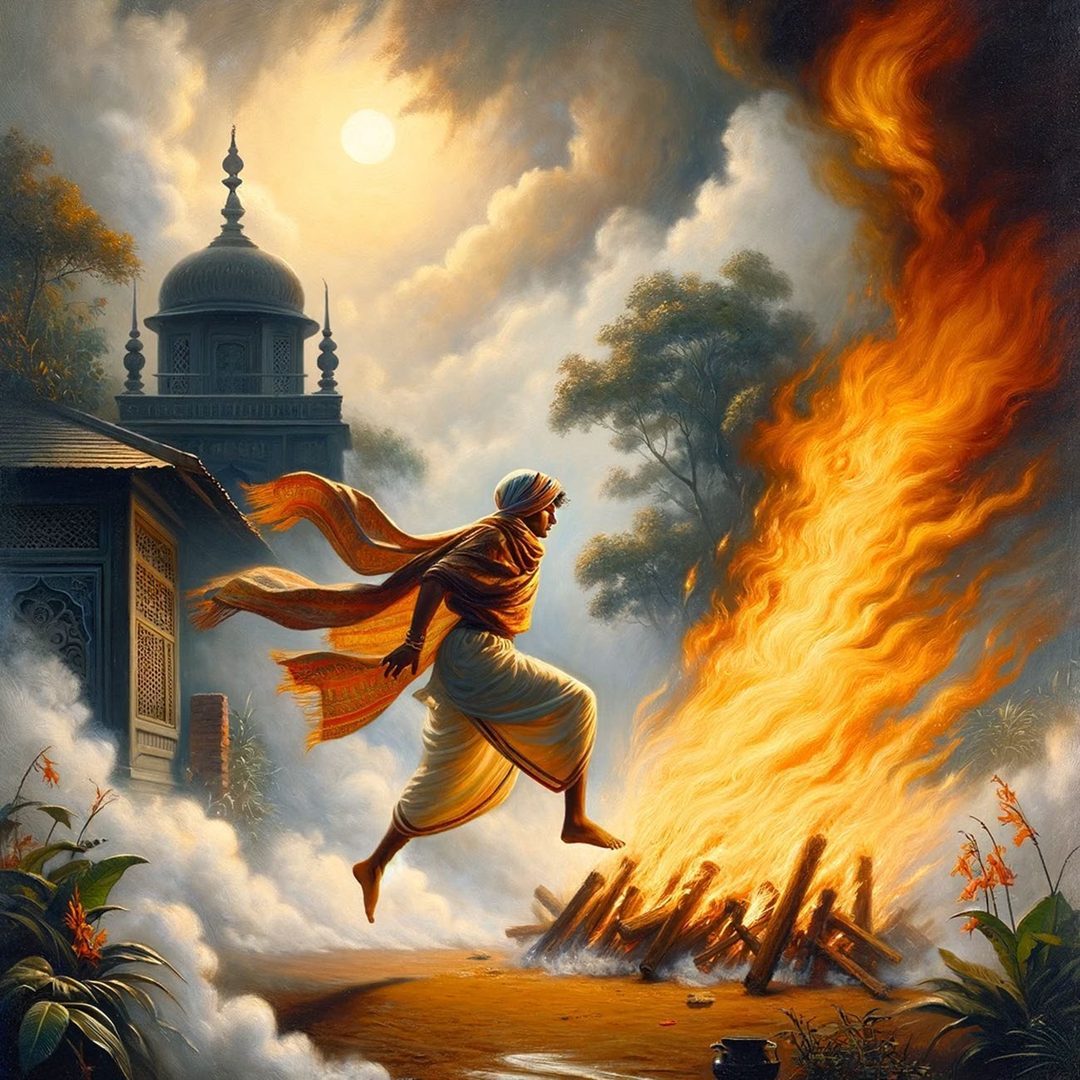
You entered fire, expecting cool breezes,
only to suffer painful burns in the end.
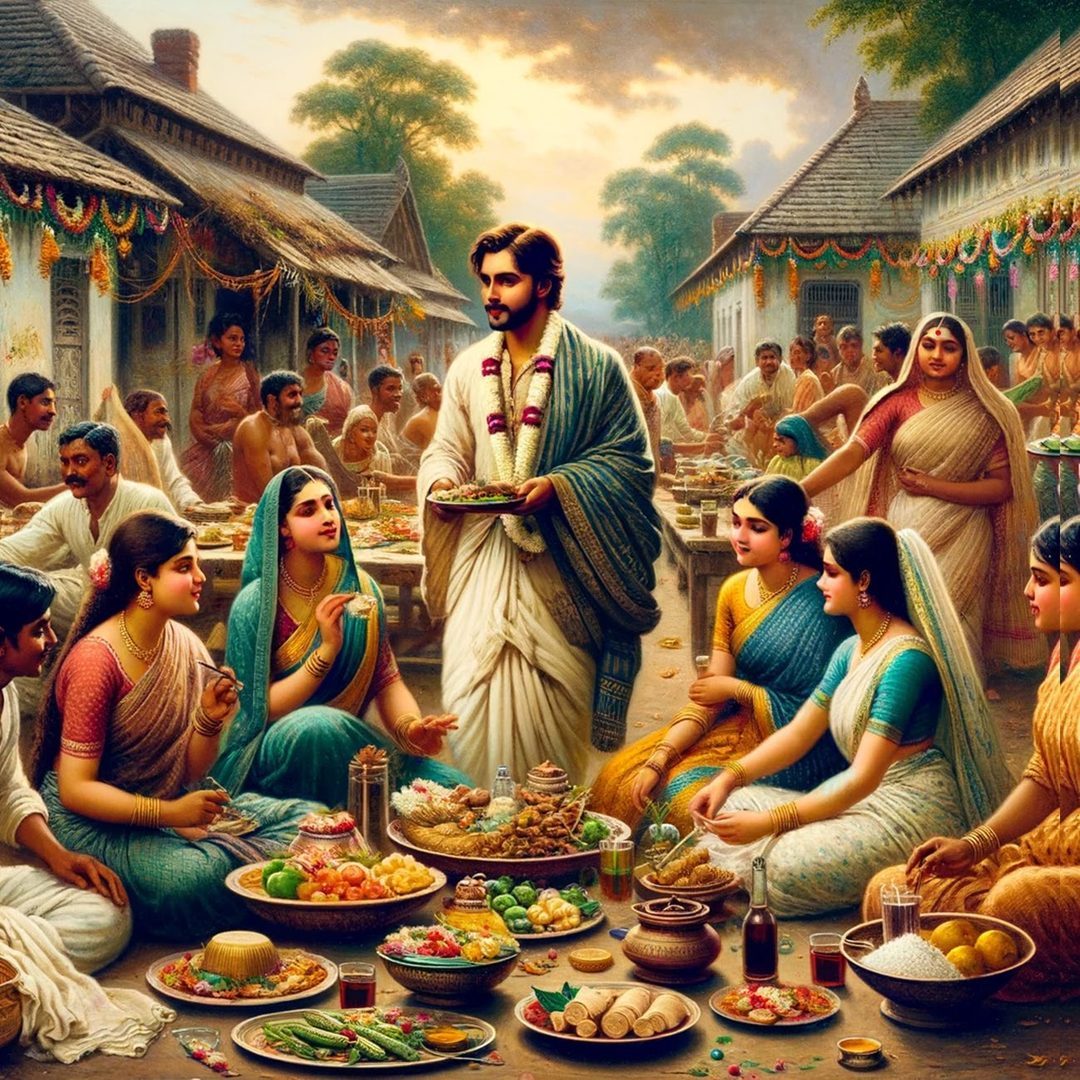
O mind, enjoying worldly pleasures, the merciful Gaura you have forgotten. Never heeding the words of the sādhus, both this world and the next are lost to you.
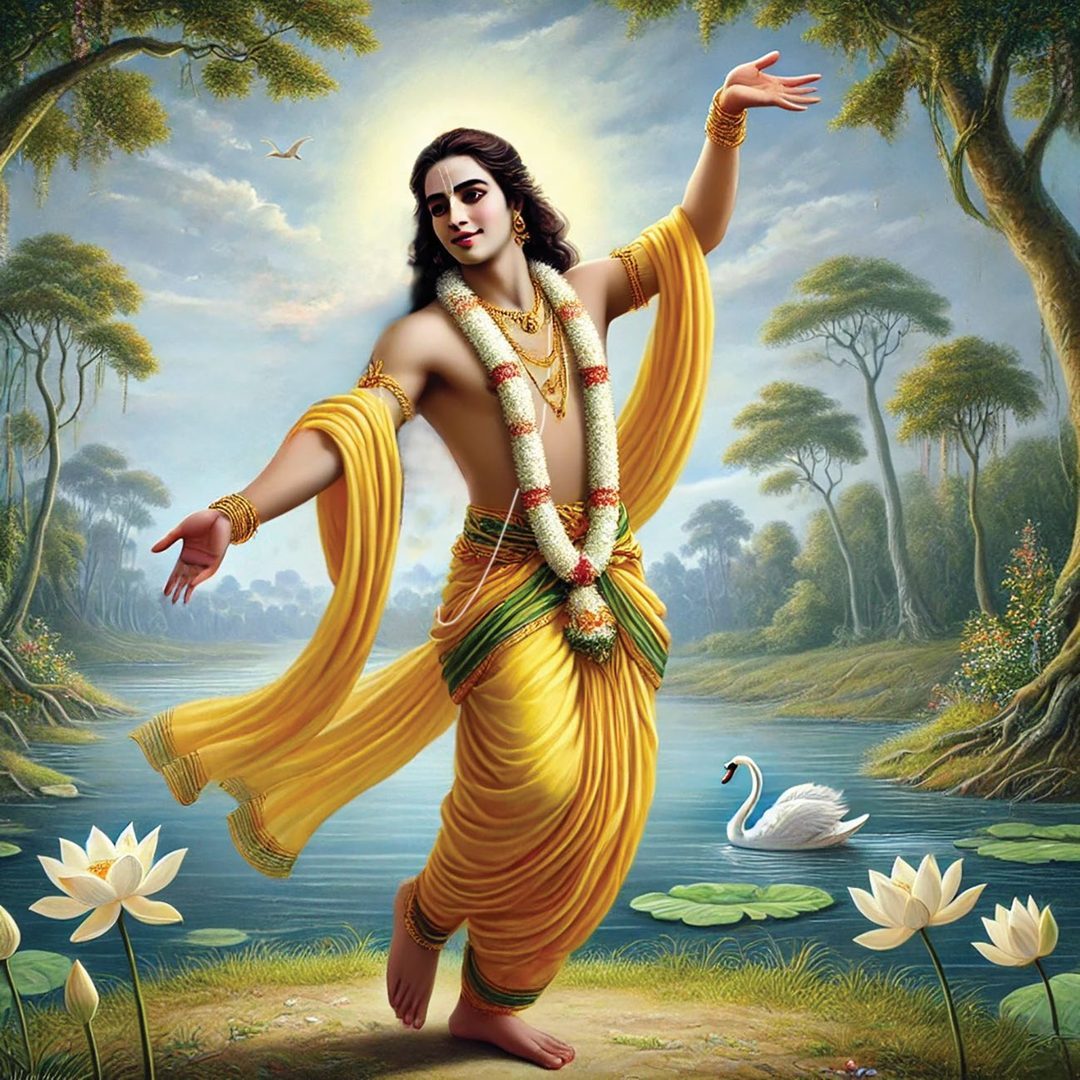
O mind, why don’t you worship Gaura,
the crown-jewel of all avatāras?
The most magnanimous and loving Lord,
bestowing pure prema freely to all.
O mind, listen to me!
O mind, listen to me!
O mind, why don’t you worship Gaura?
O mind!
Commentary
In this song, Locana dāsa Ṭhākura reproaches his mind for avoiding Gaura, the most magnanimous avatāra of all, whose sublime character and mission were described by Śrīla Rūpa Gosvāmī as follows (Cc. Madhya 19.53-54): O most munificent incarnation! You are Kṛṣṇa Himself appearing as Śrī Kṛṣṇa Caitanya Mahāprabhu. You have assumed the golden color of Śrīmatī Rādhārāṇī, and You are widely distributing pure love of Kṛṣṇa. We offer our respectful obeisances unto You. We offer our respectful obeisances unto that merciful Supreme Personality of Godhead who has converted all three worlds, which were maddened by ignorance, and saved them from their diseased condition by making them mad with the nectar from the treasure-house of love of God. Let us take full shelter of that Personality of Godhead, Śrī Kṛṣṇa Caitanya, whose activities are wonderful.
Thirsty Although Surrounded by Water
Addressing his mind, Locana dāsa Ṭhākura reproaches himself for being foolish in not taking advantage of Śrī Caitanya Mahāprabhu’s appearance. He compares his situation to that of a thirsty man who has a source of pure water right in front of him but cannot take advantage of the opportunity due to bad karma. This metaphor is reminiscent of the story of Tantalus in Greek mythology, who, because of his offenses to the gods, was placed in a pool of water beneath a fruit tree. When he tried to drink, the water receded, and when he reached for the fruit, the branches moved just out of his grasp.
Locana dāsa expresses a similar sentiment in another of his songs, Parama-karuṇa, where he says that he feels entrapped by desires for sense enjoyment and therefore has no attraction to the lotus feet of Lord Caitanya and Lord Nityānanda. He attributes his unfortunate situation to being punished by the superintendent of death, Yamarāja, for his past sins, who therefore does not allow him to be attracted by the saṅkīrtana movement. Narottama dāsa Ṭhākura expresses a similar regret in the song Gorā Pahū, where he laments that because he habitually drinks the dangerous poison of sense gratification, he cannot fully absorb myself in the blissful nectar of chanting Lord Caitanya’s glories.
Another example is given in the Śrī Caitanya-caritāmṛta, Ādi-līlā, Chapter 7, where it is said that Śrī Caitanya Mahāprabhu and the members of the Pañca-tattva caused a flood of love of Godhead that inundated the whole world, immersing everyone. Thus, everyone had the chance to quench their thirst for true happiness. Only unfortunate people—such as impersonlist philosophers, die-hard sense enjoyers, false logicians and nondevotees—were surrounded by water but unable to drink even a single drop (karī' nīre vāsa, gela na piyāsa).
Foolish Pursuits of Happiness
Locana dāsa Ṭhākura then gives several examples to illustrate the mind’s foolish attempts to become happy. The pursuit of happiness is natural (ānandamāyo’ bhyāsāt), but one must know how to achieve true happiness. Attempting to attain true, everlasting happiness through material means is compared to cultivating thorny trees in the hope of obtaining sweet, juicy fruits. Just as this is impossible and will only result in disappointment, any amount of material happiness will eventually reach its limit, ending in frustration. Unending spiritual happiness (brahma-saukhyam tv anantam) can only be attained by contacting the reservoir of all
pleasure, Kṛṣṇa, who is the supreme embodiment of bliss (sac-cidānanda vigraha). Gaura teaches the world how to connect to that source of bliss and is therefore described in this song as the beautiful and nectarean tree of prema. Unfortunately, under the influence of ignorance, the conditioned soul mistakes this nectar-tree for a poison-tree and ignores or rejects it.
The Deceptive Beauty of the Palāśa Flower
The next example Locana dāsa Ṭhākura gives is of the palāśa flower, also known as the "Flame of the Forest," which stands out due to its bright reddish-orange petals. Although the flower is stunningly beautiful and promises a superb fragrance, there is utter disappointment because it has absolutely no scent. Quite the contrary, instead of a sweet aroma, an insect may crawl into one’s nostrils. Similarly, the glamorous external features of the illusory energy may lure us into enjoyment, but in the end, expectations fall short, and the promised satisfaction and fulfillment don’t last long or fail to manifest at all.
The Futility of “Chewing the Chewed”
The analogy of mistaking dry wood for sweet, juicy sugar cane is reminiscent of Prahlāda Mahārāja’s teachings to his father. He tells him that materialistic life, where the sole aim is to repeatedly enjoy the senses in the hope of extracting some pleasure from different objects, can be compared to chewing dry sugar cane from which the juice has already been extracted. He uses the expression “chewing the chewed” (punaḥ punaś carvita-carvaṇānām, SB 7.5.30). This attempt is obviously useless and foolish, yet the conditioned soul, enamored by the material energy, is in exactly that position. It tries to enjoy its senses in different bodies, life after life, but is never truly satisfied and thus is always seeking newer and newer pleasurable experiences. Consequently, Locana dāsa Ṭhākura tells his mind that such endeavors are simply a frustrating waste of time.
The Snake of Death as a Garland
He then compares death to a coiling snake that we mistakingly place around our necks, thinking it to be a flower garland. In the Vedic scriptures, several metaphors are used for death, including a tiger, crocodile, hunter and snake. In the Śrīmad-Bhāgavatam (4.7.28), it says: “In this formidable fort of conditional existence the time element, like a snake, is always looking for an opportunity to strike.” In the Fifth Canto (SB 5.8.26), Śukadeva Gosvāmī says of Bharata Mahārāja: “In due course of time, insurmountable death, which is compared to a venomous snake that enters the hole created by a mouse, situated itself before him.” In the Eighth Canto (SB 8.2.33), Śrīla Prabhupāda comments on Gajendra’s crisis: We are always in danger because at any moment death can take place. It is not that only Gajendra, the king of the elephants, was afraid of death. Everyone should fear death because everyone is caught by the crocodile of eternal time and may die at any moment. The best course, therefore, is to seek shelter of Kṛṣṇa, the Supreme Personality of Godhead, and be saved from the struggle for existence in this material world, in which one repeatedly takes birth and dies. To reach this understanding is the ultimate goal of life. One may wonder why Locana dāsa Ṭhākura compares death to a flower garland. Who would be so crazy as to put a snake around their neck, mistaking it for a garland?
The Illusory Power of Māyā
The fact is that the illusioned jīva, under the spell of māyā, is indeed capable of acting in unbelievably foolish ways. Jagadānanda Paṇḍita says in Chapter 6 of Prema-vivarta: When the living entity desires to enjoy separately from Kṛṣṇa, the illusory potency of the Lord, māyā, immediately grabs the soul in her clutches. Being māyā's captive, the jīva becomes bewildered and acts like someone possessed by a witch. In the Śrīmad-Bhāgavatam (4.29.53), Nārada Muni tells King Pracinabarhi the following allegory to illustrate this truth: My dear King, please search out that deer who is engaged in eating grass in a very nice flower garden along with his wife. That deer is very much attached to his business, and he is enjoying the sweet singing of the bumblebees in his garden. Just try to understand his position. He is unaware that before him is a tiger, which is accustomed to living at the cost of another's flesh. Behind the deer is a hunter, who is threatening to pierce him with sharp arrows. Thus the deer's death is imminent.
The Folly of Ignoring Danger
Another metaphor vividly to describe people who are seemingly unaware of imminent danger or the consequences of their actions is “dancing on a volcano.” Kṛṣṇa’s advice in the Bhagavad-gītā (13.8) is just the opposite. He tells us to “be always aware of the miseries of birth, death, old age and disease.”
Entering Fire in Search of Coolness
The next example is similar: only someone who is blind or completely bewildered would enter fire thinking it will cool them. The only result of such foolishness is to be burned. Locana dāsa Ṭhākura concludes his song by reproaching his mind for spoiling his valuable human life by chasing fleeting sensual pleasures and ignoring the wise counsel of saintly persons. Sādhus are the true friends of conditioned souls because they genuinely care about everyone’s real welfare. Their concern is to enlighten people in bhakti-yoga, or devotional service, and for this purpose, they travel from door to door, encouraging people to become devotees of Kṛṣṇa.
The Original Song
Avatāra-sāra
Locana dāsa Ṭhākura
avatāra-sāra, gaura-avatāra kena nā bhajili tā´re kari' nīre bāsa, gela nā piyāsa āpana karama phere avatāra—incarnation; sāra—best; gaura avatāra—incarnation of Gaura; kena— why?; nā—not; bhajili—you worshiped; tā´re—to Him; kari'—having made; nīre—in waters; bāsa—residence; gela—gone; nā—not; piyāsa—thirst; āpana—your own; karama—activities; phere—in consequence. O my mind, why don’t you worship Śrī Gaura, the crown-jewel of all incarnations? You always stayed in water but your thirst was never satiated due to your own past bad activities. kaṇṭakera taru, sadāi sevili, (mana) amṛta pāibāra āśe prema-kalpataru, śrī gaurāṅga āmāra, tāhāre bhāvili viṣe kaṇṭakera—of thorns; taru—tree; sadā i—always; sevili—you served; (mana)—O mind; amṛta—nectar; pāibāra—of obtaining; āśe—with desire; prema—divine love;
kalpataru—wish-fulfilling tree; śrī gaurāṅga—Śrī Gaurānga; āmāra—my; tāhāre—to Him; bhāvili—you considered; viṣe—as poison. You always hoped to attain sweet, juicy fruits from your worship of thorny trees, but this is not possible. Our Gaurasundara is a desire-tree offering divine love, but you left Him, thinking Him to be poison. saurabhera āśe, palāśa śukili, (mana) nāśāte paśila kīta ikṣudaṇḍa bhāvi’, kāṭha cuṣili, (mana) kemane pāibi miṭha saurabhera—of sweet fragance; āśe—with desire; palāśa—the palāśa flower; śukili—you smelled; (mana)—O mind; nāśāte—in nose; paśila—entered; kīta— insect; ikṣudaṇḍa—sugar cane; bhāvi’—having considered; kāṭha—wood; cuṣili— you sucked; (mana)—O mind; kemane—how?; pāibi—you will get; miṭha— sweetness. O my mind, searching for some sweet fragrance, you smelled the beautiful palāśa flower (but it has no scent), and instead, an insect from the flower entered your nose. You sucked on dry wood, mistaking it for sugar cane, but how can you get from it any sweet juice? hāra baliyā, galāya parili, (mana) śamana kiṅkara-sāpa śītala baliyā, āguna pohāli, (mana) pāili bajara tāpa hāra—necklace; baliyā—having considered; galāya—on neck; parili—you put on; (mana)—O mind; śamana—the Lord of Death; kiṅkara—servant; sāpa—snake; śītala—cool; baliyā—having considered; āguna—fire; pohāli—you basked; (mana)— O mind; pāili—you got; bajara—excruciating; tāpa—heat. O my mind, death is like a snake which you place around your neck, thinking it to be a garland. You entered fire, thinking it to be cool, and suffered excruciating burning.
saṁsāra bhajili, śrī gaurāṅga bhulili,
nā sunili sādhura kathā
iha parakāla, du’kāla khāoyāli, (mana)
khāili āpana māthā
saṁsāra—material existence; bhajili—you worshiped; śrī gaurāṅga—Śrī Gaurāṅga; bhulili—you forgot; nā—not; sunili—you listened; sādhura—devotee´s; kathā— words; iha—this; parakāla—the hereafter; du’—both; kāla—times (this life and the next); khāoyāli—you lost, you wasted; (mana)—O mind; khāili—you caused to spoil or ruin; āpana—your own; māthā—head (from Samsad Bengali Dictionary: māthā khāoyā v. (fig.) to ruin, to spoil, (fig.) to deprave.) O my mind, enjoying material pleasures, you never heeded the devotees’ words and forgot Gaurasundara. Thus, both this world and the next are lost to you.