 Spiritual
(An adaptation of Narottama dāsa Ṭhākura’s Ṭhākura vaiṣṇava-gaṇa)

O Vaishnava Thākura, hear this prayer
from a wretched and fallen soul.
I am drowning, pull me by the hair
from saṁsāra’s ocean, make me whole.
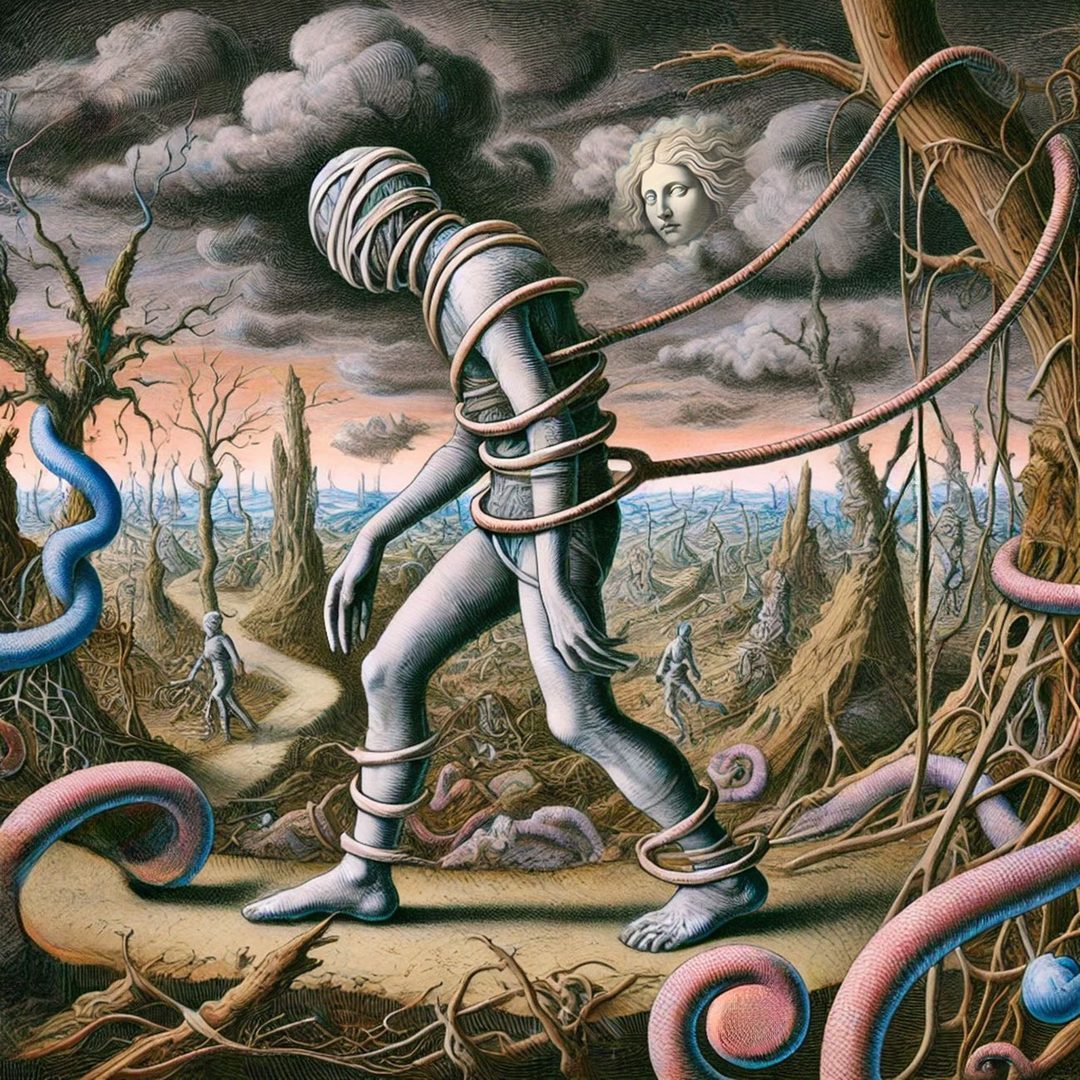
The laws of Providence, a force unyielding, for dharma and jñāna they do not care. They bind me with ropes of karma unending, without spiritual guidance, my life in despair!

Like a blind wanderer, my mind goes astray, discernment lost, no guiding star in sight. Lust, anger, pride, and illusion lead the way. In this darkened realm, I yearn for light.

The path of devotion my heart disdained,
in harmful company I chose to remain.
Now I seek redemption, a sinner's plea,
embrace me, O master, set my spirit free.
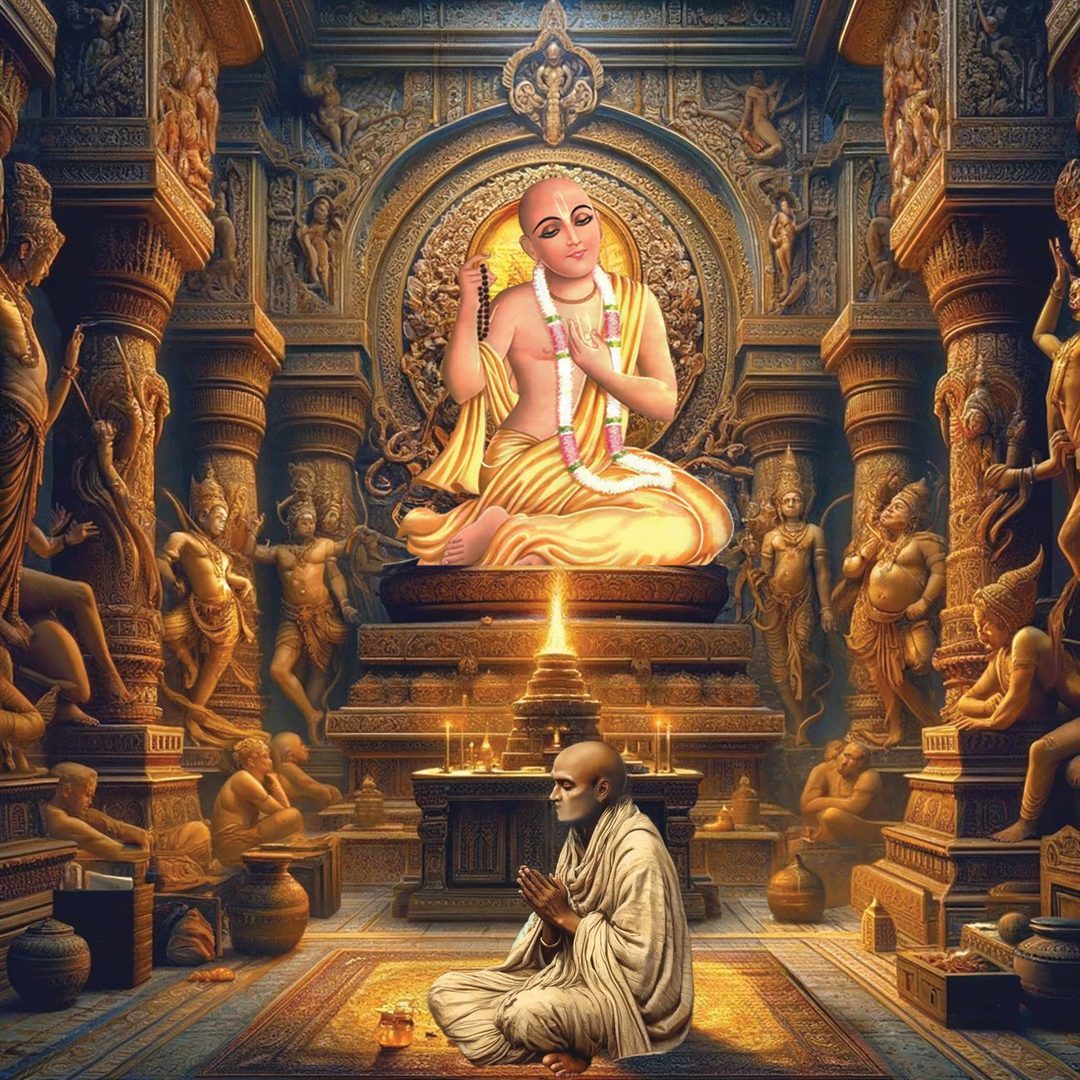
Narottama admits, in humility's voice,
"I spurned your shelter, a foolish choice.
Now fear has overtaken my troubled mind,
keep me safe at Your lotus feet, be kind.”

O Vaishnava Thākura, hear this prayer
from a wretched and fallen soul.
I am drowning, pull me by the hair
from saṁsāra’s ocean, make me whole.
I am drowning, pull me by the hair. I am drowning, pull me by the hair.
Commentary
Narottama dāsa Ṭhākura’s prayer Cry for Help forms part of his poetry collection Prārthana. The official title is Vaiṣṇava-vijñapti (Prayer to the Vaiṣṇava). As in other songs, the importance of vaiṣṇava-sevā (service to the devotees) is stressed. Prabhupāda often quotes the following line from Narottama dāsa Ṭhākura: chāriyā vaiṣṇava-sevā nistāra pāyeche kebā, which means, "Who has ever attained liberation without serving the vaiṣṇavas?"
The Urgency of Rescue from Saṁsāra
Taking the position of an ordinary, fallen soul, Narottama dāsa Ṭhākura addresses a devotee, a Vaiṣṇava Thākura, in the first stanza and begs him to rescue him from the ocean of birth and death—if need be by force, pulling him by the hair. In another song from Prārthana, he prays to the Lord: “O Hari, kindly catch my hair and pull me out of the well of material existence.” Being pulled by the hair is painful and, in ordinary circumstances, considered aggressive and offensive. In this case, however, being pulled by the hair is seen as an act of kindness because the prospect of drowning in the ocean of saṁsāra or the well of māyā is much worse, resulting in the repeated suffering of the miseries of birth and death. Therefore, a dire situation warrants an intense, perhaps even harsh, effort emphasizing the urgency and desperation involved in the rescue. In the Udyoga-parva of the Mahābhārata, there is a relevant passage where Kṛṣṇa says that a true friend should intervene and pull another away from harmful actions, even if it means using force, such as seizing them by the hair. This underscores the importance of taking decisive actions to protect a friend from impending calamity, thus fulfilling the role of a genuine friend who prioritizes the well-being of their companion over momentary discomfort or offense. In the Śrī Caitanya-caritāmṛta (Antya-līlā 4. 46-47), Śrī Caitanya Mahāprabhu
says: “Glorious is that devotee who does not give up the shelter of his Lord, and glorious is that Lord who does not abandon His servant. If by chance a servant falls down and goes somewhere else, glorious is that master who captures him and brings him back by the hair.”
The Inescapable Power of Karma
In the second stanza, Narottama dāsa Ṭhākura describes the lamentable situation of a person who has no spiritual guide to show them the path of dharma and teach spiritual knowledge. Without such guidance he feels himself at the mercy of the powerful force of Providence. Providence is understood to be an unseen, inconceivable influence (daiva) that comes from higher authorities, like God Himself, a demigod, the laws of nature, or the law of karma. Providence is beyond our control. Therefore, it is advised not to waste time and energy in a futile attempt to counteract such influences but to learn to tolerate adverse circumstances and take shelter of the Lord. The best way to learn this art is to accept the guidance of a bona fide spiritual master, a Vaiṣṇava Ṭhākura, who is capable of teaching their disciple how to surrender to the shelter at the lotus feet of the Lord. Generally, fear (bhaya) is considered an enemy, but from a another angle of vision, it can also be considered a friend when it serves as an impetus to look for a solution to the fearful condition of material existence. As Śrīla Prabhupāda said in a lecture in 1968 in Montreal: “Because māyā is very strong, we should be always fearful that ‘Māyā may not catch me.’ Always stick to Kṛṣṇa's lotus feet so māyā will not be able to touch you. Just like in a contaminated, diseased area, the doctor is also fearful, but he is taking precautions.” How to become fearless is the theme of another song, namely Govinda dāsa Kavirāja’s Bhajahū re mana, which is included in this collection under the title Free From Fear.
The Blind Wanderer
In the third stanza, Narottama dāsa Ṭhākura compares his mind to a blind wanderer who does not know where he is going. Having lost his good sense of discrimination, he follows blindly the urges of lust, anger, greed, illusion, madness and envy. All conditioned souls are to a greater or lesser degree under the sway of these six enemies. When the mind is colored by their influence, it becomes the cause of gross material bodies, one after another. As Kṛṣṇa explains in the Bhagavad-gītā (8.6), it is the mental condition at the time of death that determines our next life.
You are the Company You Keep
In the next two stanzas, Narottama dāsa Ṭhākura laments his choice to seek bad company, another recurring theme in many songs by the previous ācāryas. The harmful influence of materialistic people cannot be overstated. As the saying goes: “association rubs off,” meaning that the qualities, behaviors, and habits of the people we associate with tend to influence and affect our own. In the Bhagavadgītā (2.62) this idea is expressed as "saṅgāt sañjāyate kāmaḥ," which means "desire arises from association." This reflects the concept that the company we keep greatly influences our desires and behavior. Consequently, another common phrase that conveys a similar message is "You are the company you keep," emphasizing that the people we surround ourselves with have a significant impact on our character, values, and actions. In the context of bhakti, or devotional life, great emphasis is placed on the concept of good company, sādhu-saṅga (association with saintly persons), which is considered essential for spiritual progress. By associating with spiritually elevated individuals, our consciousness becomes purified and more focused on spiritual goals.
Conversely, associating with worldly or negative influences will most likely degrade our character and lead us away from spiritual pursuits. At the end of his prayer, Narottama dāsa Ṭhākura realizes that he was foolish when rejecting the good company of a saintly person, a Vaiṣṇava Ṭhākura. Seeing his precarious position in material existence, he is overtaken by fear. He is, therefore, now willing to surrender to a pure devotee who, as God’s representative, can also grant freedom from fear.
The Original Song
Ṭhākura vaiṣṇava-gaṇa
Narottama dāsa Ṭhākura
ṭhākura vaiṣṇava-gaṇa kari ei nivedana mo bara adhama durācāra dārūṇa-saṁsāra-nidhi tāte ḍubāila vidhi keśe dhari more kara pāra ṭhākura vaiṣṇava-gaṇa—the Vaiṣṇavas; kari ei nivedana—I request; mo—I am; bara—very; adhama—fallen; durācāra—wretched; dārūṇa—terrible; saṁsāranidhi—ocean of material existence; tābe—it; ḍubāila—drowned; vidhi—by Providence; keśe dhari—pulling my hair; more kara pāra—please deliver me. O saintly Vaiṣṇava! Please hear my prayer. I am the most wretched and fallen soul, drowning in this formidable material ocean by Providence. Please help me to cross over this ocean by grabbing me by the hair and pulling me out. vidhi bara balavān nā śune dharama-jñāna sadāi karama-pāśe bāṅdhe nā dekhi tāraṇa leśa jata dekhi saba kleśa anātha kātare tewi kānde vidhi—the Providence; bara balavān—very powerful; nā śune—not heed; dharama—religious principles; jñāna—knowledge; sadāi—always; karama-pāśe— with the ropes of karma; baṅdhe—binds; nā dekhi—I do not see; tāraṇa leśa—the way of deliverance; jata dekhi—whatever I see; saba kleśa—is simply distress; anātha—helpless; kātare—pathetic; tewi—because of that; kānde—weep. The laws of Providence are so powerful that they do not consider religion or knowledge, rather they bind one with the ropes of karma. I do not find any source of deliverance from these miserable conditions, and I always lament because I am afflicted by this, and I am without a master.
kāma krodha lobha moha mada abhimāna saha āpana āpana sthāne ṭāne aichana āmāra mana phire jena andha jana supatha vipatha nāhi jāne kāma—lust; krodha—anger; lobha—greed; moha—illusion; mada—pride; abhimāna—false ego; saha—along with; apana āpana sthāne—to their respective ends; ṭāne—pulls; aichana—such; āmāra mana—my mind; phire—wanders; jena— like; andha jana—blind man; supatha—right path; vipatha—wrong path; nāhi jāne— does not know. Lust, anger, greed, illusion, false pride and false ego are pulling me to their respective places. Thus my mind is like a blind man without knowing which one is the right path and which one is the wrong one. nā lainu sat mata asate majila citta tuwā pāye nā karinu āśa narottama dāse kaya dekhi śuni lāge bhaya tarāiyā laha nija pāśa nā lainu—did not take; sat mata—the path of the devotees; asate—in bad association; majila—absorbed; citta—heart; tuyā pāye—on your lotus feet; nā karinu—did not; āśa—desire; narottama dāse—Narottama dāsa; kaya—says; dekhi śuni—by seeing and hearing; lāge bhaya—I am afraid of; tarāiyā—by delivering; laha—keep me; nija pāśa—at your lotus feet. My mind did not accept the path of the devotees. I was absorbed in bad association. Narottama dāsa says, “I did not aspire for your lotus feet, O Lord. Please accept me and keep me at your lotus feet, as I am afraid.”