 Spiritual
(An adaptation of Narottama dāsa Ṭhākura’s Gaurāṅga karuṇa koro)

O Gaurāṅga cast Your merciful glance upon this wretch, allured by Māyā’s dance. Lost in the three worlds’ boundless domain, I am seeking Your lotus feet’s shelter again.
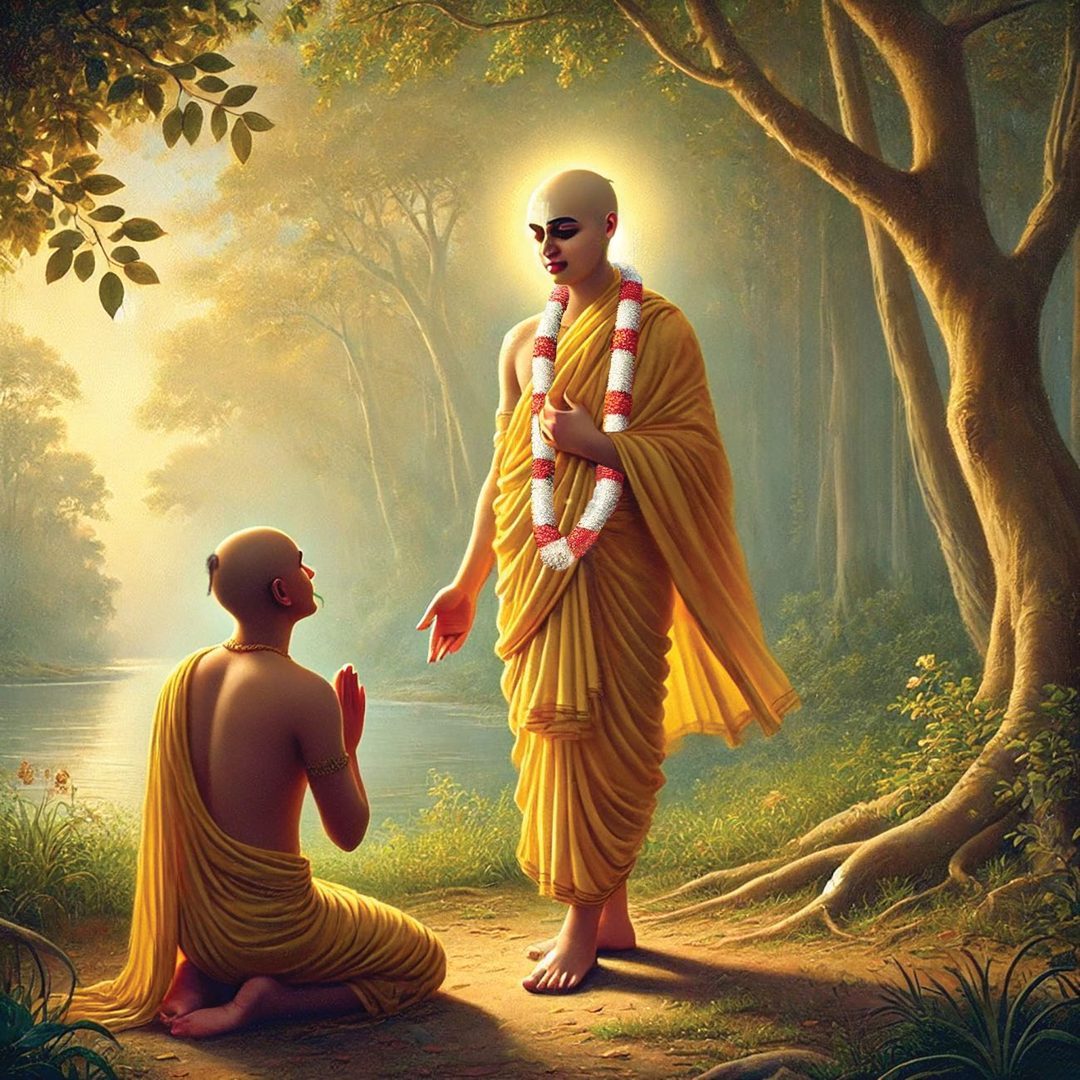
With a blade of grass between my teeth, I beg You, o Gaura, Your causeless mercy bequeath. In the temple of my heart, please take Your seat in a shrine of love, free from all conceit.
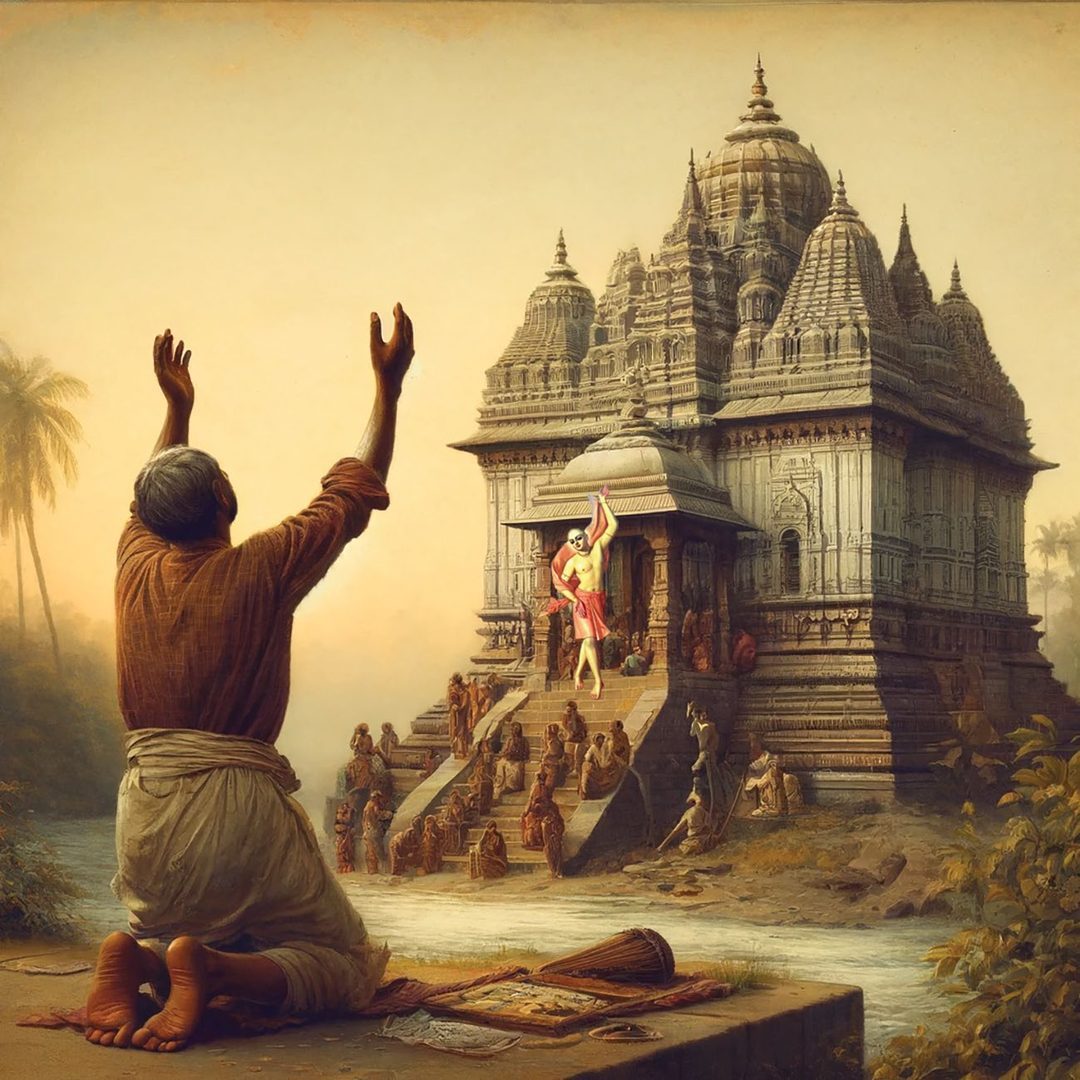
If You have no mercy seeing my condition, my misfortune and dreadful situation, why are You known as the savior of the fallen? Why bear this name, if You don’t save the forsaken?
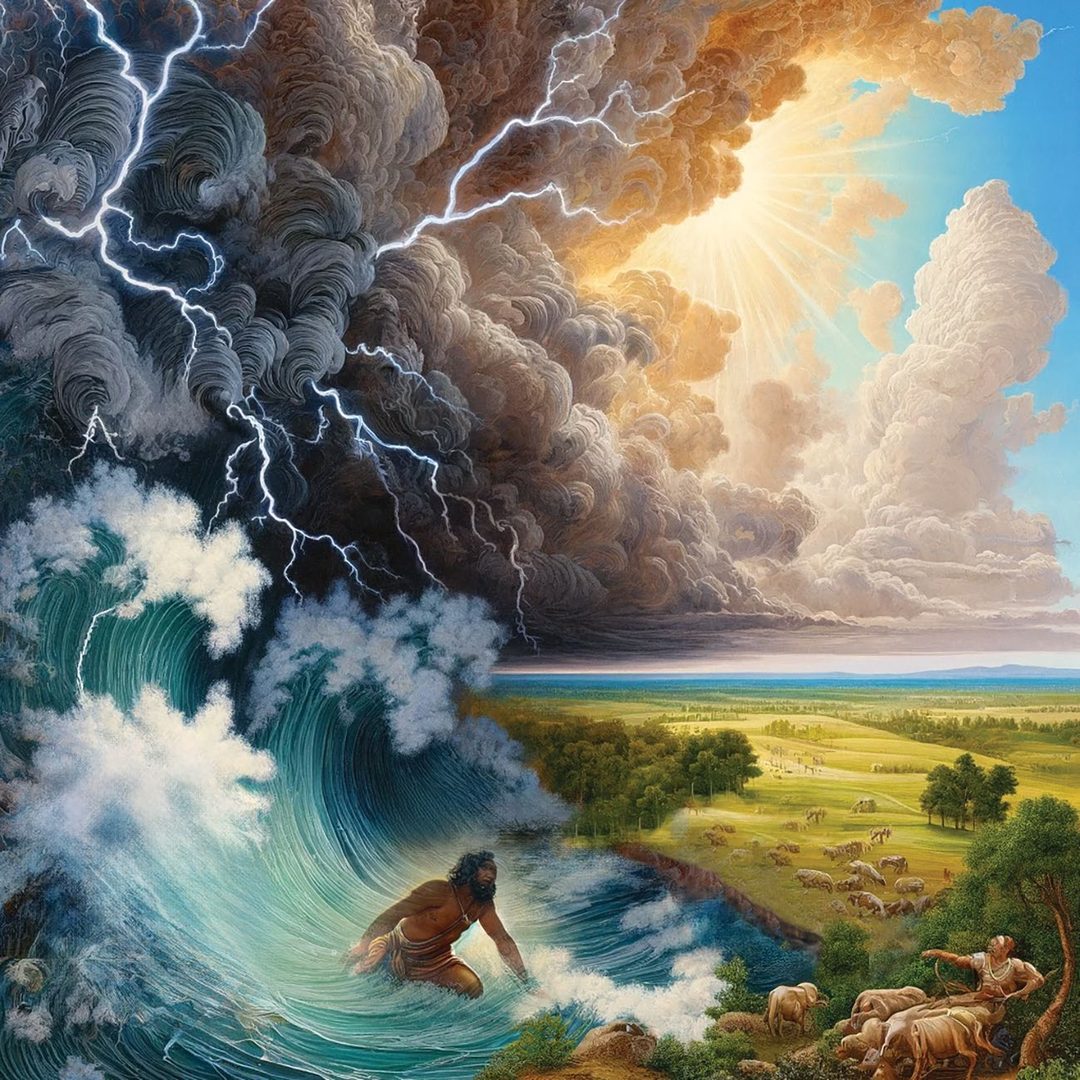
No escape from the tempest of worldly life, a constant struggle with no hope to survive. Your divine lotus feet, a boat to transcend to the shores of eternity, where all sorrows end.

I’m the servant of the servant, Narottama dāsa sings, of Śrī Kṛṣṇa Caitanya, the savior of all beings. My prayer flows to Him, like an endless stream, to the lotus feet of that most munificent Supreme.
Commentary
This song by Narottama dāsa Ṭhākura is a fervent prayer for the mercy of Gaurāṅga, the Supreme Lord in His feature as the most benevolent avatāra. Narottama presents himself as a dīna hīna jana, a low and destitute person. Dīna indicates someone whose mind is stricken with melancholy or sorrow, who is overcome with a sense of humility, and hīna means “devoid of” or “deprived of,” referring here to a lack of material or spiritual assets. He further emphasizes his lamentable position by stating that it would be difficult to find anyone more fallen in the entire universe.
As seen in many songs by Narottama dāsa Ṭhākura and Bhaktivinoda Ṭhākura, this self-deprecating attitude is a common theme. It is understood that the Lord is inclined to bestow His mercy on a person who has given up false pride, which Kṛṣṇa describes in the Bhagavad-gītā (16.4) as a quality typical of non-devotees.
The Sign of Humility
Following the example of Sanātana Gosvāmī, Narottama dāsa Ṭhākura, in the next stanza, presents himself before Gaura with a blade of grass between his teeth—a sign of utmost humility. He calls out to the Lord and begs Him to reside within the temple of his heart. As Kṛṣṇa says in the Bhagavad-gītā (18.61), He is situated within the heart of all living entities and directs their movements. One may wonder why Narottama dāsa Ṭhākura asks the Lord to reside within his heart, if He is already there. The answer is that the Lord, as the Supersoul, generally acts as a witness and sanctioner but does not involve Himself directly and personally as a well-wishing friend. This He does when a jīva turns to Him through loving devotional service, as explained in the Bhagavad-gītā (10.10). Then the Lord takes His seat in a purified heart and gives personal instructions on how to
come to Him. Or, as explained in the Śrīmad-Bhāgavatam (1.2.17), the Lord becomes a suhṛt (a well-wishing friend), when a jīva becomes eager to hear about Him, personally cleansing the heart from all inauspicious things. The first step toward this position is to become a humble servant of the Lord and His devotees and patiently wait for their mercy.
A Challenge to the Lord's Title
In the third stanza, Narottama suddenly shifts his mood, seemingly challenging Śrī Caitanya Mahāprabhu’s title of Patita-pāvana, the savior of the fallen. He implies that if the Lord wishes to maintain this title, He should prove His mercy and rescue him. Narottama dāsa Ṭhākura expresses a similar mood in another song, saying: “The purpose of Your coming to this world is to deliver the fallen souls. I assure You that You will not find a soul more fallen than me. Therefore, my claim is first.” Such challenges, of course, are not signs of disrespect but rather a desperate plea from the devotee to hasten the downpour of the Lord's mercy. The more fervent and sincere the prayer, the swifter the Lord's response.
The Ocean of Material Existence
In the next stanza, Narottama dāsa Ṭhākura offers a compelling reason for receiving Lord Caitanya’s mercy. He explains that he has fallen into an ocean agitated by hurricane-stricken waves. The comparison of the material world to an ocean is frequent in the songs of the Vaiṣṇava ācāryas and various Vedic texts. Even the best swimmer cannot survive long in the middle of an ocean, especially if the water is churned by a fierce tempest with towering waves repeatedly pushing the swimmer underwater. The only hope is help from outside, such as a boat from which people can lift the person out of the water. In his prayers to Kṛṣṇa, Brahmā compares the Lord’s lotus feet to such a boat (SB 10.14.58): samāśritā ye pada-pallava-plavaṁ mahat-padaṁ puṇya-yaśo murāreḥ bhavāmbudhir vatsa-padaṁ paraṁ padaṁ padaṁ padaṁ yad vipadāṁ na teṣām For one who has accepted the boat of the lotus feet of the Lord, who is the shelter of the cosmic manifestation and is famous as Mukunda, or the giver of mukti, the ocean of the material world is like the water contained in a calf's hoofprint. Paraṁ padam, the place where there are no material miseries, or Vaikuṇṭha, is his goal, not the place where there is danger in every step of life. Here, Narottama dāsa Ṭhākura hopes for the same saving grace and pleads with Gaurāṅga to bestow upon him the gift of His divine lotus feet, which are compared to a boat that can carry a humble servant of the Lord across the ocean of birth and death.
A Repeated Prayer
Narottama dāsa ends his song with a line he uses in many of his songs: prārthanā karaye sadā, narottama dāsa—“Narottama dāsa offers this prayer continuously.” From this, we can surmise that offering prayers regularly is recommended, not only in moments of need or a crisis. Floating in the agitated ocean of material existence is a constant crisis. Therefore, it is wise to pray for help continuously.
The Original Song
Gaurāṅga karuṇā koro
Narottama dāsa Ṭhākura
gaurāṅga karuṇā koro, dīna hīna jane mo-sama patita prabhu, nāhi tri-bhuvane gaurāṅga—O my dear Lord Gaurāṅga; karuṇā kara—please show Your mercy; dīna hīna jane—to this fallen and destitute soul; mo-sama—like myself; patita—fallen; prabhu—O Lord!; nāhi—there is not; tri-bhuvane—in the three worlds. O my dear Lord Gaurāṅga! Please show Your mercy to this lowly and destitute soul. O Lord! There is no one more fallen than myself in all the three worlds.
dante tṛṇa dhari’ gaura, ḍāki he tomāra kṛpā kari’ eso āmāra, hṛdaya mandire dante—between my teeth; tṛṇa dhari'—holding grass; gaura—O Lord Gaura!; ḍāki—I am calling out; he—O!; tomāra—your; kṛpā—mercy; kari'—showing; eso— please come; āmāra—my; hṛdaya mandire—into the temple of the heart. Holding grass between my teeth, O Lord Gaura, I am calling out to You now! Please be compassionate upon me and come to reside within the temple of my heart.
yadi dayā nā karibe, patita dekhiyā patita pāvana nāma, kisera lāgiyā yadi—if; dayā—mercy; nā karibe—You do not give; patita—fallen; dekhiyā—seeing; patita pāvana—savior of the fallen; nāma—the name; kisera lāgiyā—why are You known. If You do not give Your mercy, seeing how fallen I am, then why are You known as Patita Pāvana—the merciful savior of the fallen?
pareci bhava tuphāne, nāhika nistāra śrī caraṇa taraṇī dāne, dāse kara pāra pareci—I have fallen; bhava tuphāne—in the hurricane of this material world; nāhika nistāra—there is no escape; śrī caraṇa—divine lotus feet; taraṇī—compared to a boat; dāne—by the gift; dāse—to Your servant; kara pāra—make cross over. I am plunged amidst the violent hurricane-stricken waves in the ocean of this material world, from which there is no escape. Kindly give me the gift of Your divine lotus feet, which are compared to a boat in which Your servant may cross over the ocean of birth and death.
śrī kṛṣṇa caitanya prabhu, dāsera anudāsa prārthanā karaye sadā, narottama dāsa śrī kṛṣṇa caitanya prabhu—Lord Śrī Kṛṣṇa Caitanya Prabhu; dāsera anudāsa—servant of the servant; prārthanā karaye—makes this prayer; sadā—always; narottama dāsa—Narottama dāsa. Narottama dāsa, the servant of the servant of Śrī Kṛṣṇa Caitanya Prabhu, ceaselessly makes this prayer.