 Spiritual
(An adaptation of Bhaktivinoda Ṭhākura’s Bhuliyā tomāre)
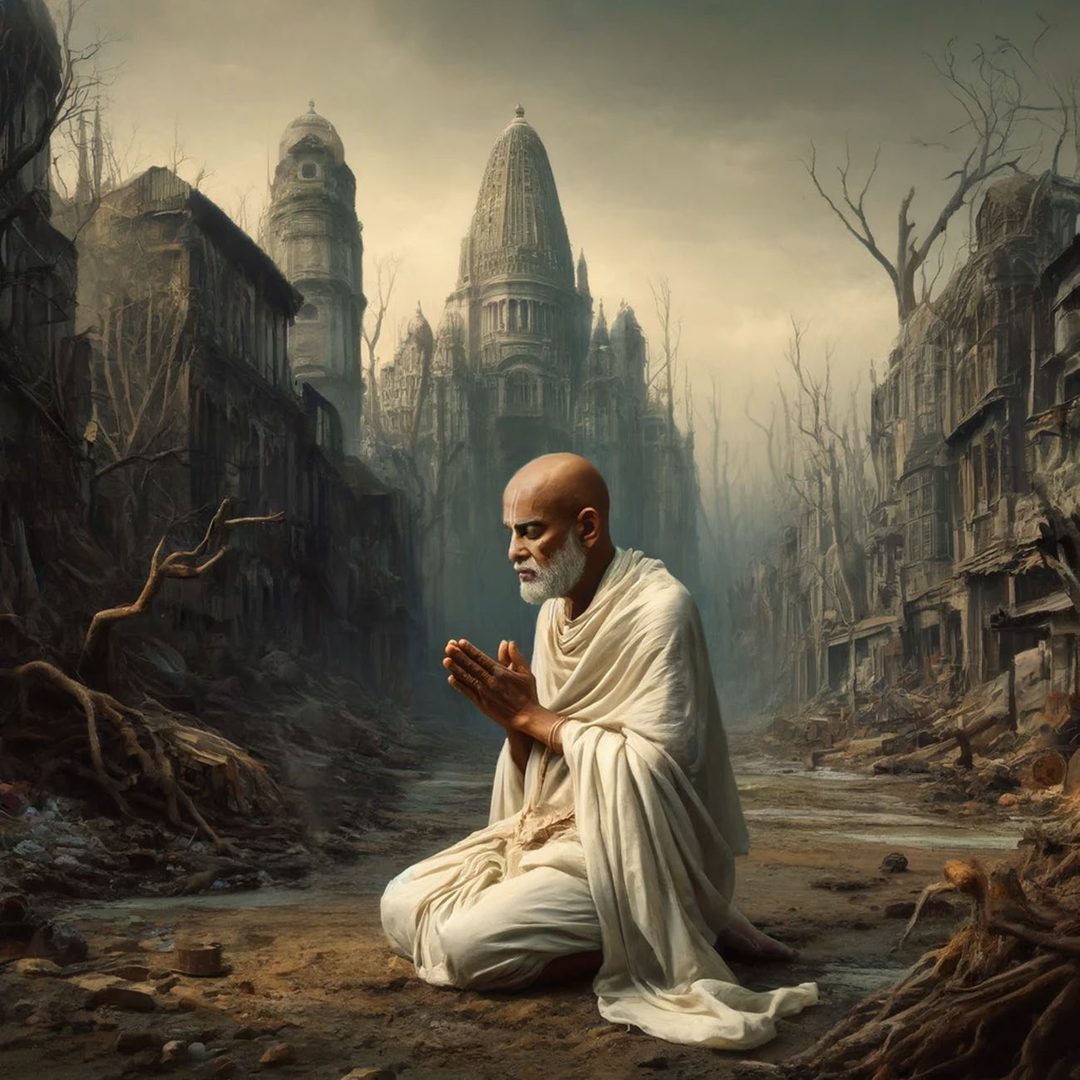
I turned from You, O Lord,
to a realm where sorrow reigns,
And now, before Your lotus feet,
I lay my tale of pains.
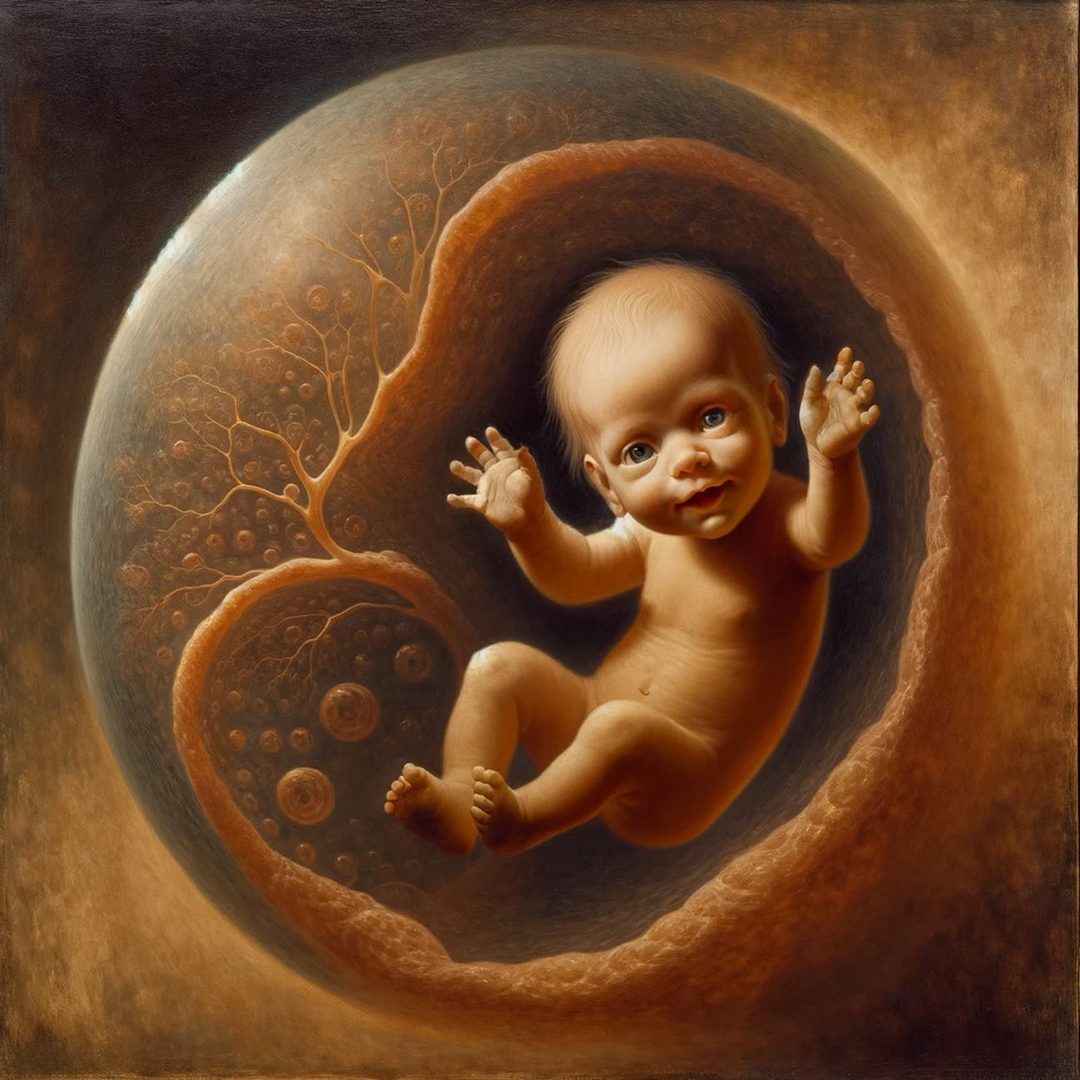
Inside my mother's womb,
fettered and unseen,
Your vision blessed my infant eyes,
then vanished from the scene,
leaving Your servant behind.

I vowed at birth to worship You,
yet as Māyā's veil descended,
the illusions of this earthly sphere
my early promise ended.

As a cherished child, I smiled and laughed,
embraced by kin so dear.
Thus I forgot You more and more,
and the world as paradise appeared.
5a
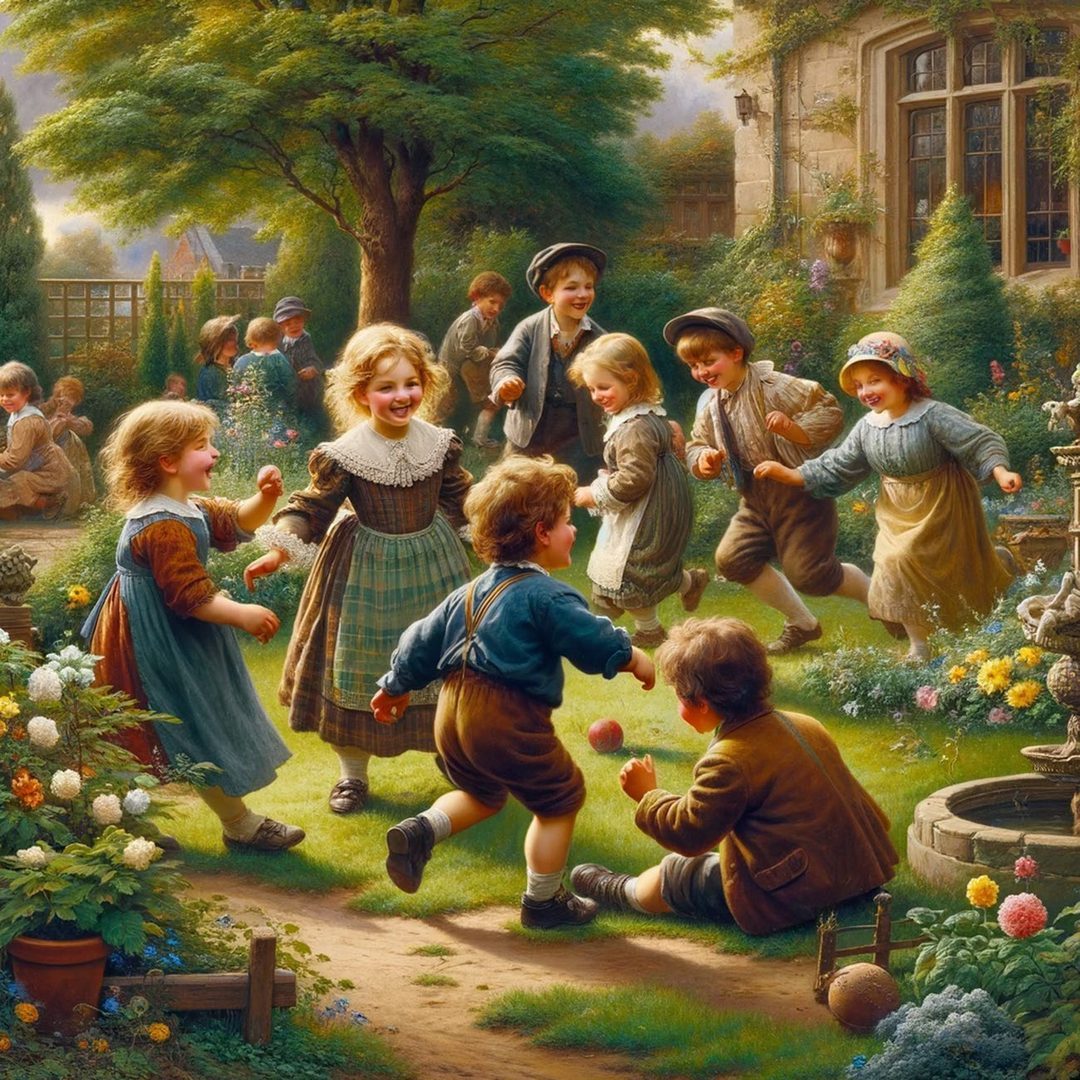
Day by day, I grew, and with my friends
in games and mirth I shared.

5b
Soon intellect awoke in me,
in studies I was snared.

6a
From place to place I travelled,
absorbed in maintaining my family.

6b
Proud of my learning and wealth amassed,
I forgot You, O Hari!

I turned from You, O Lord,
to a realm where sorrow reigns,
And now, before Your lotus feet,
I lay my tale of pains.
Now in old age, with sadness in my heart, I weep alone bitterly, as death lurks in the dark.
O Lord, I failed to worship You,
my days passed in vain.
What will be my fate now?
Commentary
Forgetfulness of our identity as Kṛṣṇa’s eternal servant and the eternal spiritual relationship we have with Him is the root cause of material bondage which implies being situated in different material bodies—as humans, animals, demigods, etc. Therefore, Bhaktivinoda Ṭhākura sings bhuliyā tomāre, saṁsāre āsiyā: “Forgetting You, I have come to the world of saṁsāra and entered the cycle of repeated birth and death.” This song forms part of the songbook Śaraṇāgati, a collection of songs published in 1893 about the process of surrender.
Kṛṣṇa as the Deliverer
In the Bhagavad-gītā (12.7), Kṛṣṇa describes Himself as the samuddhartā mṛtyu-saṁsāra-sāgarāt, the deliverer from the ocean of birth and death, for those who surrender unto Him. Surrender is therefore key to being delivered, and that is why Kṛṣṇa concludes His instructions in the Bhagavad-gītā (18.66) with a call for surrender. In exchange, He promises to protect the surrendered soul from all sinful reactions. However, as Śrīla Prabhupāda points out, Kṛṣṇa did not explain how to surrender, and because most people were unable to do so, He came again, this time as a devotee—Śrī Caitanya Mahāprabhu—who explained in detail how to surrender to one of His foremost disciples, Sanātana Gosvāmī.
Understanding the Jīva’s Position
When Sanātana Gosvāmī approached Śrī Caitanya Mahāprabhu, he posed two fundamental questions: “Who am I? and Why am I suffering from the threefold miseries?” Śrī Caitanya Mahāprabhu began His explanation by first establishing the jīva’s constitutional position as the eternal servant of Kṛṣṇa. The living entity is Kṛṣṇa’s marginal energy, simultaneously one with and distinct from the Lord, like a molecular particle of sunshine or fire. Consequently, the jīva is naturally dependent on its source, which translates into service within a personal relationship. The jīva suffers the threefold miseries of material existence because it is influenced by the avidyā (nescience) potency, which obscures its constitutional identity. Next Śrī Caitanya Mahāprabhu pointed out the root cause of the jīva’s suffering condition: kṛṣṇa bhuli’, forgetfulness of Kṛṣṇa (Cc. Madhya 20.117): Forgetting Kṛṣṇa, the living entity has been attracted by the external feature from time immemorial. Therefore the illusory energy [māyā] gives him all kinds of misery in his material existence [saṁsāra-duḥkha].
The Forgotten Promise
Forgotten (Bhuliyā tomāre) deals with this topic in depth. Bhaktivinoda Ṭhākura begins his song by describing the embryo in the womb, a suffering condition experienced not only by humans but also by other living beings, including birds and insects, who are confined in eggs. Being trapped in a reduced space—whether womb or egg— over a period of time is very uncomfortable. However, it is only the human being who can become aware of their pitiable situation and look for a solution. As Kṛṣṇa says in the Bhagavad-gītā (7.14), the solution is to surrender to Him who is the controller of the illusory energy, māyā: This divine energy of Mine, consisting of the three modes of material nature, is difficult to overcome. But those who have surrendered unto Me can easily cross beyond it. Śrī Caitanya Mahāprabhu tells Sanātana Gosvāmī that the process of surrender consists of six steps: the acceptance of those things favorable to devotional service, the rejection of unfavorable things, Song 8 the conviction that Kṛṣṇa will give protection, the acceptance of the Lord as one’s guardian or master, full self-surrender, and humility.
Humility vs. Pride
It is important to note that these steps are not necessarily sequential. They don’t have to be taken one after another, as is evident from the way Bhaktivinoda Ṭhākura structured his songbook. He wrote 31 songs to illustrate the surrendering process, and the first seven songs are about dainya (humility), which comes last in Śrī Caitanya Mahāprabhu’s list. Why dainya first? It could be reasoned that without a minimum of humility, one will not even consider beginning the process of surrender. A proud person not only scoffs at the idea of being humble but considers humility a sign of weakness. In fact, such a person considers pride a virtue. There are numerous historical examples—such as the French Revolution, American Revolution, and Indian Independence Movement—where political leaders have invoked national pride, rooted in a shared cultural and historical identity, to rally mass support for their causes, elevating the sense of national pride to a desirable goal for the entire country. However, as Kṛṣṇa points out in the Bhagavad-gītā (16.4), pride, arrogance, and conceit are key traits of a non-devotional mentality that must be curbed. Instead, humility is exalted as a fundamental virtue, essential for surrender. Through his songs, Bhaktivinoda Ṭhākura teaches us what the mentality of true surrender looks like. His method is to speak in the first person, putting himself in the position of a conditioned soul, to show us how to approach the Lord in a humble state of mind.
The Typical Life Journey
In the first of the seven songs, Bhuliyā tomāre, he submits his life story which he calls a tale of woe (duḥkhera kathā). Bhuliyā tomāre, saṁsāre āsiyā: “O Lord, having forgotten You, I have come to this material world.” This reflects Śrī Caitanya Mahāprabhu’s explanation to Sanātana Gosvāmī on how the jīva comes to the material world: kṛṣṇa bhuli’ sei jīva anādi-bahirmukha. “Forgetting Kṛṣṇa, the living entity has been attracted by the external feature from time immemorial.” In the next five stanzas, Bhaktivinoda Ṭhākura paints a picture of the typical life course of a human being in the material world. His description of the living entity’s position in the womb reminds us of Kapiladeva’s description in the Third Canto of Śrīmad-Bhāgavatam. There Kapila describes to His mother Devahūti in Chapter 31 the movements of the living entities. The jīva is trapped inside a womb, which resembles an airtight bag, where it can hardly move. Shortly before delivery, if a child is fortunate, it can remember all the troubles of its past one hundred births and then pray to the Supreme Lord for relief from all fear promising to engage in His devotional service. But then, as Bhaktivinoda Ṭhākura describes it, immediately after birth, the jīva’s consciousness is covered by the veil of māyā and thus it forgets everything, including its promise. Latter, being surrounded by fond relatives, the infant forgets completely the suffering it had experienced within the womb and during birth. In the following months and years, being showered with affection by its mother, father, and other relatives, the living entity falls more and more under the spell of illusion. As Bhaktivinoda Ṭhākura says in Stanza 4: “I began to think that the material world was a very nice place.”
The Illusions of the World
In the following stanzas, he describes a typical life journey from childhood with its plays, to youth with its studies, to adulthood with its earning wealth and having a family, and finally to old age. Old age is the time of reckoning, and the author laments that he failed to
worship the Lord and instead passed his days in vain. The concluding words are foreboding: “What will be my fate now?”
A Timeless Message
Although this song was composed almost 150 years ago, its message is as relevant as ever. Circumstances may change due to the influence of time, but the underlying nature of material existence remains the same, whether 150 years or 150,000 years ago. Even millions of years ago, the conditioned souls faced the same problems. Prahlāda Mahārāja, who lived during that time, gave a similar description to his schoolmates. He said that a human being lives for a maximum of one hundred years of which half are lost due to sleeping. Then, during childhood, when everyone is bewildered, one passes ten years. Similarly, in boyhood, engaged in sporting and playing, one passes another ten years. In this way, twenty years are wasted. Latter, in old age, when one is an invalid, unable to perform even material activities, one passes another twenty years wastefully. In the remaining years one becomes increasingly attached to family life because of insatiable lusty desires and strong illusions. In this way, the opportunity for self-realization that the human form of life offers is lost. Throughout the Śrīmad-Bhāgavatam, we find similar stories and instructions because forgetfulness is a common phenomenon, especially in Kali-yuga. Consequently, regularly hearing about spiritual topics and being reminded of the real purpose of life is a practice recommended by all great teachers.
The Original Song
Bhuliyā tomāre
Bhaktivinoda Ṭhākura
bhuliyā tomāre, saṁsāre āsiyā, peye nānā-vidha byathā tomāra caraṇe, āsiyāchi āmi, baliba duḥkhera kathā bhuliyā—forgetting; tomāre—You; saṁsāre—to this material world; āsiyā—having come; peye—experienced; nānā—many; vidha—varieties; byathā—of sufferings; tomāra—Your; caraṇe—to lotus feet; āsiyāchi—have come; āmi—I; baliba—I will speak; duḥkhera—of woe; kathā—my tale. O Lord, having forgotten You and come to this material world, I have experienced a host of sins and sorrows. Now I approach Your lotus feet and submit my tale of woe. jananī jaṭhare, chilāma yakhana, viṣama bandhana-pāśe eka-bāra prabhu! dekhā diyā more, vañcile e dīna dāse jananī—of my mother; jaṭhare—in the womb; chilāma—I was; yakhana—when; viṣama—painful; bandhana—in the encagement; pāśe—bound up; eka—one; bāra—time; prabhu—O Lord; dekhā—a vision (of Yourself); diyā—having given; more—to me; vañcile—abandoned; e—this; dīna—poor; dāse—servant. While I was bound up tightly in the unbearable confines of my mother’s womb, O Lord, You once revealed Yourself before me. After appearing briefly, You abandoned this poor servant of Yours.
takhana bhāvinu, janama pāiyā,
kariba bhajana tava
janama hoila, pari' māyā-jāle,
nā hoila jñāna-lava
takhana—at that time; bhāvinu—I thought; janama—birth; pāiyā—after taking; kariba—I will perform; bhajana—worship; tava—Your; janama—birth; hoila— having taken; pari’—I fell; māyā—of illusions; jāle—into a network; nā—not; hoila— there was; jñāna—of knowledge; lava—a drop. At that moment I thought, “After my birth this time, I will surely worship You with undivided attention.” But alas, after taking birth I fell into the entangling network of worldly illusions; thus I possessed not even a drop of true knowledge. ādarera chele, sva-janera kole, hāsiyā kāṭānu kāla janaka jananī-snehete bhuliyā, saṁsāra lāgila bhāla ādarera—dear; chele—son; sva-janera—of relatives; kole—in the arms; hāsiyā— laughing; kāṭānu—spent; kāla—my time; janaka—of my father; jananī—of my mother; snehete—by the affection; bhuliyā—I forgot (You); saṁsāra—the material world; lāgila—seemed to be; bhāla—good. As a dear son fondled in the laps of attentive relatives, I passed my time smiling and laughing. The affection of my father and mother helped me forget You still more, and I began to think that the material world was a very nice place.
krame dina dina, bālaka hoiyā, bhelinu bālaka-saha āra kichu dine, jnāna upajila, pāṭha pari ahara-ahaḥ krame—gradually; dina dina—day by day; bālaka—a young boy; hoiyā—I became; bhelinu—played; bālaka—other boys; saha—with; āra—more; kichu—(after) a few; dine—days; jnāna—my knowledge; upajila—grew; pāṭha—school lessons; pari—I studied; ahara-ahaḥ—every day. Day by day I gradually grew into a young boy and began playing with other boys. Soon my powers of understanding emerged, so I diligently studied my school lessons every day.
vidyāra gaurave, bhrami' deśe deśe,
dhana uparjana kari
sva-jana pālana, kari eka-mane,
bhulinu tomāre, hari!
vidyāra—of my education; gaurave—proud; bhrami’—I traveled; deśe deśe—from place to place; dhana—of wealth; uparjana—the earning; kari—I did; sva-jana—of my family; pālana—the maintenance; kari—I did; eka—with one-pointed; mane— attention; bhulinu—I forgot; tomāre—You; hari—O Lord Hari. Proud of my accomplished education, I latter traveled from place to place and earned much wealth. Thereby maintaining my family with undivided attention, I forgot You, O Lord Hari!
bārdhakye ekhana, bhakativinoda, kāṅdiyā kātara ati nā bhajiyā tore, dina bṛthā gela, ekhana ki habe gati? bārdhakye—in old age; ekhana—now; bhakativinoda— Bhaktivinoda; kāṅdiyā— weeps; kātara—in sadness; ati—great; nā—not; bhajiyā—worshiped; tore—You; dina—days; bṛthā—useless; gela—have gone; ekhana—now; ki—what; habe—will be; gati—my fate. Now in old age, this Bhaktivinoda very sadly weeps as death approaches. I failed to worship You, O Lord, and instead passed my days in vain. What will be my fate now?