 Spiritual
(An adaptation of Narottama Dāsa Ṭhākura’s Gorā Pahū)
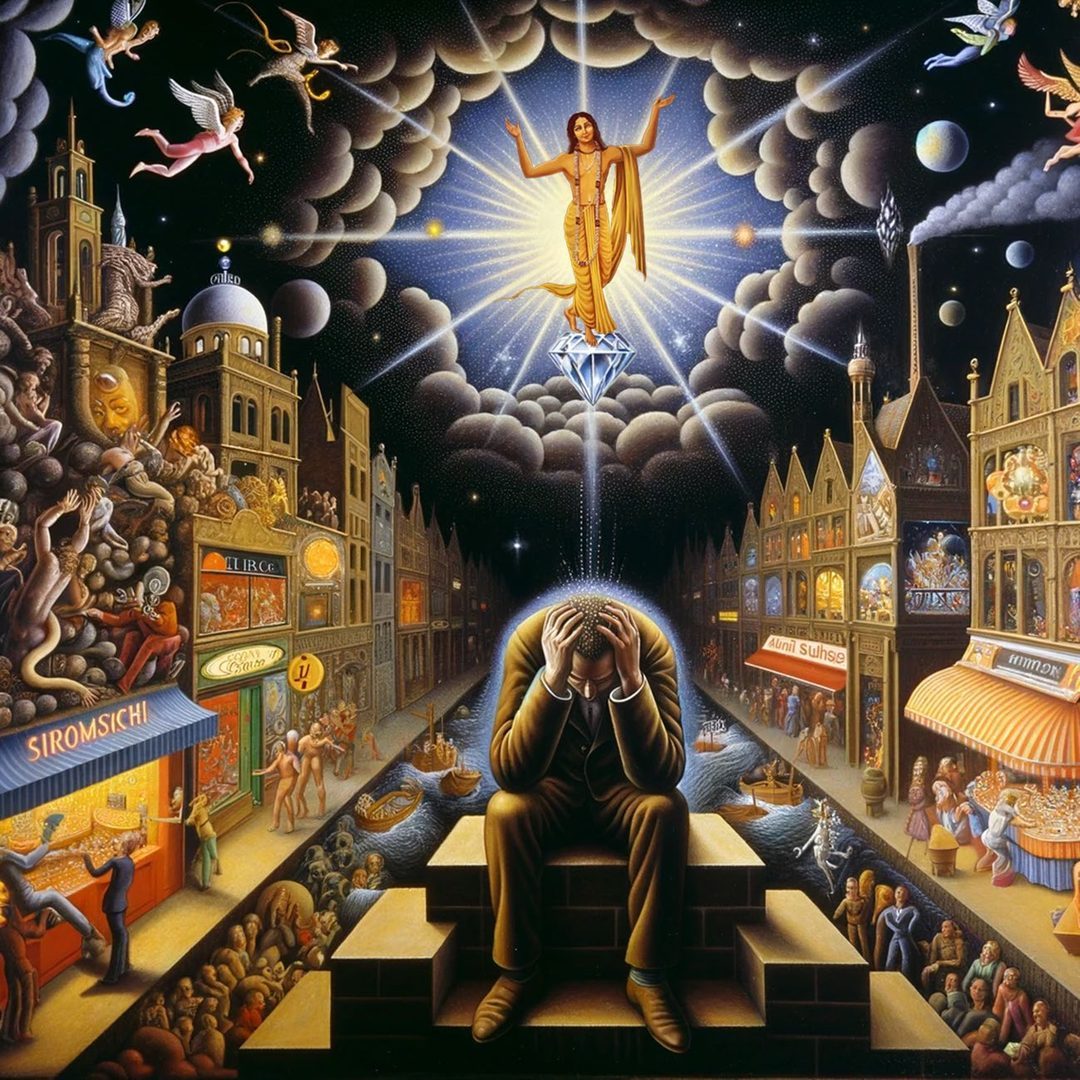
Gorā Pahū, I failed to worship You. Gorā Pahū, I have no devotion true.
Instead of the jewel-like treasure of pure love divine, I only gained my spirit’s ever-increasing decline.

The purpose of human life—not my concern in the least, chasing fleeting shadows instead—illusion only increased. Drowning in the ocean of birth and death, chained by misdeeds and sins, the treasure of pure love forsaken, my only pursuit: worthless things.
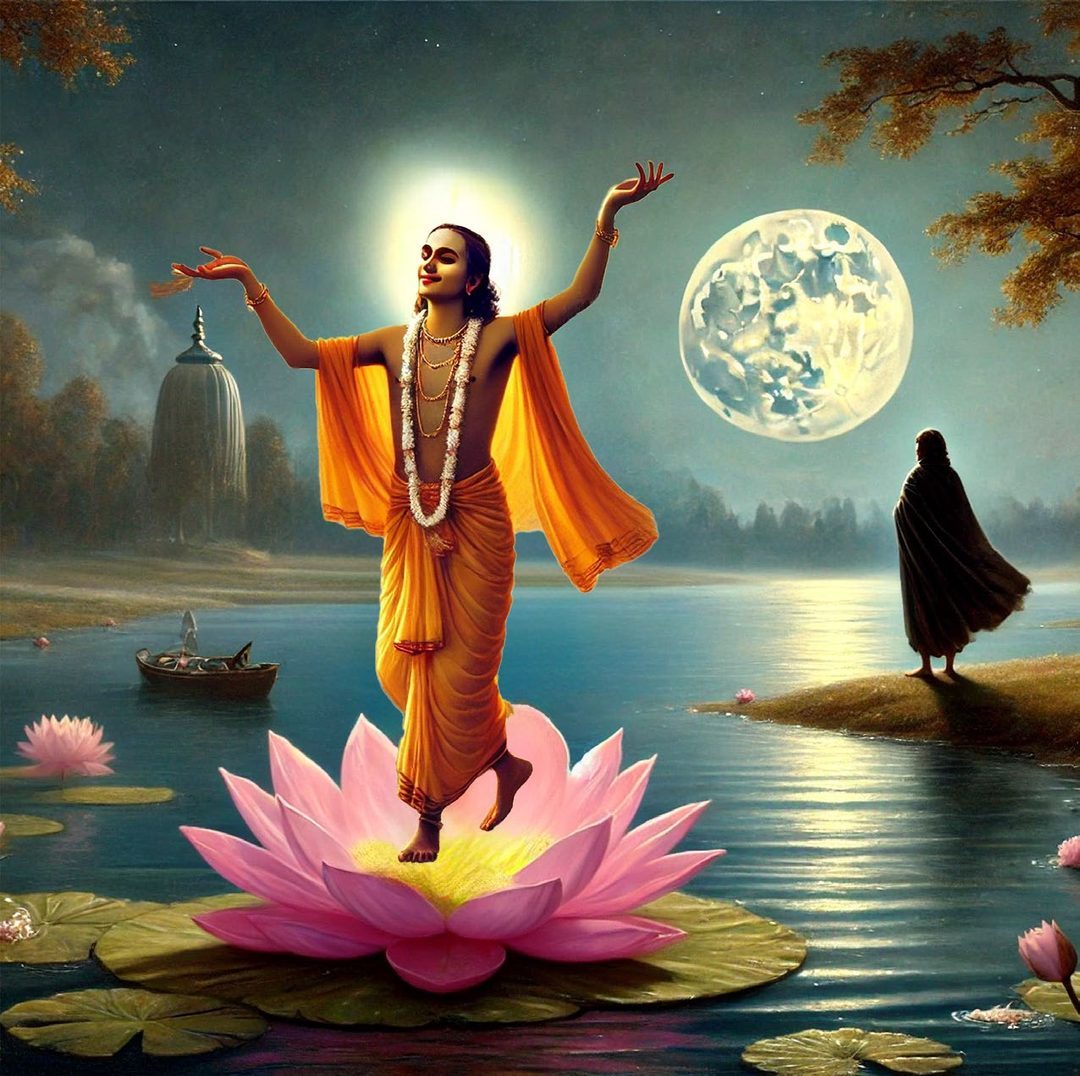
Gorā Pahū, I failed to worship You. Gorā Pahū, I have no devotion true.
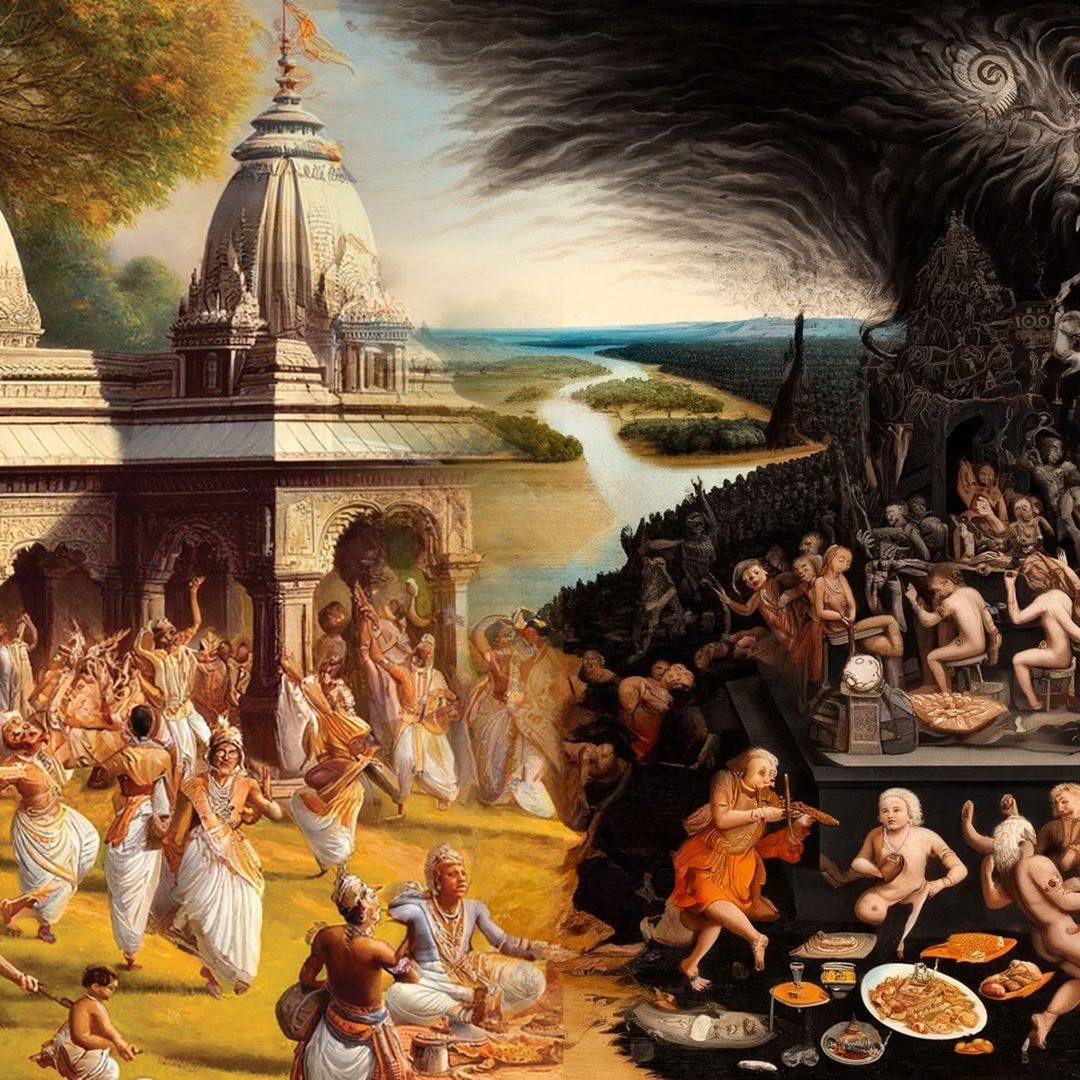
3-4 Sat-saṅga I always shunned, to enjoy with the unsaintly, bound by karma's unyieling ropes, unable to get free. I am always tempted to swallow the poison of sensual passion. I have no taste to absorb myself in the nectar of Gaura’s kīrtaṇa.
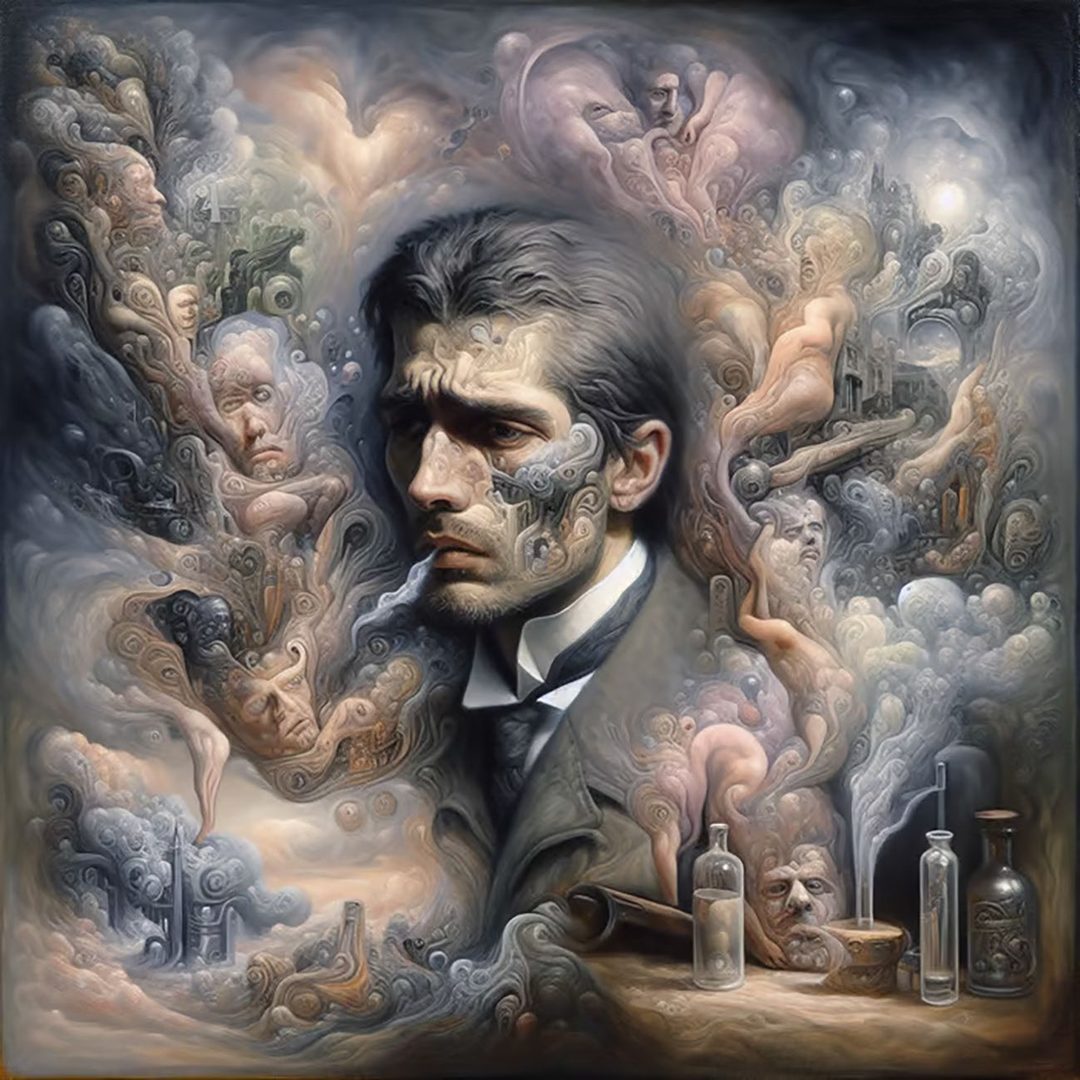
Gorā Pahū, I failed to worship You. Gorā Pahū, I have no devotion true.
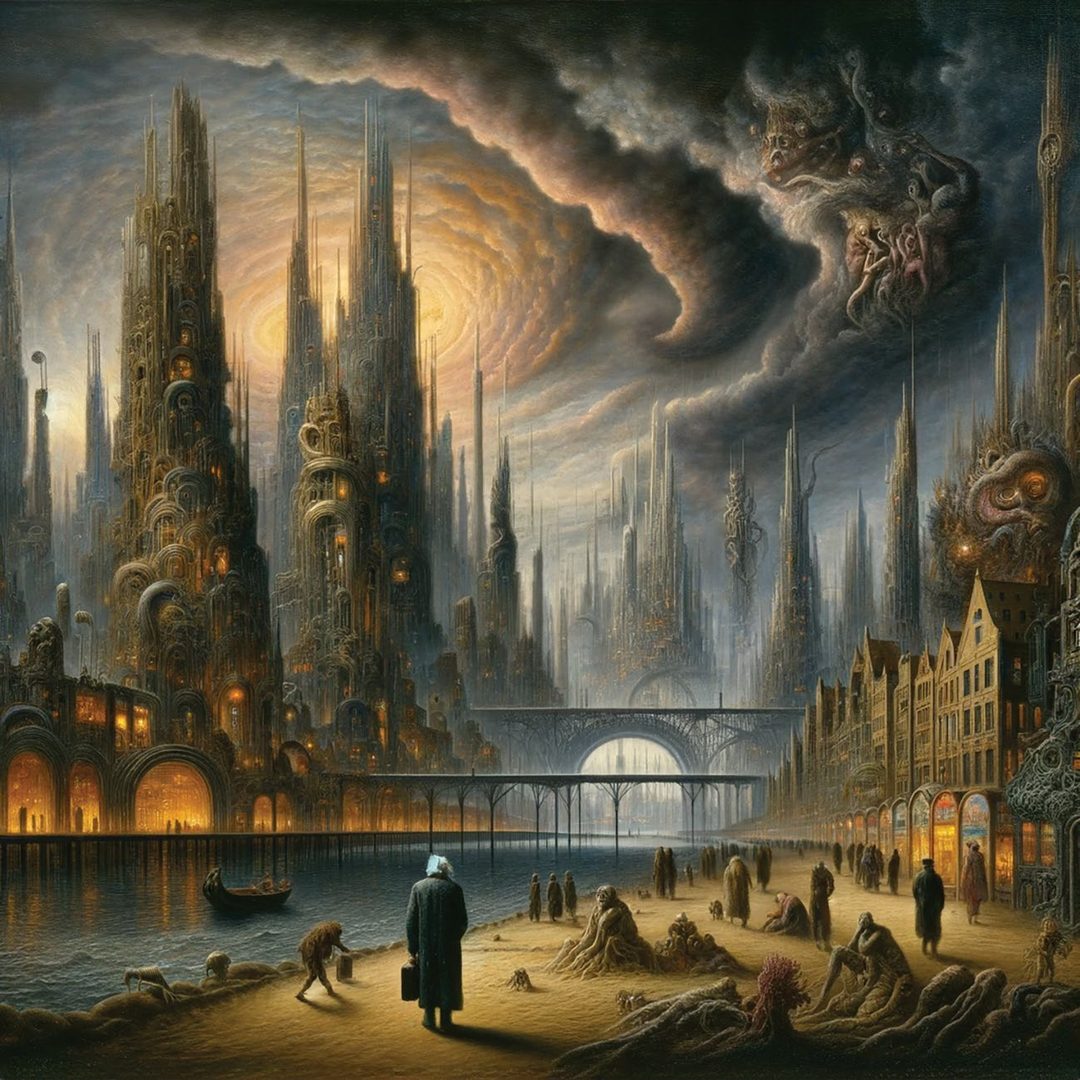
Why do I continue to linger in this world of worry and woe? What happiness can be found here, where sorrow only grows? Narottama dāsa ponders, in a heartfelt lament and cry, "Why am I still living? Why long ago I did not die."
Commentary
The original title of this song, commonly known as Gorā Pahū, is Akṣepa (Regret). Narottama dāsa Ṭhākura expresses deep disappointment over his failure to worship Śrī Caitanya Mahāprabhu, also called Gorā Pahū—the most magnanimous of Kṛṣṇa’s avatāras— who brought the jewel-like treasure of pure love (prema-ratanadhana) to this world. He laments that he was not interested in pursuing the true purpose of life, which is to free oneself from material bondage and enter the kingdom of God, where prema (divine love) reigns supreme. Instead, he spent his life chasing fleeting shadows. Material objects, no matter how valuable they seem, can be compared to shadows because they lack real substance. The material creation, with its innumerable gold mines, diamond fields, pearl beds, and countless other precious things, comes and goes in cosmic cycles. It is therefore compared to a shadow that moves according to the laws of nature, which act according to the will of the Supreme Controller. Above all, our own body, through which we enjoy these things is also transient. Consequently, all our plans and attempts to create lasting happiness are destined to end in failure.
The Consequences of Material Attachment
As Ṛṣabhadeva points out to his sons in the Śrīmad-Bhāgavatam (5.5.5): As long as one does not inquire about the spiritual values of life, one is defeated and subjected to miseries arising from ignorance. Be it sinful or pious, karma has its resultant actions. If a person is engaged in any kind of karma, his mind is called karmātmaka, colored with fruitive activity. As long as the mind is impure, consciousness is unclear, and as long as one is absorbed in fruitive activity, he has to accept a material body.
Having a material body means being subjected to the inevitable miseries of birth, death, old age and disease. Narottama dāsa Ṭhākura admits that he feels as though he is drowning in the ocean of birth and death. He understands that this dire situation is the result of his own misdeeds, which have bound him with the ropes of karma. However, not only evil deeds but even good deeds create binding karmic ropes, as Ṛṣabhadeva points out in the above-mentioned verse. A sober person will therefore act in such a way that no karmic reactions are produced. That type of action is described in the Bhagavad-gītā as akarma, action in Kṛṣṇa consciousness.
The Root Cause of Misfortune
In the third stanza, Narottama dāsa Ṭhākura identifies the root cause of his misfortune as bad association (asat-saṅga). He admits that he avoided good association (sat-saṅga) and instead preferred the company of materialistic people (asate vilāsa). Saṅga, whether sat or asat, is a key concept in Vaiṣṇava philosophy. A simple definition is “an intimate connection on a physical, mental-emotional or spiritual level.” Through such saṅga, our consciousness becomes colored and shaped, and takes a certain direction in life, thus preparing our future. Narottama dāsa Ṭhākura warns of the dangerous effects of asatsaṅga by comparing it to drinking poison, a metaphor that appears in other songs as well, notably Hari! Hari! biphale, included in this song cycle as A Wasted Human Birth. He cautions that one of the harmful effects of drinking viṣaya-viṣa, the poison of sense gratification, is the loss of taste for gaura-kīrtana, the chanting and hearing of Gaurāṅga’s glories.
The Futility of a Life Without Spiritual Content
Narottama dāsa Ṭhākura concludes his song with a rhetorical question: “Why am I still living?” In essence, he questions the value
of a life devoid of spiritual purpose. Most people, however, do not ask themselves this question, as they are content with simply being healthy and wealthy. To become wise is not on their list of goals to achieve. Śrīla Prabhupāda frequently highlighted this materialistic mindset, warning against a life focused solely on enjoyment without spiritual pursuit. In his commentary on Śrīmad-Bhāgavatam (2.3.18), he explains that modern society's obsession with extending material life often blinds people to the true purpose of existence. The materialistic man of the modern age will argue that life, or part of it, is never meant for discussion of theosophical or theological arguments. Life is meant for the maximum duration of existence for eating, drinking, sexual intercourse, making merry and enjoyment. The modern man wants to live forever through the advancement of material science, and there are many foolish theories for prolonging life to the maximum duration. But the Śrīmad-Bhāgavatam affirms that life is not meant for so-called economic development or the advancement of materialistic science for the hedonistic philosophy of eating, mating, drinking and merrymaking. Life is solely meant for tapasya, for purifying existence so that one may enter into eternal life just after the end of the human form of life.
The Original Song
Gorā Pahū
(Akṣepa) Narottama dāsa Ṭhākura
gorā pahū nā bhajiyā goinu prema-ratana-dhana helāya hārāinu gorā pahū—Lord Gaurāṅga; nā bhajiyā—not worshiping; goinu—I invited spiritual death; prema—of love of God; ratana—the jewel; dhana—transcendental treasure; helāya—by neglect; hārāinu—I have lost. I did not consider worshiping Lord Gaurāṅga, but instead brought about my spiritual ruin by neglecting that treasure trove of pure love of God. adhane yatana kari dhana teyāginu āpana karama-doṣe āpani ḍubinu adhane—for worthless things; yatana—striving; kari—doing; dhana—the treasure of love of God (the real purpose of life); teyāginu—I have rejected; āpana—my; karama-doṣe—in the misdeeds; āpani—myself; ḍubinu—I have drowned. I rejected the real purpose of my life and strove for worthless things. I am drowning in the ocean of birth and death because of my own misdeeds. sat-saṅga chāri' kainu asate vilāsa te-kāraṇe lāgila ye karma-bandha-phāṅsa sat—of devotees; saṅga—the association; chāri’—giving up; kainu—I have made; asate—with materialists; vilāsa—enjoyment; te-kāraṇe—for that reason; lāgila— began; ye—which; karma—of fruitive activities; bandha—of the entanglement; phāṅsa—the web. I gave up the association of the saintly devotees to enjoy myself in the company of the ungodly. Therefore I am bound up by the snare of karma.
viṣaya-viṣama-viṣa satata khāinu gaura-kīrtana-rase maghana nā hainu viṣaya—of sense gratification; viṣama—most dangerous; viṣa—the poison; satata— always; khāinu—I have drunk; gaura—of Lord Caitanya; kīrtana—of the congregational chanting of the holy name; rase—in the mellows; maghana— merged; nā—not; hainu—I have become. I am always drinking the dangerous poison of sense gratification, and therefore I can never absorb myself in the blissful nectar of chanting the glories of Lord Caitanya. kena vā āchaye prāṇa ki sukha pāiyā narottama dāsa kena nā gela mariyā kena vā—why; āchaye—is there; prāṇa—life; ki—what; sukha—happiness; pāiyā— getting; narottama dāsa—Narottama dāsa; kena—why; nā—did not; gela—go; mariyā—(to) death. Why am I still living and what happiness do I have? Narottama dāsa says, "Why have I not died long ago?"