 Spiritual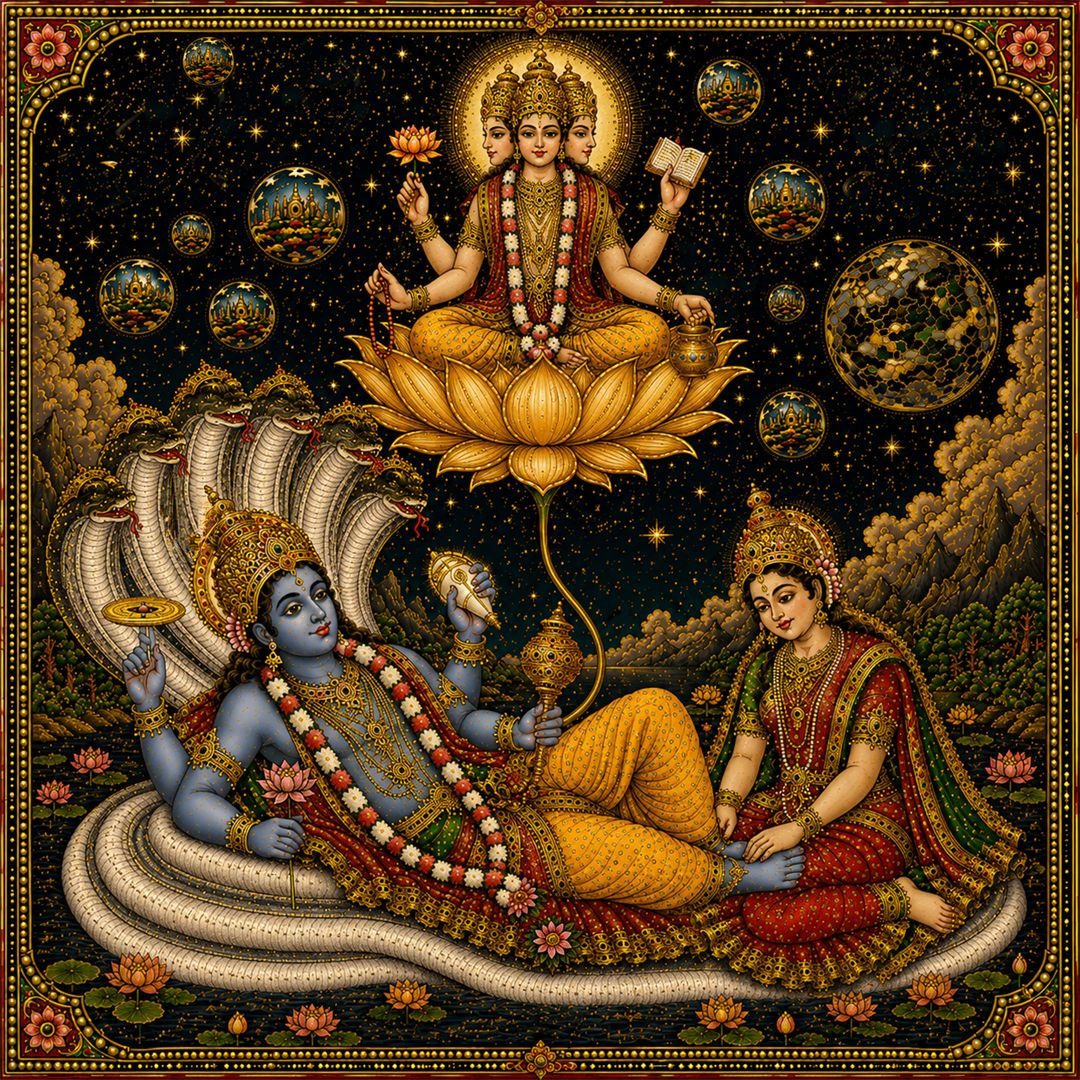
सिसृक्षायां ततो नाभेस्तस्य पद्मं विनिर्ययौ ।
तन्नालं हेमनलिनं ब्रह्मणो लोकमद्भुतम् ॥ १८ ॥
sisṛkṣāyāṁ tato nābhes tasya padmaṁ viniryayau
tan-nālaṁ hema-nalinaṁ brahmaṇo lokam adbhutam
When He desired to create, a lotus emerged from His navel. That golden lotus, together with its stem, was the wondrous abode of Brahmā.
sisṛkṣāyām—when the desire to create arose; tataḥ—then; nābheḥ tasya—from His navel; padmam—a lotus; viniryayau—emerged; tat-nālam— together with its stem; hema-nalinam—golden lotus; brahmaṇaḥ lokam—the abode of Brahmā; adbhutam—wondrous.
Dig-darśinī-ṭīkā
Jīva Gosvāmī
The meaning is that the golden lotus, together with its stem, is called the world of Brahmā because it serves as the place of both his birth and his residence.
Brahma-saṁhitā-prakāśinī
Bhaktivinoda Ṭhākura
Verse 18
When Garbhodakaśāyī Viṣṇu desires to create, a golden lotus arises from His navel. That golden lotus, together with its stem, is Brahmaloka, also known as Satyaloka, the dwelling place of Brahmā.
Here the word “golden” (hema) indicates a reflection or semblance of spiritual consciousness (cid-ābhāsa).
Annotations
Bhakti Gauravani Goswami
The stem connecting the lotus to Viṣṇu indicates that even the highest realm within the material universe, Satyaloka or Brahmaloka, remains dependent upon the Supreme Lord as its source and support.
Bhaktivinoda Ṭhākura explains that the word “golden” indicates cid-ābhāsa, a semblance or reflected appearance of spiritual consciousness. Brahmaloka therefore possesses an extraordinary brilliance and purity resembling spiritual existence, yet it remains within the material creation and should not be confused with the eternal spiritual realm.
The lotus imagery may also suggest a deeper metaphysical symbolism. Just as a lotus grows from water yet remains untouched by it, the cosmic manifestation arises from the Supreme Lord while He remains completely transcendental and unaffected by material nature.