 Spiritual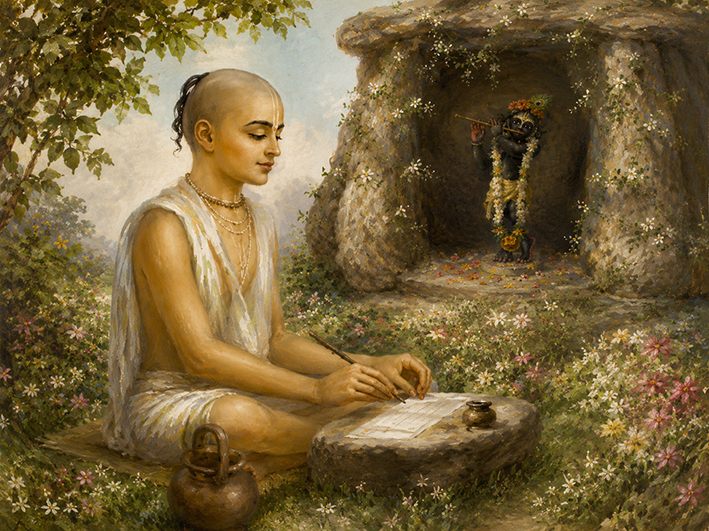
Jīva Gosvāmī (c. 1513–c. 1598), one of the Six Gosvāmīs of Vṛndāvana, was described by Śrīla Prabhupāda as “the greatest scholar and philosopher in the world.” He compiled the teachings of Śrī Caitanya Mahāprabhu in a syste-matic way and wrote extensively on Vedānta philosophy, the practice of devotional service, Sanskrit grammar, poetics, and the pastimes of Rādhā and Kṛṣṇa.
His works gave the Gauḍīya Vaiṣṇava tradition a coherent philosophical foundation and preserved the teachings of his uncles, Śrī Rūpa Gosvāmī and Śrī Sanātana Gosvāmī.
Jīva was born in Rāmakeli, in the region of Gauḍa in present-day West Bengal. His father, Vallabha, later known as Anupama, was the younger brother of Rūpa and Sanātana. The family was distinguished for learning, devotion, and public service. Traditional accounts describe Jīva as exceptionally gifted and deeply devoted to Kṛṣṇa from childhood. After leaving home, he traveled to Navadvīpa, where he met Nityānanda Prabhu, who guided him through the places associated with Śrī Caitanya’s early pastimes and blessed him to proceed to Vṛndāvana. Jīva also studied in Varanāsi and became thoroughly conversant with logic, Vedānta, and the major systems of philosophy prevalent in India.
In Vṛndāvana, Jīva accepted Rūpa Gosvāmī as his spiritual master and assisted his uncles in editing manuscripts, composing works, establishing sacred sites, and organizing the growing Vaiṣṇava community.
After the departure of Rūpa and Sanātana Gosvāmī, Jīva Gosvāmī became the leading philosophical authority of the Gauḍīya community. Closely associated with the Rādhā-Dāmodara temple, he helped make Vṛndāvana a center of learning, and devotional culture. He also trained and encouraged teachers such as Śrīnivāsa Ācārya, Narottama Dāsa Ṭhākura, and Śyāmānanda Prabhu, who carried the writings of the Gosvāmīs from Vṛndāvana to Bengal and other regions.
Jīva Gosvāmī’s greatest philosophical achievement is the Ṣaṭ-sandarbha, a monumental exposition of Gauḍīya Vedānta in six volumes based primarily on the Śrīmad-Bhāgavatam. This work establishes the authority of the Bhāgavatam, explains the nature of Bhagavān, Paramātmā, the living entities, and material nature, demonstrates that Kṛṣṇa is Svayaṁ Bhagavān, and presents bhakti and prema as the means and supreme goal of spiritual life. His Sarva-saṁvādinī further clarifies difficult points and answers possible objections.
Through these writings, Jīva Gosvāmī gave systematic expression to acintya-bhedābheda, the inconceivable simultaneous oneness and difference between the Supreme Lord and His energies. The living beings and the universe depend entirely upon Kṛṣṇa and are one with Him as manifestations of His potency, yet they remain eternally distinct from Him.
His literary activity extended far beyond the Sandarbhas. He wrote commentaries on the Śrīmad-Bhāgavatam, the Gopāla-tāpanī Upaniṣad, the Brahma-saṁhitā, and important works of Rūpa Gosvāmī. His Dig-darśinī-ṭīkā on the Brahma-saṁhitā reveals the scriptural and philosophical structure underlying Brahmā’s hymn to Govinda. He also composed the Hari-nāmāmṛta-vyākaraṇa, an innovative Sanskrit grammar centered upon Kṛṣṇa’s names, and the Gopāla-campū, an elaborate prose-and-poetry narration of Kṛṣṇa’s pastimes.
Jīva Gosvāmī spent most of his life in Vṛndāvana and passed away near the end of the sixteenth century, although sources differ concerning the exact date. His samādhi stands within the Rādhā-Dāmodara temple. He is remembered as a brilliant philosopher, prolific author, careful editor, and devoted servant of Rūpa Gosvāmī whose scholarship was wholly dedicated to revealing the eternal service of Rādhā and Kṛṣṇa.