 Spiritual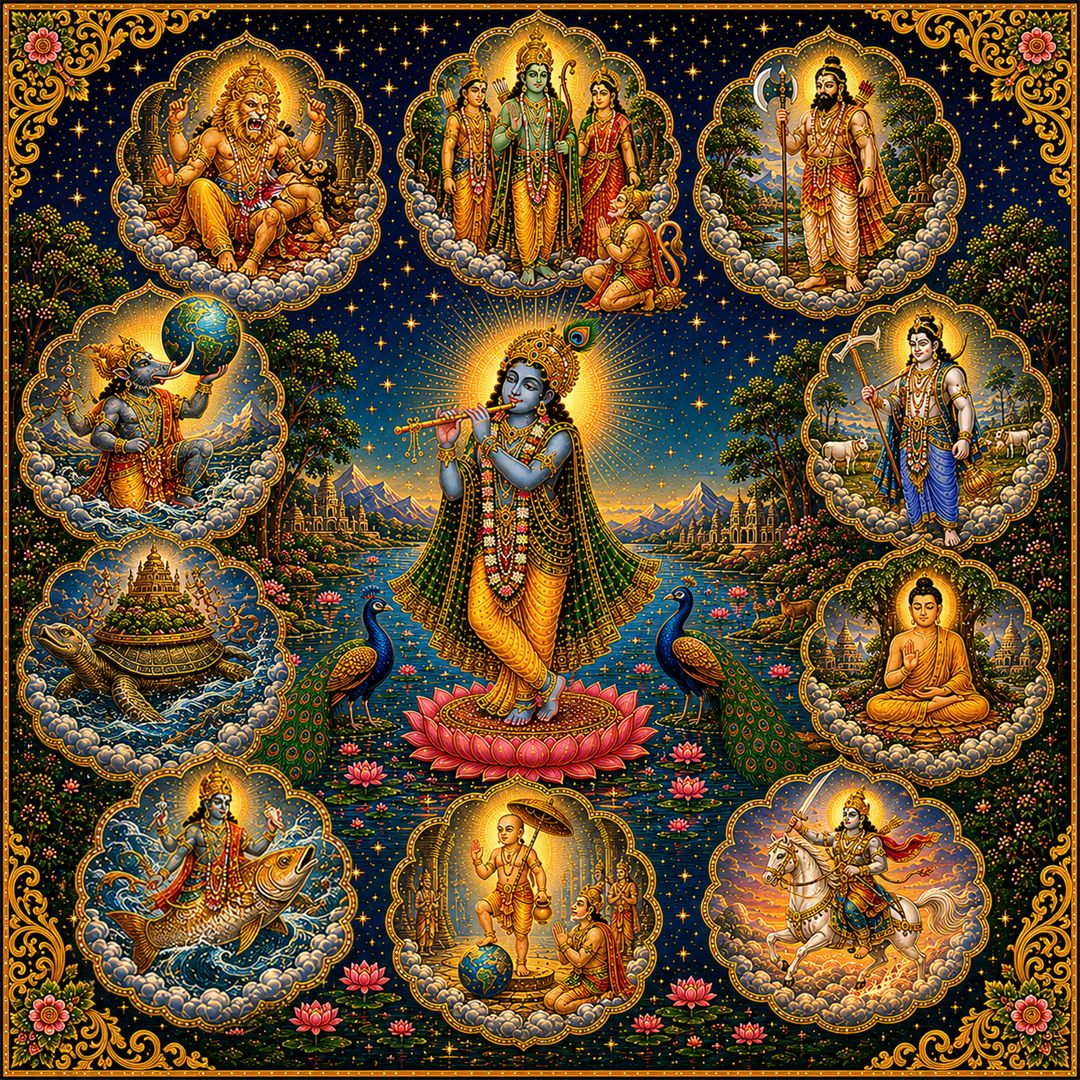
रामादिमूर्तिषु कलानियमेन तिष्ठन् नानावतारमकरोद्भुवनेषु किन्तु । कृष्णः स्वयं समभवत्परमः पुमान्यो गोविन्दमादिपुरुषं तमहं भजामि ॥ ३९ ॥
rāmādi-mūrtiṣu kalā-niyamena tiṣṭhan
nānāvatāram akarod bhuvaneṣu kintu
kṛṣṇaḥ svayaṁ samabhavat paramaḥ pumān yo
govindam ādi-puruṣaṁ tam ahaṁ bhajāmi
I worship Govinda, the primeval Lord, the Supreme Person who, while remaining situated in forms beginning with Rāma according to the order of His plenary portions and expansions, manifested various avatāras throughout the worlds, but who Himself appeared as Kṛṣṇa.
rāma-ādi-mūrtiṣu—in forms beginning with Rāma; kalā-niyamena—according to the order of His plenary portions and expansions; tiṣṭhan—remaining situated; nānā-avatāram akarot—He appeared in many avatāras; bhuvaneṣu—within the worlds; kintu—but; kṛṣṇaḥ svayam—Kṛṣṇa Himself; samabhavat—personally came; paramaḥ pumān—the Supreme Person; yaḥ—who; govindam—Govinda; ādi-puruṣam—the primeval Lord; tam—Him; ahaṁ bhajāmi—I worship.
Dig-darśinī-ṭīkā
Śrī Jīva Gosvāmī
Now Brahmā explains that this same Lord sometimes personally descends into the material world by His own portion. Thus he says: rāmādi-mūrtiṣu. The Supreme Person known as Kṛṣṇa remains situated in forms such as Rāma by manifesting only the specific potencies fixed in those forms, and, by manifesting those respective forms, He produces various avatāras throughout the worlds.
Yet: kṛṣṇaḥ svayaṁ samabhavat. “He Himself personally appeared as Kṛṣṇa.” Thus the meaning is: “I worship Govinda, who is distinguished by this particular pastime.”
This is confirmed in the Tenth Canto of Śrīmad-Bhāgavatam (10.2.40) by the prayers of the demigods:
matsyāśva-kacchapa-varāha-nṛsiṁha-haṁsa-
rājanya-vipra-vibudheṣu kṛtāvatāraḥ tvaṁ
pāsi nas tri-bhuvanaṁ ca yathādhuneśa
bhāraṁ bhuvo hara yadūttama vandanaṁ te
“O Lord, You have previously appeared as Matsya, Hayagrīva, Kūrma, Nṛsiṁha, Varāha, Haṁsa, as Rāmacandra among the kṣatriyas, as Paraśurāma among the brāhmaṇas, and as Vāmanadeva among the demigods, in order to protect us and the three worlds. Now, O Lord, O best of the Yadus, please remove the burden of the Earth. We offer our obeisances unto You.”
Brahma-saṁhitā-prakāśinī
Śrīla Bhaktivinoda Ṭhākura
Verse 39
I worship that primeval Lord Govinda, the Supreme Person, who, remaining situated in forms such as Rāma according to the order of His plenary expansions and portions (svāṁśa, kalā, and others), manifested various avatāras throughout the worlds, and who also manifested personally as Śrī Kṛṣṇa Himself.
The avatāras headed by Rāma descend from Vaikuṇṭha as plenary expansions (svāṁśa-avatāras). Kṛṣṇa, however, descends personally together with Vraja-dhāma from Goloka.
Śrī Kṛṣṇa Caitanya, who is non-different from Kṛṣṇa, the Supreme Person, also accepts manifestation in that very svayaṁ-rūpa. This is the deeper significance of the verse.