 Spiritual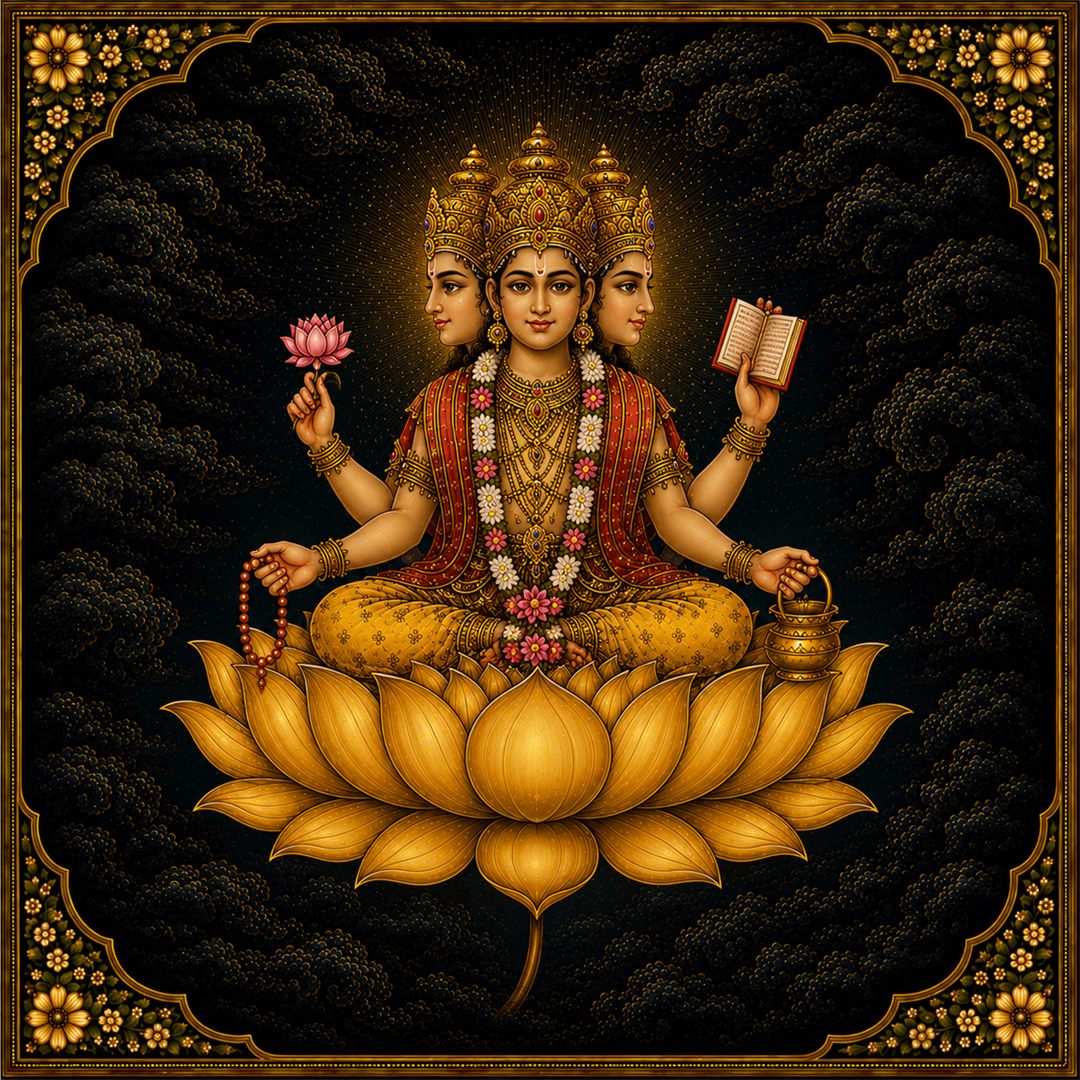
सञ्जातो भगवच्छक्त्या तत्कालं किल चोदितः ।
सिसृक्षायां मतिं चक्रे पूर्वसंस्कारसंस्कृतम् ॥
ददर्श केवलं ध्वान्तं नान्यत्किमपि सर्वतः ॥ २३ ॥
sañjāto bhagavac-chaktyā tat-kālaṁ kila coditaḥ
sisṛkṣāyāṁ matiṁ cakre pūrva-saṁskāra-saṁskṛtam
dadarśa kevalaṁ dhvāntaṁ nānyat kim api sarvataḥ
Having been born, Brahmā was impelled at that very time by the Lord’s potency and set his mind, shaped by prior impressions, upon creation. Yet in every direction he saw nothing but darkness.
sañjātaḥ—having been born; bhagavat-śaktyā—by the potency of Bhagavān; tat-kālam—at that very time; kila—indeed; coditaḥ—impelled, inspired; sisṛkṣāyām—upon creation, upon the desire to create; matim cakre—he set or turned his mind; pūrva-saṁskāra-saṁskṛtam—shaped by prior impressions; dadarśa—he saw; kevalam dhvāntam—only darkness; na anyat kim api—nothing else whatsoever; sarvataḥ—on all sides, in every direction.
Dig-darśinī-ṭīkā
Jīva Gosvāmī
Now, in the verse and a half beginning with sañjātaḥ, the activity of that four-faced Brahmā is described. The meaning is clear.
Brahma-saṁhitā-prakāśinī
Bhaktivinoda Ṭhākura
Verse 23
Having been born, Brahmā was impelled by Bhagavān’s potency and set his mind upon creation according to impressions from a previous birth. Yet in every direction he saw nothing but darkness.
Brahmā’s endeavor to create arose solely in accordance with prior impressions (pūrva-saṁskāra).
Every living entity acquires a particular disposition according to prior impressions, and the living entity’s endeavors arise according to that disposition. This is called adṛṣṭa1, or karma-phala, the fruit of action.
Brahmā’s natural disposition and endeavors likewise arose according to the actions he had performed in the previous kalpa.
Similarly, some qualified living entities may attain the position of Brahmā in this same way.
Annotations
Bhakti Gauravani Goswami
Bhaktivinoda Ṭhākura draws from this verse a broader point concerning the post of Brahmā. It is ordinarily occupied by a highly qualified jīva whom the Lord empowers to carry out secondary creation within a universe. Brahmā is therefore both a living entity and an empowered cosmic administrator. His impulse to create arises from impressions carried over from his previous performance of the same function, while his appointment to this position depends upon the qualifications by which he becomes eligible to receive the Lord’s empowerment.
In his purport to Śrīmad-Bhāgavatam 1.3.5, Śrīla Prabhupāda explains the position of Brahmā as follows:
Brahmā is always jīva-tattva. The highest pious living being, or the greatest devotee of the Lord, is empowered with the potency of the Lord for creation, and he is called Brahmā. His power is like the power of the Sun reflected in valuable stones and jewels. When there is no such living being to occupy the post of Brahmā, the Lord Himself becomes a Brahmā and takes charge of the post.
In a lecture on Śrīmad-Bhāgavatam 3.25.5, he similarly states:
The first Bhagavān is Śrī Kṛṣṇa Himself, but some of His opulences are also bestowed upon Lord Brahmā. Lord Brahmā is jīva-tattva, a living being like us. If we become spiritually powerful, we can also have the post of Lord Brahmā.
Notes
- Adṛṣṭa literally means “the unseen” and refers to the subtle, invisible workings of karma by which previous actions produce their results. ↩