 Spiritual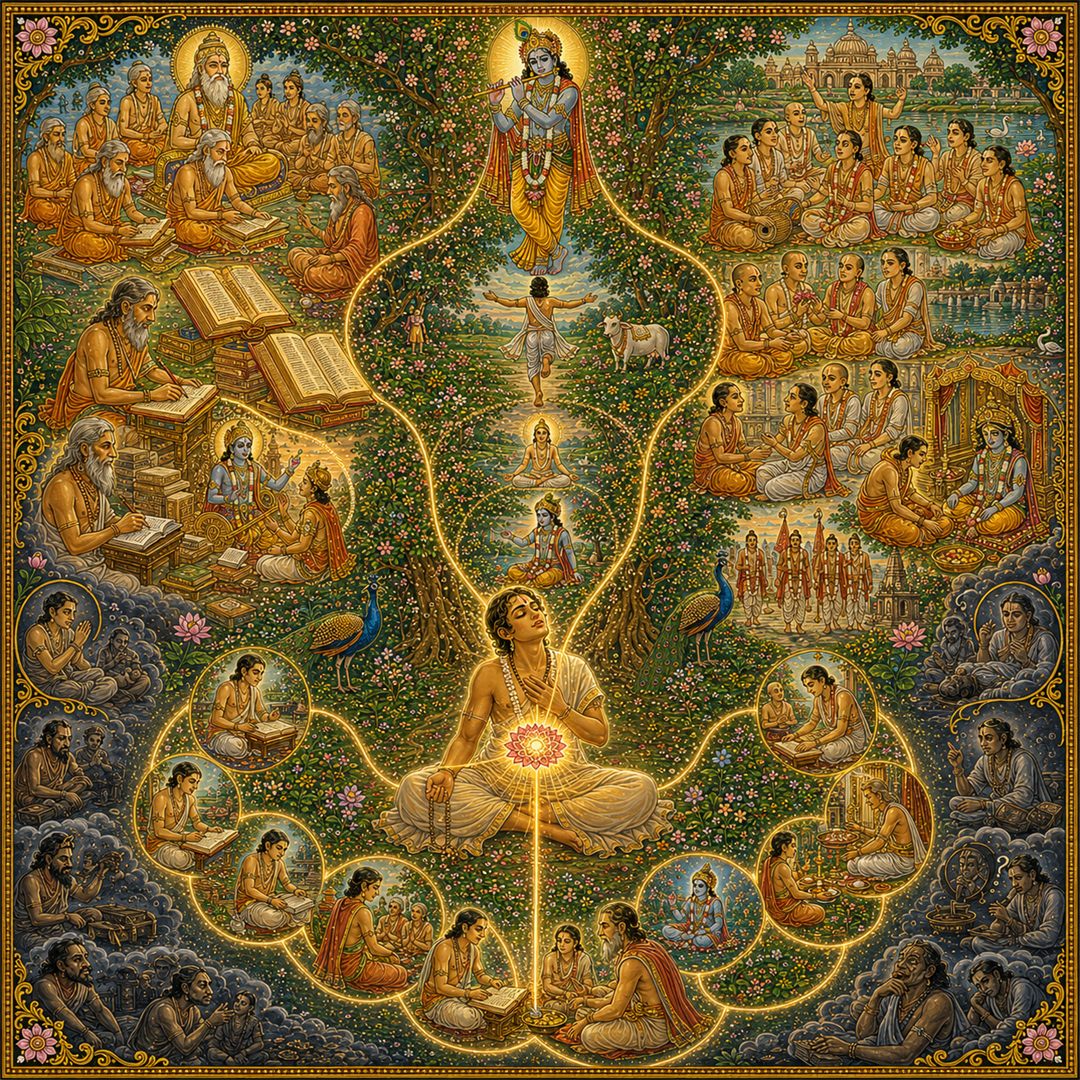
प्रमाणैस्तत्सदाचारैस्तदभ्यासैर्निरन्तरम् ।
बोधयन्नात्मनात्मानं भक्तिमप्युत्तमां लभेत् ॥ ५९ ॥
pramāṇais tat-sad-ācārais tad-abhyāsair nirantaram
bodhayann ātmanātmānaṁ bhaktim apy uttamāṁ labhet
By scriptural authority, by the conduct of the Lord’s saintly devotees, and by constant practice of that conduct, one continually awakens the self by the self and attains even the topmost level of devotional service.
pramāṇaiḥ—by scriptural authorities; tat-sad-ācāraiḥ—by the conduct and practices of the Lord’s saintly devotees; tat-abhyāsaiḥ—by repeated practice of those very practices; nirantaram—constantly; bodhayan—awakening, enlightening; ātmanā ātmānam—the self by the self; bhaktim api uttamām—even the highest devotional service; labhet—one attains.
Dig-darśinī-ṭīkā
Śrī Jīva Gosvāmī
The Lord now explains the means of attaining knowledge and the form of devotion that serve as the practices leading to devotional service characterized by divine love (prema).
Thus He says: pramāṇair iti. By pramāṇas, evidence from the Scriptures concerning Bhagavān; by tat-sad-ācāraiḥ, the conduct and practices of the saints who belong to Him; and by tad-abhyāsaiḥ, repeated engagement in those very practices, a person awakens the self by the self and directly realizes the self as a pure jīva sheltered by Bhagavān. Thereafter he attains the highest form of bhakti, pure devotional service.
Thus it is said in the prayers of the personified Vedas (10.87.20):
svakṛta-pureṣv amīṣv abahir-antara-saṁvaraṇaṁ
tava puruṣaṁ vadanty akhila-śakti-dhṛto ‘ṁśa-kṛtam
“Within the bodies created by Himself, the sages describe the individual soul as a partial manifestation of the Supreme Person, who possesses all potencies and who is neither enclosed from within nor from without.”
And further:
nṛ-gatiṁ vivicya kavayo nigamāvapanam
bhavata upāsate ‘ṅghrim abhavaṁ bhuvi viśvasitāḥ
“Having discerned the true destination of human life, the wise, placing their faith in the Vedas, worship Your lotus feet, which are beyond material existence.”
Brahma-saṁhitā-prakāśinī
Śrīla Bhaktivinoda Ṭhākura
Verse 59
Through scriptural authority, saintly conduct, and constant practice thereof, one continually awakens oneself with realization of one’s spiritual identity and attains supreme devotional service.
Pramāṇa refers to the revealed Scriptures concerning the Supreme Lord, such as the Vedas, Purāṇas, Bhagavad-gītā, and other devotional literature.
Sadācāra refers to the conduct of pure devotees and, in particular, the rāga-based conduct of saintly devotees established in rāga-bhakti.
Tad-abhyāsa refers to constant practice of the devotional process thus received.
Having understood the teachings of the Daśa-mūla from the Scriptures, one receives the holy name of Hari, which consists of His name, form, qualities, and pastimes.
One then continually cultivates these through constant practice. Included within this are study of the Scriptures and association with saintly devotees. When one chants the holy name in conjunction with saintly conduct, the ten offenses against the holy name will gradually disappear. To follow the example of sādhus in their offenseless chanting and discussion of the holy name is called abhyāsa. By continually engaging in such devotional practice, the ultimate goal arises, namely bhakti characterized by divine love (prema-lakṣaṇā bhakti).
Annotations
Bhakti Gauravani Goswami
Bhaktivinoda Ṭhākura identifies three essential components of spiritual progress: pramāṇa (revealed Scripture), sadācāra (the example and conduct of realized devotees), and abhyāsa (steady personal practice). Spiritual advancement does not arise from theoretical study alone. Scripture provides knowledge, saintly devotees demonstrate how that knowledge is lived, and regular practice transforms knowledge into realization. When these three work together, regular devotional service gradually matures into prema, pure love of God.
The progression outlined in the teachings of the pañca-ślokī, the five verses, is systematic. Verse 58 established the three foundational principles of sambandha, abhidheya, and prayojana. Verse 59 now explains the practical method by which sambandha and abhidheya are cultivated: through Scripture, saintly association, and steady practice.
This same progression later became one of the central themes of the teachings of Śrī Caitanya Mahāprabhu and the Six Gosvāmīs, exemplified by Rūpa Gosvāmī’s description of the process of devotional service in his work Bhakti-rasāmṛta-sindhu (1.4.15-16):
ādau śraddhā tataḥ sādhu-saṅgo ‘tha bhajana-kriyā
tato ‘nartha-nivṛttiḥ syāt tato niṣṭhā rucis tataḥ
athāsaktis tato bhāvas tataḥ premābhyudañcati
sādhakānām ayaṁ premṇaḥ prādurbhāve bhavet kramaḥ
“In the beginning there is faith, then association with saintly devotees, and then engagement in devotional practice. Thereafter comes the cessation of unwanted habits, then steadiness, taste, attachment, and then spiritual ecstasy. After that, prema, pure love of God, arises. This is the sequence by which prema appears among practitioners.”